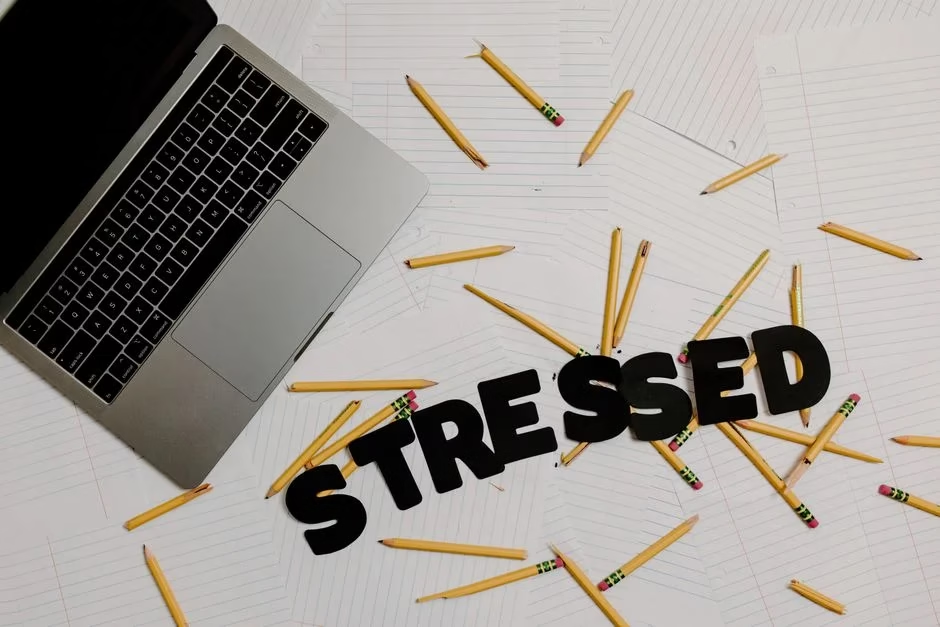
Your heart is racing. Your thoughts are piling on top of each other so fast you can’t catch one before the next one arrives. You know you need to calm down, but every tip you’ve ever read feels completely useless in this moment. Sound familiar?
Here’s the thing most advice gets wrong: not all anxiety feels the same, and not all anxiety coping mechanisms work the same way. What helps when you’re mildly worried about a work deadline is completely different from what helps when your chest is tight and your hands are shaking. Using the wrong tool at the wrong time can actually make things harder — like trying to thread a needle while running.
This post walks you through why that mismatch happens, and how to pick the right approach for exactly how you’re feeling right now — whether anxiety is quietly humming in the background or roaring full volume.
Relevant blog to read: Rewiring Your Mindset Thoughts That Work for You
Table of contents
Why Anxiety Coping Mechanisms Aren’t One-Size-Fits-All
When anxiety spikes, your brain shifts into survival mode. The thinking part of your brain — the part that reasons, plans, and problem-solves — goes quieter. The alarm part of your brain takes over completely. That’s why, in the middle of a panic attack, someone telling you to “just think positive” feels almost insulting. Your brain literally cannot access that gear right now.
This is why experts in emotional regulation emphasise matching coping tools to your anxiety level. At high intensity, your body needs to feel safe before your mind can engage. At moderate intensity, your mind is available and ready to do some gentle, helpful work.
Think of it like a fire. When flames are high, you reach for water — not a conversation about fire safety. Once things cool down, that’s when the conversation makes sense.
When Anxiety Is High: Body-Based Techniques First
At high anxiety — racing heart, tight chest, a sense of dread you can’t explain — your body is the door back to calm. Trying to think your way out too early won’t work. Instead, speak to your nervous system in the language it understands: sensation, breath, and physical movement.
Deep Breathing Exercises for Anxiety
When you’re anxious, your breathing gets shallow and fast, which actually tells your brain there’s danger — creating a loop that keeps anxiety going. Slowing your breath down sends the opposite signal: you’re safe. It’s one of the fastest ways to interrupt that cycle.
Try the 4-4-8 breath:
- Place one hand on your chest and one on your belly.
- Breathe in slowly through your nose for a count of four — feel your belly rise, not just your chest.
- Hold gently for four counts.
- Breathe out through your mouth for eight full counts — longer than the inhale.
- Repeat for two to three minutes.
That long exhale is the key. It activates the part of your nervous system responsible for rest and calm. You don’t need an app or a quiet room. You just need your breath.
Grounding Techniques for Anxiety
Grounding works because it pulls your attention out of your churning thoughts and plants it firmly in the present moment. Anxiety lives in the future — in everything that might go wrong. Grounding brings you back to right now, where you’re actually okay.
The 5-4-3-2-1 technique is one of the most reliable grounding techniques for anxiety:
- 5 things you can see: Look around. A plant, a crack in the ceiling, the colour of someone’s jacket.
- 4 things you can hear: Traffic outside, the hum of a fridge, your own breath.
- 3 things you can physically feel: The weight of your feet on the floor, the texture of your clothes, the temperature of the air.
- 2 things you can smell: Even faint ones count.
- 1 thing you can taste: Notice whatever is there.
If 5-4-3-2-1 feels like too much mid-panic, try the simpler 3-3-3 rule: name three objects you can see, three sounds you can hear, and move three parts of your body. That’s it. Small steps back to the present.
Progressive Muscle Relaxation for Anxiety
Anxiety doesn’t just live in your head — it takes up residence in your body. That locked jaw you’ve had all day. The shoulders you’re currently wearing as earrings. The stomach that hasn’t fully unclenched since Monday. Progressive muscle relaxation works by deliberately tensing each muscle group for a few seconds, then releasing it. The contrast between tension and release teaches your body what calm actually feels like — not as a concept, but as a physical sensation it can return to.
Start with your feet. Scrunch them tight for five seconds, then let go completely. Move slowly up: calves, thighs, stomach, hands, shoulders, face. By the time you reach the top, your body often feels noticeably heavier and softer. Many people find this especially useful before bed when the mind won’t switch off.
When Anxiety Is Moderate: Gentle Tools for Your Mind
Once the physical storm has settled a little — once you can breathe more easily and your thoughts are slowing down — your mind becomes available again. This is the moment for cognitive tools. Not before. Trying to reframe your thoughts while you’re in full panic is like trying to read a map during an earthquake. Wait until the ground steadies.
Cognitive Reframing for Anxiety
Anxious thoughts tend to feel like facts. This is definitely going to go wrong. Everyone noticed. I can’t handle this. Cognitive reframing for anxiety doesn’t tell you to pretend everything is fine — it gently asks whether the thought is actually true.
Try this simple written exercise:
- Write the anxious thought: “I’m going to fail this presentation.”
- List evidence FOR it: Be honest. Write anything that seems to support it.
- List evidence AGAINST it: Past times you’ve managed, preparation you’ve done, support around you.
- Write a balanced thought: “I’m nervous, and I’ve also prepared. Most people won’t notice small mistakes the way I do.”
You’re not forcing yourself to be positive. You’re just making the full picture visible — because anxiety only ever shows you one side.
Naming Your Emotions Out Loud
This one sounds almost too simple, but the effect is real. When you name exactly what you’re feeling — not just “bad” but “I feel anxious and overwhelmed and a little embarrassed” — something shifts. Research in emotional processing suggests that labelling feelings with specific words reduces their intensity and makes them feel more manageable. The more precise you can be, the better it tends to work.
You could say it quietly to yourself, write it in your notes app, or tell someone you trust. The act of naming it moves the feeling from something vague and enormous to something you can actually see — and work with.
Small Daily Habits That Quietly Lower Your Baseline
The big coping tools matter most in difficult moments. But underneath all of it, there’s a quieter layer — small daily choices that gradually turn the volume down on anxiety in general, so when hard moments come, you’re not already running on empty.
- Move your body a little every day: Even a five-minute walk counts. Regular exercise reduces anxiety symptoms meaningfully over time — the Mayo Clinic Health System has found it can reduce anxiety symptoms by around 25%. You don’t need a gym or a plan. Just movement.
- Watch your caffeine: Caffeine mimics anxiety in the body — speeding your heart rate and putting your nervous system on alert. If you’re prone to anxiety, reducing it gently can make a noticeable difference to how you feel day-to-day.
- Protect your sleep: CDC research has found that getting seven or more hours of sleep nightly can reduce anxiety severity by around 30%. A consistent bedtime and stepping away from screens an hour before sleep are two of the simplest places to start.
- Keep a small gratitude note: At the end of the day, write down one or two things that weren’t awful. This isn’t about toxic positivity — it’s about gently training your attention to notice more of the full picture, not just what went wrong.
- Engage your hands: Colouring, clay, cooking, knitting — anything tactile pulls attention out of anxious thought loops and into the present. Creative activities redirect focus in a way that feels more natural than forcing yourself to “stop thinking”.
None of these need to be perfect. One small thing done consistently does more than ten things done once. You’re building a life that’s a little kinder to your nervous system, one gentle choice at a time.
Frequently Asked Questions
The best anxiety coping mechanisms depend on how intense your anxiety feels right now. For high anxiety — racing heart, shallow breathing, panic — body-based tools work best: slow breathing, grounding techniques like 5-4-3-2-1, or progressive muscle relaxation. For moderate anxiety, cognitive tools like writing out and gently challenging your thoughts tend to work well. Matching the tool to your level makes a real difference.
Start with your breath. Try the 4-4-8 technique: breathe in for four counts, hold for four, breathe out for eight. The long exhale signals your nervous system to calm down. If breathing alone isn't enough, add the 3-3-3 rule — name three things you see, three sounds you hear, and move three parts of your body. These bring you back into the present moment and away from the spiral.
Grounding techniques are simple ways to pull your attention out of anxious thoughts and into the present moment using your senses. The most well-known is the 5-4-3-2-1 method: name five things you can see, four you can hear, three you can feel, two you can smell, and one you can taste. They work because anxiety lives in the future — grounding brings you back to right now, where you're actually safe.
Yes — and there's a clear reason why. When anxiety spikes, breathing becomes fast and shallow, which signals danger to your brain and keeps the cycle going. Slowing your breath — especially making the exhale longer than the inhale — sends the opposite signal. It activates the rest-and-calm side of your nervous system. Even two to three minutes of slow, deliberate breathing can noticeably reduce the intensity of an anxiety attack.
Discreet grounding works well in a work setting. Try the 3-3-3 rule quietly at your desk: identify three things you can see, three sounds around you, and gently move three parts of your body. Box breathing — inhale four counts, hold four, exhale four, hold four — is nearly invisible and very calming. Naming your feelings specifically, even just in your head, also helps reduce their intensity without anyone noticing.
Related Reading
- Rewiring Your Mindset Thoughts That Work for You
- What to Do When You Hate Meditation but Know You Need It
- Inner Peace Techniques That Actually Work Daily
- Stress Resilience Strategies That Actually Work
Author’s note
Thank you for taking the time to focus on your well-being and for being your own cheerleader in this journey called life. I truly appreciate you for choosing to invest in yourself today, and I’m honored that you spent a part of your day here. Remember, every small step you take matters, and you’re doing an amazing job. Keep going—you’ve got this!