

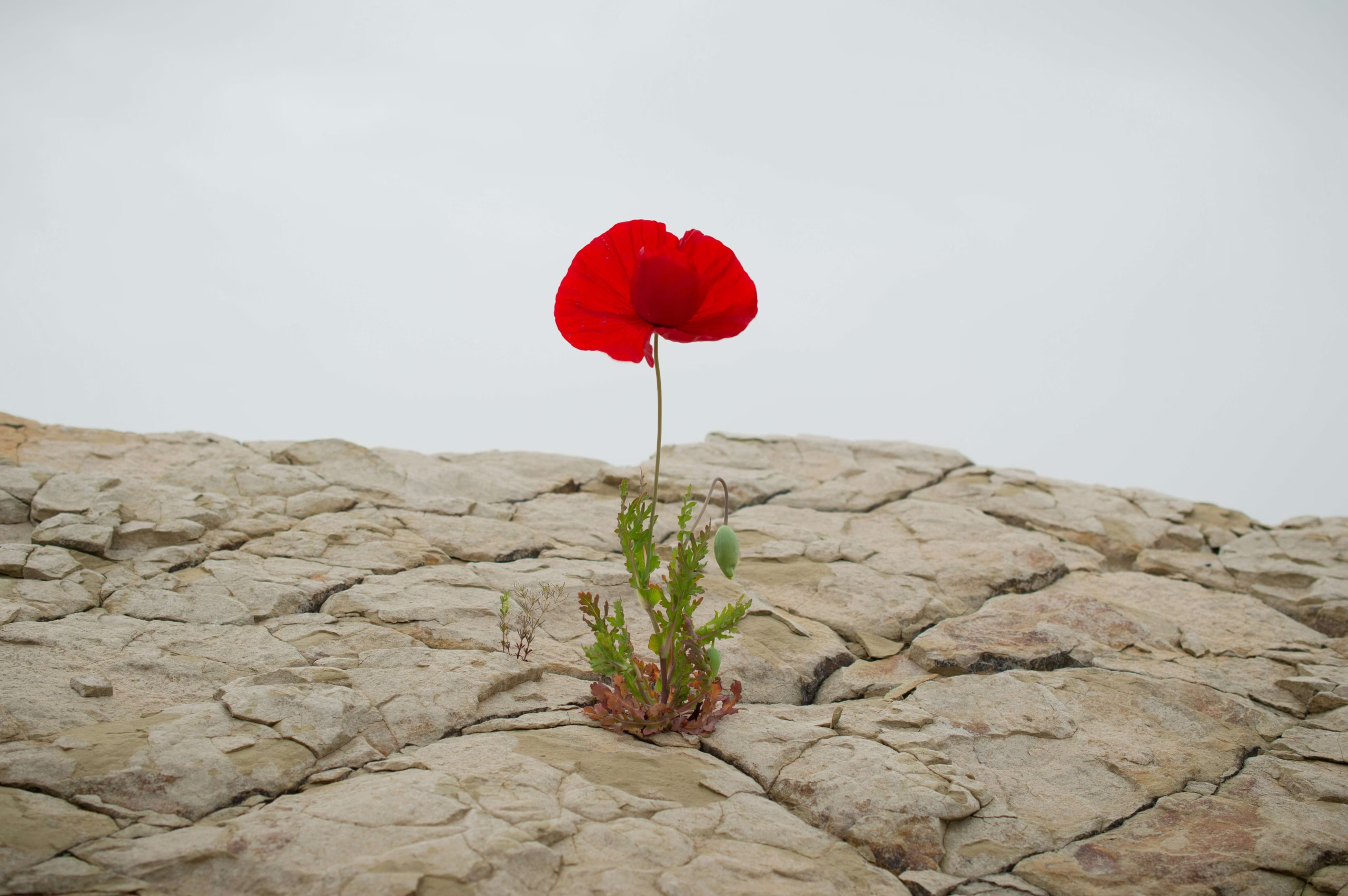
Life guarantees two things: change and challenge. The difference between those who are derailed by difficulty and those who thrive through it is resilience. Resilience is not an innate trait reserved for a lucky few; it is a muscle that can be developed, strengthened, and relied upon when you need it most.
In this detailed guide, we break down the core components of emotional and psychological resilience, offering practical techniques to build resilience and dramatically enhance your mental toughness so you can effectively overcome adversity and cope gracefully with change.
Relevant blog to read: Why We Feel Empty Even When Everything is “Fine”
What is True Resilience? Beyond ‘Bouncing Back’
Resilience is often defined as the ability to “bounce back” from stress, setback, or tragedy. However, modern psychology suggests a deeper, more active definition: the capacity to adapt and grow in the face of significant challenges.
True resilience involves three stages:
- Endurance: Staying functional during the crisis.
- Recovery: Returning to baseline stability.
- Post-Traumatic Growth (PTG): Using the struggle as a catalyst for deeper understanding, strength, and life improvement. This is the ultimate form of mental toughness.
Core Technique 1: The Power of Adaptable Thinking (Cognitive Reframing)
Resilient people don’t deny stress; they interpret it differently. This is called cognitive reframing, and it’s the cornerstone of how to build resilience.
A. The “Three P’s” Trap
When we face adversity, our minds often fall into three destructive thought patterns. Learning to recognize and dismantle them is vital for cognitive resilience:
- Pervasiveness: Believing the problem will infect every area of your life (“I failed the presentation, so now I’m going to lose my job, and my family will be disappointed.”)
- The Hack: Isolate the problem. Remind yourself: “This is about this one project, not my entire career.”
- Permanence: Believing the negative situation will last forever (“This sadness will never end,” or “I’ll never get over this mistake.”)
- The Hack: Use time-bound language. Replace “never” with “This is temporary. I feel this way right now, but it will change.”
- Personalization: Blaming yourself entirely for external factors (“It’s all my fault.”)
- The Hack: Externalize where appropriate. Identify outside factors that contributed (poor communication, economic downturn, luck). Remind yourself: “I played a part, but I was also dealing with external pressures.”
B. “What Can I Control?” Inventory
Anxiety escalates when you focus on what you can’t influence (outcomes, other people’s actions). Resilience is built by shifting focus to your actions.
- Actionable Tip: Draw a circle on a piece of paper. Inside the circle, write down everything you can control (your effort, your response, your schedule). Outside the circle, write everything you cannot control (the past, the weather, the final decision). Commit 100% of your energy to the items inside the circle.
Core Technique 2: The Grit Factor (Behavioral Resilience)
Grit, a term popularized by psychologist Angela Duckworth, is the passion and perseverance for long-term goals. It’s the engine that helps you overcome adversity by maintaining effort over time.
A. Embrace the “Yet” Mindset
Adopting a growth mindset means viewing skills and intelligence as malleable, not fixed. This transforms failure from a statement about your identity (“I am a failure”) into a piece of actionable data.
- Actionable Tip: When you face a setback, always finish the sentence with “Yet.”
- Instead of: “I can’t build resilience.”
- Say: “I can’t build resilience, yet.”
B. Strategic Energy Recovery
Grit doesn’t mean working 24/7. It means knowing how to strategically stop and recover so your efforts are sustainable.
- Actionable Tip: Schedule recovery time (walking, reading, disconnecting) just as seriously as you schedule work time. Resilient individuals view rest as a productive tool, not a reward earned after burnout.
Core Technique 3: Harnessing Post-Traumatic Growth (Eudaimonic Resilience)
The most advanced stage of resilience is finding meaning and growth after trauma or a major setback. This is the highest level of coping with change.
Post-Traumatic Growth (PTG) can manifest in five areas:
- New Possibilities: Identifying new paths you wouldn’t have considered before the event.
- Closer Relationships: Strengthening bonds with those who supported you.
- Increased Strength: A greater sense of personal ability and mental toughness.
- Spiritual Change: A deeper or more appreciative approach to life.
- Life Appreciation: A renewed sense of gratitude for simply being alive.
- Actionable Tip: After resolving a challenge, conduct a “Crisis Review.” Instead of just reviewing what went wrong, dedicate half the time to answering:
- What unexpected skills did I discover during this?
- Who showed up for me, and how can I strengthen that relationship?
- What new boundary did I set that improved my life?
This process transforms the painful memory into a blueprint for future success, making you permanently stronger.
Summary: Building Your Resilience Toolkit
Here is a quick summary of the techniques for building your resilience:
- Cognitive Resilience: Focuses on Adaptable Thinking. The daily practice is to reframe negative thoughts using the “Three P’s” counter-arguments. This shifts your focus from blame to action.
- Behavioral Resilience: Focuses on Grit and Effort. The daily practice is to adopt the “Yet” mindset and schedule productive recovery time. This sustains effort over the long term.
- Relational Resilience: Focuses on Social Support. The daily practice is to connect genuinely with 1-2 people per day and ask for help when needed. This reduces the perceived threat of isolation.
- Eudaimonic Resilience: Focuses on Meaning and Growth. The daily practice is to perform a “Crisis Review” after a setback to find lessons learned. This drives Post-Traumatic Growth, which helps you overcome adversity.
How to Build Resilience Into Your Everyday Routine
The techniques above are powerful, but resilience is built in the small, repeatable choices you make on ordinary days — not only in a crisis. If you want to build resilience that lasts, treat it like a fitness practice: consistent, gentle reps that compound over time. The goal is not to feel unshakeable every moment, but to widen your window of tolerance so life’s ups and downs move you a little less each time.
Try weaving a few of these micro-habits into a week and notice which ones actually stick for you:
- A two-minute morning check-in: name how you feel before the day’s noise arrives.
- One “recovery” block a day — a walk, a stretch, or simply doing nothing on purpose.
- A short evening reframe: write down one thing that was hard and one thing you handled.
- A weekly connection ritual with someone who reminds you that you are supported.
Quieting the inner critic is part of the work too — our guide to overcoming negative self-talk pairs well with this practice, and a few minutes of loving-kindness meditation can soften the harshness you might otherwise turn on yourself when things get hard.
Frequently Asked Questions (FAQs)
A: No. While some people may start with a slight advantage due to genetics or early childhood environment, resilience is primarily a dynamic skill. Anyone can build resilience by consistently practicing behavioral and cognitive techniques like mindfulness, self-compassion, and adaptable thinking. It is a state that evolves throughout life.
A: This is where Post-Traumatic Growth (PTG) comes in. The goal is not to forget the trauma, but to integrate the lessons and strengths derived from the experience into your identity. Focus less on what happened and more on how you responded and what you gained (e.g., greater compassion, clearer priorities, increased mental toughness).
A: The fastest way to start is by consistently engaging in small, intentional acts of controlled discomfort. This could be sticking to a challenging new workout, consciously delaying gratification, or having a difficult but necessary conversation. Successfully navigating these small, manageable stresses trains your brain’s coping with change circuitry and boosts your confidence for larger crises.
Related Reading
- Emotional Intelligence Skills That Build Real Resilience
- Stoicism: The Ancient Secret to Modern Mental Resilience and Emotional Peace
- How to Build Self-Confidence That Actually Lasts
- Building Resilience: Skills Anyone Can Learn
Author’s note
Thank you for taking the time to focus on your well-being and for being your own cheerleader in this journey called life. I truly appreciate you for choosing to invest in yourself today, and I’m honored that you spent a part of your day here. Remember, every small step you take matters, and you’re doing an amazing job. Keep going—you’ve got this!



2 Comments