You know that feeling when a hard week finally breaks you — not with one big thing, but with the slow drip of a hundred small ones? The inbox that never empties. The conversation that went badly. The 2am moment when your brain decides to replay all of it at once. That’s stress doing what it does. And if you’ve ever told yourself “I’m just not a resilient person” — this post is gently, warmly here to tell you that’s not true.
Stress resilience strategies work because resilience isn’t something you either have or you don’t. It’s something your brain and body can actually build — and one of the most powerful tools for building it is something researchers are only just beginning to talk about properly: the quiet, protective force of positive emotion. Not forced happiness. Not pretending everything’s fine. Real, small moments of feeling okay — and why those moments matter far more than most of us realise.
What follows are stress resilience strategies grounded in how your brain actually works, why certain daily habits protect your mental health, and how you can start building something stronger — starting today, wherever you are.
Relevant blog to read: Stress Management Techniques That Actually Work
Table of contents
- The Biggest Misconception About Stress Resilience
- What's Actually Happening in a Resilient Brain
- The Underestimated Power of Positive Emotion
- Daily Habits for Stress Resilience That Actually Fit Real Life
- How to Build Stress Resilience at Work
- A Simple Mindfulness Practice to Try Right Now
- Frequently Asked Questions
- Author's note
The Biggest Misconception About Stress Resilience
Most people think resilience means not feeling stressed. That resilient people just… bounce. That they don’t cry in car parks or lie awake catastrophising. That resilience is a personality type — something some people are born with and others simply aren’t.
That’s not what the research shows. Not even close.
Resilience isn’t a wall that keeps stress out. It’s more like a muscle — one that gets stronger with the right conditions, the right inputs, and yes, even the right kind of rest. Studies show that resilient individuals actually feel stress just as acutely as anyone else. The difference is in how their brains process and recover from it. And that processing ability? It can be developed. At any age. With consistent, manageable habits.
So if you’ve been waiting to feel naturally strong before you start — you don’t have to wait. You can build the strength while you’re still in the middle of things.
What’s Actually Happening in a Resilient Brain
Here’s the part that changes everything. Researchers have found that people with stronger stress resilience show greater connection between two key parts of the brain: the prefrontal cortex — the thinking, reasoning part — and the amygdala, which is the brain’s alarm system. When those two areas communicate well, your thinking brain can calm your panic brain down. Like a steady hand on a shoulder saying, “We’re okay. We can handle this.”
A study published in the Journal of Neuroscience found that resilient individuals show around 30% greater connectivity between these two brain regions compared to those who struggle more with stress. That connection isn’t fixed at birth. It’s shaped by your habits, your environment, and crucially — your emotional experiences over time.
Your brain also has the ability to grow new cells in a region called the hippocampus, which plays a big role in how you respond to stress and how flexibly you think under pressure. This process — growing new brain cells in adulthood — is strongly supported by sleep, movement, nature, and safe social connection. All things that are within your reach.
This matters because it means every small, healthy choice you make isn’t just a nice idea. It’s literally reshaping the structure of your stress response.
The Underestimated Power of Positive Emotion
Here’s the most surprising insight in all of the resilience research — and it’s one that doesn’t get nearly enough attention.
Positive emotion doesn’t just feel nice. It actively shields you from the worst effects of stress. Not after the storm has passed. During it.
Research from the National Institute of Mental Health found that positive affect — which just means genuinely feeling good emotions, even briefly — protects against stress-related depression and trauma symptoms in around 60% of adults studied. That’s not a small effect. That’s significant protection, and it comes not from avoiding hard things, but from regularly experiencing moments of warmth, connection, or calm alongside them.
Think about what that means practically. It means that when you take ten minutes to do something you enjoy on a hard day — watch something funny, call a friend, sit in the sun — you’re not being indulgent or avoiding your problems. You’re actively building your resilience. You’re giving your brain the emotional resources it needs to stay steady.
This is why stress resilience strategies aren’t just about managing the bad. They’re about deliberately tending to the good.
Daily Habits for Stress Resilience That Actually Fit Real Life
None of these require a perfect morning routine or a two-hour wellness block. These are daily habits for stress resilience that work in the margins of ordinary life — a commute, a lunch break, the ten minutes before bed.
- Breathe with your belly, not your chest: When you’re stressed, your breathing becomes shallow and fast, which signals danger to your nervous system and keeps it on high alert. Slow, deep abdominal breathing does the opposite — it tells your body the threat has passed. Even 2-3 minutes of this during a stressful moment can genuinely reset your baseline. Place one hand on your belly, breathe in slowly for four counts, and feel it rise. That’s it.
- Move your body for 20 minutes: Moderate physical activity — a walk, a light jog, dancing in your kitchen — reduces stress hormones and supports the brain’s ability to grow new cells. You don’t need a gym. You need movement that feels manageable today.
- Protect your sleep like it’s the one thing holding you together: Because right now, it might be. Seven to nine hours of restorative sleep is one of the most powerful stress resilience techniques available to you — not a luxury, not something to sacrifice when things get hard, but the actual mechanism by which your brain processes the day’s emotional weight, repairs stress-related damage, and resets your threat response so tomorrow doesn’t feel quite as impossible. Protecting sleep is protecting everything else.
- Spend time in green spaces: Even 15 minutes in nature or a park has been shown to reduce stress and improve wellbeing. If you can’t get outside, even a plant on your desk or a window with natural light helps. Your nervous system responds to cues of safety — and nature is full of them.
- Reframe, don’t suppress: When something stressful happens, instead of pushing the feeling down, try shifting the lens. Ask: “What part of this is within my control?” This approach — called cognitive reappraisal — is one of the psychosocial factors most consistently linked to stronger resilience. It’s not about toxic positivity. It’s about finding a grain of agency in difficult situations.
How to Build Stress Resilience at Work
Work stress is its own particular animal. It often feels relentless, socially complex, and hard to switch off from. Building resilience in a work context means both managing the pressure and creating micro-moments of recovery throughout the day.
- Reach out briefly and genuinely: One of the clearest findings in resilience research is that safe, warm social connection is deeply protective. You don’t need a long conversation. A brief, pleasant interaction with a colleague — even a genuine “how are you doing?” that you actually wait to hear the answer to — reduces the physiological impact of stress. Social support and stress resilience are closely linked, and that support doesn’t have to be deep to count.
- Take real breaks: Scrolling your phone is not a break for your stress system. A brief walk, a moment of stillness, or slow breathing away from your screen is. Build these into your day intentionally — your focus and emotional steadiness will thank you.
- Name what you’re feeling: Research consistently shows that labelling an emotion reduces its intensity. When a difficult meeting leaves you tense and irritable, simply saying to yourself “I feel frustrated right now” activates your thinking brain and begins to calm the alarm system. It sounds almost too simple. It works.
- Notice small wins: Active coping and optimism are key psychosocial factors in resilience. Part of optimism isn’t pretending things are easy — it’s genuinely noticing when something goes well, even something small. That trains your brain to register positive data, not just threats.
A Simple Mindfulness Practice to Try Right Now
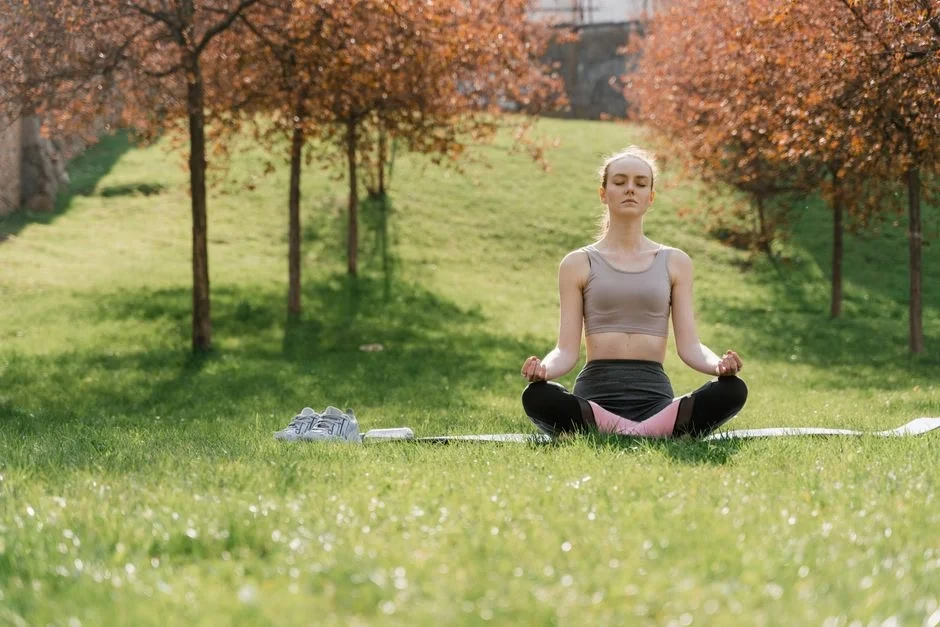
Mindfulness exercises for stress resilience don’t need to be complex or require silence and a cushion. The simplest version is this: pause, and notice what’s real right now.
Try this for two minutes. Sit comfortably — or don’t, if you’re reading this in bed or on the sofa at some unreasonable hour. Take three slow, deep breaths. Not the kind where you’re performing relaxation. The kind where you actually exhale all the way, until there’s nothing left. Then ask yourself: What can I hear? What can I feel against my skin? What’s one thing I can see clearly? That’s it. You’ve just asked your brain to anchor in the present moment, which interrupts the stress response’s tendency to spiral into future fears or past regrets.
Over time, this kind of brief, regular mindfulness practice strengthens the very brain connections that make resilience possible — the ones between your thinking brain and your alarm system. You’re not escaping stress. You’re training your brain to stay steadier when it arrives.
Resilience is built in the quiet moments between the hard ones. Every breath you slow down, every small joy you let yourself feel, every time you reach out to someone you trust — those aren’t small things. They’re the foundation. And you’re already building it.
How to Bounce Back Faster After a Setback
Resilience isn’t only about staying steady while stress is happening — it’s also about how quickly you recover once the hard moment has passed. This recovery speed, sometimes called your “stress reset,” is one of the most trainable stress resilience strategies there is.
- Name it before you fix it. Simply labelling what you feel — “I’m anxious,” “I’m disappointed” — measurably lowers the intensity of the emotion and hands some control back to your thinking brain.
- Move your body first. A short walk or a few minutes of stretching burns off stress hormones faster than trying to think your way calm.
- Reconnect to one small positive. A moment of genuine gratitude broadens your perspective when stress has narrowed it — you’ll find practical ways to do this in these gratitude practices that actually work.
The goal isn’t to never get knocked down. It’s to shorten the gap between the fall and the moment you stand back up — and that gap shrinks every time you practise.
Frequently Asked Questions
Start with brief, genuine social connection — even a short warm conversation with a colleague has been shown to reduce the physical effects of stress. Alongside that, take real screen-free breaks during the day, name your emotions when things feel tense, and notice small wins. Resilience at work grows from many small, consistent habits rather than one big change.
Seven to nine hours of sleep, 20 minutes of moderate movement, and a few minutes of deep abdominal breathing are among the most research-supported daily habits. Spending time in nature, connecting briefly with someone you trust, and practising cognitive reappraisal — focusing on what you can control — also build resilience steadily over time.
It can absolutely be learned. While genetics play some role, research shows that resilience is shaped by brain plasticity — your brain's ability to change and strengthen its connections over time. The habits you build, the environments you spend time in, and the social connections you nurture all influence how resilient your brain becomes, at any age.
Mindfulness strengthens the connection between the brain's thinking region and its alarm system, which helps you stay calmer under pressure. Even two minutes of grounding yourself in the present moment — noticing sounds, sensations, and what's in front of you — begins to interrupt the stress spiral. Regular practice makes this calming response faster and easier to access.
Safe, warm social connection is one of the most consistently protective factors in resilience research. It doesn't need to be a deep conversation — even brief, genuine interaction with someone you trust reduces the physiological impact of stress. Feeling connected signals safety to your nervous system, which directly supports your ability to recover from and adapt to difficult experiences.
Author’s note
Thank you for taking the time to focus on your well-being and for being your own cheerleader in this journey called life. I truly appreciate you for choosing to invest in yourself today, and I’m honored that you spent a part of your day here. Remember, every small step you take matters, and you’re doing an amazing job. Keep going—you’ve got this!