

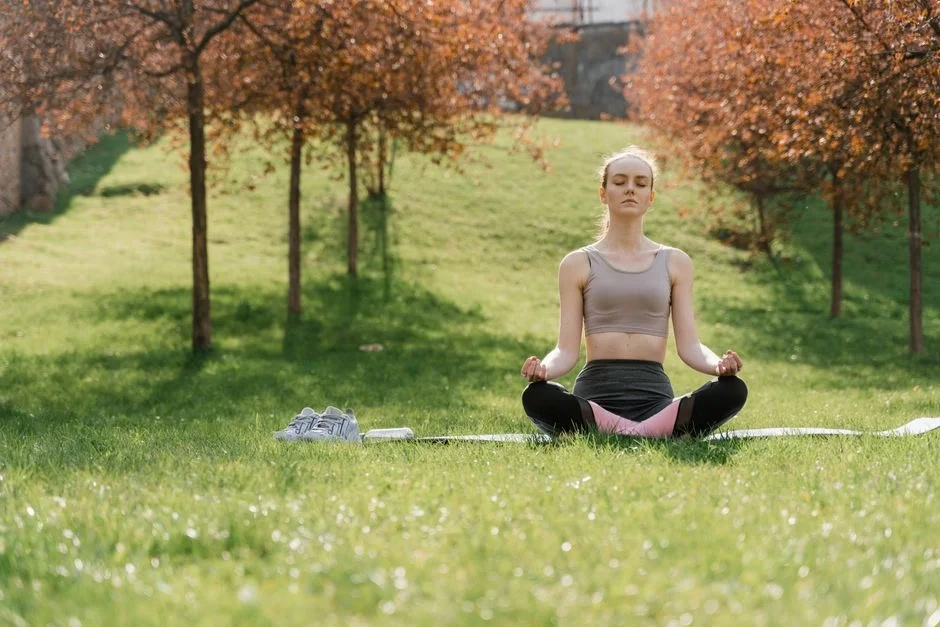
You’re not burned out because you’re weak. You’re burned out because you’ve been running on empty for a long time, and nobody handed you a proper toolkit. Stress doesn’t always arrive as one big crisis — more often it’s a slow, quiet pile-up of emails, responsibilities, sleepless nights, and the nagging feeling that you’re always one step behind.
Here’s the thing most people get wrong about stress management techniques: they think the goal is to stay calm. It’s not. The real goal is to build a flexible response — so you can reach for the right tool depending on what’s actually stressing you out, instead of trying to meditate your way through a problem that actually needs a decision.
This post walks you through how stress really works in your body, how to match your response to the type of pressure you’re facing, and a handful of practical tools you can use today — no perfect circumstances required.
Relevant blog to read: Time Management Strategies That Protect Your Mental Energy
Table of contents
- Why Trying to 'Just Calm Down' Doesn't Cut It
- The Most Useful Shift in Stress Management Techniques
- Quick Stress Relief Techniques You Can Use Right Now
- How to Manage Stress at Work Without Overhauling Your Life
- The Stress Coping Skills Most People Forget About
- Building Your Own Flexible Stress Response
- Frequently Asked Questions
- Author's note
Why Trying to ‘Just Calm Down’ Doesn’t Cut It
When something stressful happens, your body goes into a kind of high-alert mode. Your breathing gets shallower, your heart beats faster, and your brain starts scanning for danger. That response was designed to help you survive — but it wasn’t designed to run all day, every day, alongside a full inbox and a never-ending to-do list.
The problem is that when stress becomes chronic — meaning it just never really switches off — your body stays in that alert state. Over time, that wears you down. You sleep badly. You snap at people you love. Small things feel enormous. That’s not a character flaw. That’s cumulative overload, and it’s incredibly common.
Relaxation techniques like breathing and mindfulness are genuinely useful — but they’re only one part of the picture. Staying stressed is rarely about one thing you forgot to breathe through. It’s usually about too many demands, not enough recovery, and a system that never gets a real chance to reset.
The Most Useful Shift in Stress Management Techniques
Here’s the single most important idea in this whole post: not all stressors are the same, and not all responses should be either.
Some stressors are changeable. You can do something about them — delegate a task, have a conversation, set a boundary, reorganise your schedule. For those, the most helpful response is action. Thinking your way calm while a solvable problem sits untouched doesn’t actually help.
Other stressors aren’t changeable — at least not right now. A difficult diagnosis. A relationship that’s ended. A situation at work you can’t control. For those, the most helpful response is emotion-focused: breathing, acceptance, talking to someone, or changing how you’re thinking about the situation.
Using the wrong tool for the wrong type of stress is exhausting. It’s like trying to mop the floor while the tap is still running. Before you reach for a coping strategy, it helps to ask: Is this something I can actually change right now? That one question can point you toward the right response every time.
Quick Stress Relief Techniques You Can Use Right Now
Sometimes you just need something that works in the next five minutes — before a difficult meeting, after a hard phone call, or at 11pm when your mind won’t quiet down. These tools work because they speak directly to your nervous system, not just your thoughts.
Breathing: The Fastest Reset You Have
When you’re stressed, your breathing becomes short and fast — which actually signals to your brain that there’s still a threat nearby. Slowing your breath down does the opposite. It tells your body: we’re safe now, you can stand down.
Stanford Medicine found that just five minutes a day of breathing exercises can reduce overall anxiety and improve mood. You don’t need a quiet room or a meditation cushion. You just need five minutes and a willingness to try.
A simple way to start: breathe in slowly through your nose for four counts, then breathe out for six. The longer exhale is the key — it activates the part of your nervous system responsible for rest and recovery. Try it for five breaths and notice what shifts.
Mindfulness Stress Reduction: Small Doses, Real Results
Mindfulness doesn’t work by removing your stressors. It works by changing how you react to them. When you practise noticing what’s happening without immediately jumping to catastrophe, you create a tiny gap between the stressor and your response — and that gap is where calm lives.
You don’t need a 30-minute meditation. A short, consistent practice matters far more than a long, occasional one. Try this: set a reminder once a day to pause for two minutes. Notice five things you can see, take three slow breaths, and ask yourself: What’s actually happening right now, versus what am I adding to it?
How to Manage Stress at Work Without Overhauling Your Life
Work stress often feels relentless because the demands keep arriving faster than you can process them. The pile never fully clears. That feeling of always being behind is one of the most draining forms of chronic stress there is.
The good news is that small structural changes can make a real difference — without needing your workplace to suddenly become perfect.
- Start with your top three: Each morning, write down the three most important things you need to do that day. Do the hardest one first, before the day gets noisy. Everything else is bonus.
- Break it down: If a task feels overwhelming, find the smallest possible next step — something you could complete in under ten minutes. Starting is usually the hardest part.
- Set a stop time: Put a firm end to your working day. When work bleeds into every evening, your brain never gets to recover. Recovery isn’t laziness — it’s what makes tomorrow possible.
- Take a real break: A ten-minute screen-free walk outside counts. Fresh air and movement lower stress hormones in a way that scrolling through your phone simply can’t.
These aren’t revolutionary ideas — but they work precisely because they reduce the load rather than just helping you cope with a load that’s too heavy.
The Stress Coping Skills Most People Forget About
Some of the most powerful stress coping skills aren’t techniques at all. They’re habits that quietly build your resilience over time, so that when stress does arrive, it doesn’t knock you flat.
- Sleep: This one matters more than almost anything else. The CDC recommends adults get seven or more hours per night — and it’s not a soft suggestion. When you’re underslept, everything feels harder, emotions run hotter, and the thing you said to a colleague on Tuesday starts feeling like a federal case at 2am. Protect your sleep like it’s a priority, because it is.
- Movement: You don’t need to run a marathon. The CDC recommends building toward two and a half hours of physical activity per week — that’s roughly twenty to thirty minutes most days. A walk counts. A bike ride counts. Movement lowers the physical tension that stress stores in your body.
- Social connection: Stress shrinks the world. It makes you want to pull back from people, which often makes the isolation worse. Reaching out to someone you trust — even just a short conversation — can reduce the sense that you’re carrying everything alone.
- Kinder self-talk: When you notice yourself spiralling into worst-case thinking, try asking: What’s one thing I can do next? It’s a small shift, but it moves you from panic back toward action.
A 2023 meta-analysis found that stress management interventions can actually change cortisol levels in healthy adults — meaning these approaches don’t just change how you feel emotionally, they affect what’s happening inside your body too. That’s not a small thing.
Building Your Own Flexible Stress Response
You know that feeling when you wake up at 3am and your brain starts listing every problem you’ve ever had, every email you forgot to send, every awkward thing you said three years ago? That’s not you being dramatic. That’s a nervous system that hasn’t had enough recovery — and it needs a plan, not a lecture.
The goal isn’t to become someone who never feels stress. Stress is part of being alive and caring about things. The goal is to get better at moving through it — to shorten how long it lingers, lower how intense it feels, and stop it from becoming your permanent background setting.
So don’t overhaul everything tonight. Pick one tool from this post — just one. Use it tomorrow. Use it the day after. Notice even the smallest shift, because small shifts are how this actually works. Not a grand resolution. Not a new version of yourself by Friday. Just one choice, made consistently, until it becomes the thing you reach for instead of your phone.
How to Build a Stress Management Routine That Sticks
Knowing dozens of stress management techniques doesn’t help much if you only reach for them once you’re already overwhelmed. The people who stay genuinely calmer aren’t using more techniques — they’ve simply woven a few into their week so support is already in place before stress spikes. A routine turns coping from a rescue mission into a quiet habit.
- Choose two or three techniques that actually fit your life, rather than trying to adopt all of them at once.
- Attach each one to something you already do — breathing before meetings, a stretch after lunch, a wind-down before bed.
- Keep the daily version small enough that a bad day can’t derail it.
- Review monthly and swap anything that’s stopped helping — a routine should flex as your life does.
Sticking with a routine is easier when you’re also building the underlying resilience that makes stress feel more manageable in the first place. For grounded ways to strengthen that base, explore our guide on how to build mental strength, then let your chosen techniques do the day-to-day work.
Frequently Asked Questions
There isn't one single best technique — because it depends on what's stressing you out. For problems you can actually change, action-focused tools like planning, prioritising, and setting boundaries tend to work best. For things outside your control, emotion-focused tools like breathing, mindfulness, and talking to someone are more helpful. Matching the right tool to the right stressor is what makes stress management genuinely effective.
Yes, and there's solid evidence behind it. Stanford Medicine found that just five minutes a day of breathing exercises can reduce anxiety and improve mood. The reason it works is physical — slowing your exhale activates the part of your nervous system responsible for rest and recovery, which directly counters the high-alert state stress creates in your body. Even a few slow breaths can make a measurable difference.
A few things work well even in a busy workplace. Try a slow five-breath reset before a stressful meeting — inhale for four counts, exhale for six. Write down your top three priorities at the start of the day so your brain isn't holding everything at once. Set a firm stop time for work so your evenings become genuine recovery. Even a ten-minute walk outside can lower stress hormones more than a scrolling break.
Small, consistent habits do more than occasional big efforts. A short breathing practice once a day, a firm end time to your workday, seven or more hours of sleep, and a brief walk outside are all backed by evidence — and none of them require a life overhaul. The key is picking one or two things and doing them regularly, rather than trying to do everything at once and burning out on that too.
That feeling makes complete sense, and you're not imagining it. Chronic stress often builds from cumulative overload — too many small demands, too little recovery, and not enough time to decompress. It's not one dramatic event; it's the drip, drip, drip of everyday pressure with no real off switch. Reducing your overall load, protecting your sleep, and building in genuine rest can help more than any single calming technique.
Related Reading
- Stress Resilience Strategies That Actually Work
- Relaxation Techniques for Anxiety That Actually Work
- Creative Outlets for Stress Relief That Actually Work
- Natural Remedies for Anxiety That Actually Work
Author’s note
Thank you for taking the time to focus on your well-being and for being your own cheerleader in this journey called life. I truly appreciate you for choosing to invest in yourself today, and I’m honored that you spent a part of your day here. Remember, every small step you take matters, and you’re doing an amazing job. Keep going—you’ve got this!


One Comment