

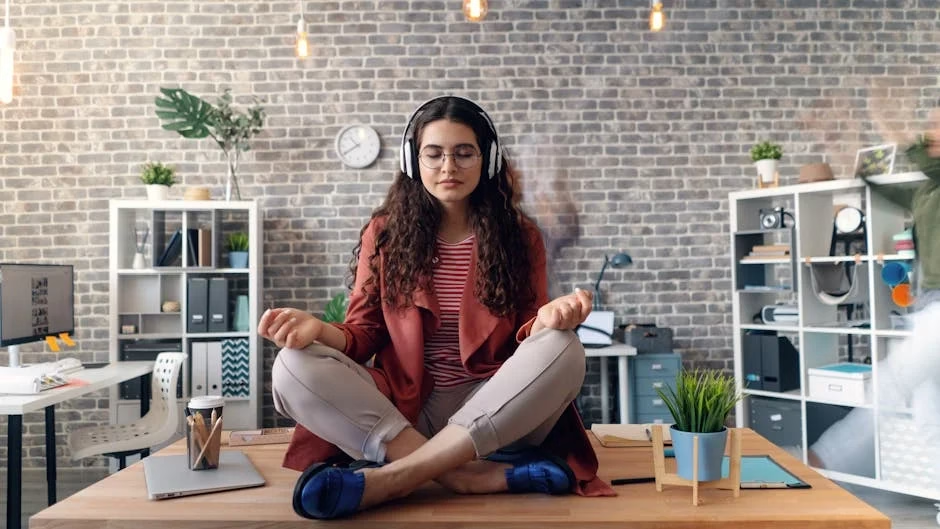
You close your laptop after a long day, and your brain is still running. The to-do list is looping. Your shoulders are somewhere near your ears. You reach for your phone, scroll for twenty minutes, and somehow feel worse.
This is what stress without an exit ramp looks like. And it’s more common than most people realise. What many of us are missing isn’t more rest — it’s a way to actually process what we’re carrying. That’s exactly where creative outlets for stress relief come in, and not in the way you might think.
This post walks you through why creativity works on a body and brain level, how to match the right activity to how you’re actually feeling, and how to get started today — no talent required, no elaborate setup needed.
Relevant blog to read: Meditation for Stress Relief Rewires Brain
Table of contents
The Surprising Reason Creativity Calms You Down
Most people assume creative activities help because they’re a distraction. And yes, being absorbed in something does give your mind a break. But what’s actually happening goes a lot deeper than that.
When you’re stressed, your brain locks into threat mode. It’s scanning for problems, replaying worries, and keeping your body on high alert — heart rate up, muscles tight, breathing shallow. You can’t just think your way out of that state. You need something that works on a different level.
Creative activities do something quite specific: they anchor your attention to the present moment — to colour, texture, rhythm, movement, or the feel of a pen on paper. That sensory focus interrupts the worry loop your brain is stuck in. It’s not that the problems go away. It’s that your nervous system gets a chance to step down from high alert. One mental health professional describes it this way: creativity shifts attention from problem-solving to sensory experience, and that change is often what calms the stress response enough for clearer thinking to return.
Many creative activities can also bring on what psychologists call a flow state — that absorbed, almost effortless feeling where time slips by and you forget to be anxious. Flow isn’t just pleasant. It actively crowds out rumination. There’s simply no mental bandwidth left for worry when you’re genuinely absorbed in making something.
A 2019 World Health Organization scoping review of more than 900 publications found that arts engagement can benefit health across prevention, promotion, and the management of illness — a finding that holds across many different settings and populations. That’s not a small claim. It’s a broad, consistent signal that creativity genuinely moves the needle on wellbeing.
You Don’t Need to Be Good at This
Here’s the thing that stops most adults before they even begin: they think creativity is for people with talent. They tried drawing once, didn’t like what they made, and filed the whole category under “not for me.”
That’s one of the most common — and most unhelpful — misconceptions around creative hobbies for anxiety and stress. The therapeutic benefit has nothing to do with skill level. It comes from the act of engaging, expressing, and focusing. Whether your sketch looks like a masterpiece or a wobbly stick figure is completely beside the point.
In fact, a performance-focused mindset can increase stress rather than relieve it. If your creative activity starts to feel like another thing you can fail at, it’s working against you. The sweet spot is always process over product. You’re not making art for an audience. You’re giving your nervous system something to do that isn’t worrying.
The best stress-relief outlet is rarely the most impressive one. It’s the one you’ll actually do on a Tuesday evening when you’re tired and overwhelmed. Simple, low-friction, low-judgment activities tend to work best — and that’s backed up by what clinicians consistently observe in practice.
Matching the Right Creative Outlet to How You Actually Feel
Not all stress feels the same. Sometimes it’s a racing mind that won’t stop. Sometimes it’s a heavy, tight feeling in your chest. Sometimes it’s emotional fog. Different creative outlets for stress relief suit different states — and choosing the right one for the moment makes a real difference.
- Racing thoughts or anxiety: Try something with a clear structure and gentle repetition — adult colouring books, knitting, simple origami, or tracing patterns. The rhythm is grounding and the steps give your mind something concrete to follow.
- Emotional overload or difficult feelings: Writing or journaling can help enormously here. Getting feelings out of your head and onto paper helps your brain organise and process them, rather than just cycling through them. Try the prompt: What am I actually feeling right now? — and write without editing.
- Physical tension or restlessness: Movement-based creativity is often the most effective route when stress lives in your body. Put on two songs and dance in your kitchen. Do rhythm tapping. Stretch while listening to music you love. You don’t need a choreographed routine — you just need to move.
- Low energy or emotional flatness: Choose the lowest-friction option available. Collage-making, doodling, or even just arranging things visually on a page can feel manageable when bigger projects feel impossible. The bar should be: can I start this in under two minutes?
- Loneliness or disconnection: Social creative activities add an extra layer of relief. A craft night with a friend, a community choir, a local pottery class — these combine the benefits of creativity with genuine human connection, which research consistently links to higher wellbeing and lower loneliness.
Easy Creative Outlets for Adults to Try at Home
You don’t need a studio, a kit, or a free weekend. Some of the most effective mindful creative activities take ten minutes and cost almost nothing. Keep the setup so simple that starting feels possible even on your worst days — because those are exactly the days you need it most.
Here are some genuinely easy activities to relieve stress at home — sorted by how much energy they require:
When You Have Very Little Energy
- Doodling: A pen and any piece of paper. No plan needed. Just let your hand move.
- Colouring: Printable pages are free online, or pick up an adult colouring book. It’s repetitive in the best possible way.
- Freewriting: Set a five-minute timer and write whatever comes. No sentences required. No one will read it.
- Collage: Tear pages from an old magazine and arrange them however you like. There’s something quietly satisfying about making order from chaos.
When You Have a Little More in the Tank
- Cooking or baking something new: Following a recipe gives you structure, a clear endpoint, and something tangible at the finish. The sensory experience — smell, texture, colour — is naturally grounding.
- Gardening or plant care: Tending to living things is one of the oldest forms of mindful creative activity. Even repotting a plant or deadheading flowers can feel restorative.
- Photography walk: Take your phone outside and photograph only things that catch your eye. It trains your attention outward, away from internal noise.
- Simple craft: A candle, a piece of macramé, a handmade card. The internet is full of beginner tutorials for crafts that take under an hour.
How to Make It a Habit That Sticks
One occasional creative session is lovely. But the real benefits — steadier mood, lower baseline anxiety, a greater sense of control — build with consistency. And consistency doesn’t mean hours. It means showing up regularly, even briefly, even badly.
Short daily sessions tend to be more sustainable and more beneficial than long, infrequent ones. Even ten to fifteen minutes can create a meaningful mental shift. The trick is attaching your creative time to something you already do — after work, before bed, while the kettle boils. Don’t give yourself the chance to negotiate. Just start.
A few things that make the habit easier to keep:
- Keep a visible stress-relief kit: A small box with paper, pens, markers, glue, and scissors means zero setup time. When starting is effortless, you’ll actually start.
- Use it as a transition ritual: The gap between work mode and home mode is a powerful place to insert a creative reset. Even ten minutes of doodling or freewriting can help your brain switch gears.
- Remove the pressure of a finished product: You don’t need to make anything shareable, frameable, or impressive. Tear it up afterwards if you want. The value was in the doing.
- Try one social creative activity each week: A hobby group, a class, or even just making something alongside a friend adds connection — and connection is one of the most protective things there is when life feels heavy.
Creativity isn’t a talent test, and it isn’t a luxury. Used regularly and without pressure, it’s one of the most flexible, accessible tools you have for shifting your mental state, processing what you’re feeling, and giving yourself a small but real moment of calm in an otherwise loud day. You already have everything you need to start.
Frequently Asked Questions
The best creative outlet is the one you'll actually do on a hard day. For most people, that means something low-friction and low-pressure — doodling, colouring, freewriting, or dancing to a couple of songs. The activity matters less than the approach: keep it process-focused, skip the self-criticism, and aim for consistency over perfection. Even ten minutes can create a real mental shift.
Creative activities work on two levels at once. They anchor your attention to sensory details — colour, texture, rhythm, movement — which interrupts the worry loops your brain gets stuck in. At the same time, they can bring on a flow state, where your mind becomes genuinely absorbed and stress reactions fade into the background. It's not just distraction — it's a measurable shift in how your nervous system is functioning.
Yes, and the reason is more practical than it sounds. Writing or drawing helps move feelings from inside your head — where they loop and grow — onto something external, where your brain can actually process them. You don't need to write beautifully or draw well. The benefit comes from the act of expressing and externalising, not from the quality of what you make.
Start with anything that has a low setup time and zero skill requirement. Adult colouring books, freewriting with a timer, collage-making from old magazines, doodling, or following a simple recipe all work well. The goal is to find something you can begin within two minutes on your most overwhelmed day — because that's when you need it most and when the bar needs to be lowest.
Short and regular beats long and occasional. Even ten to fifteen minutes a day can build real benefits over time — steadier mood, lower anxiety, a stronger sense of control. Attaching a creative activity to something you already do, like your after-work routine or the time before bed, makes it much easier to keep up consistently without it feeling like another item on your to-do list.
Author’s note
Thank you for taking the time to focus on your well-being and for being your own cheerleader in this journey called life. I truly appreciate you for choosing to invest in yourself today, and I’m honored that you spent a part of your day here. Remember, every small step you take matters, and you’re doing an amazing job. Keep going—you’ve got this!