

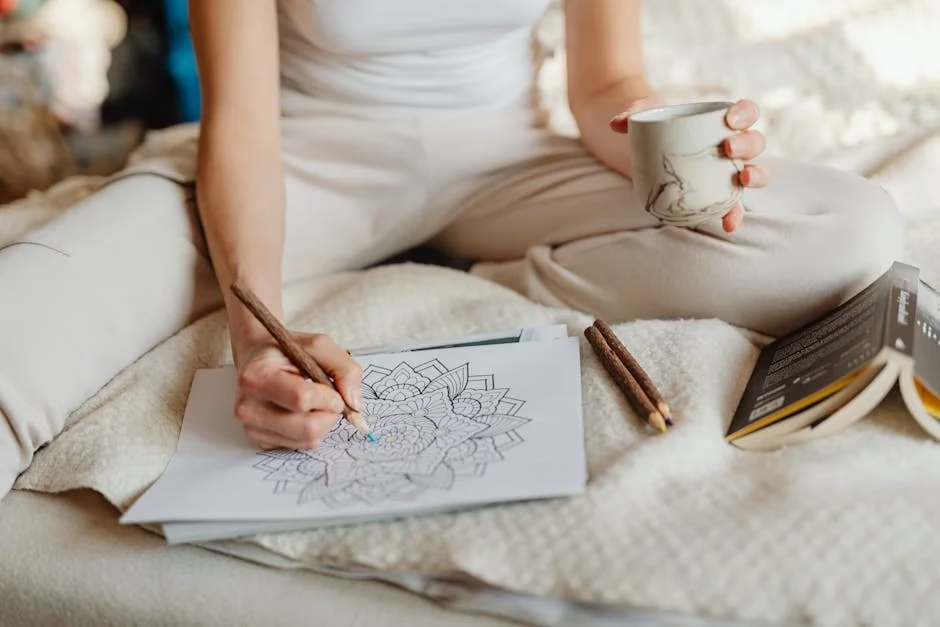
You don’t have to be an artist. You don’t have to be talented. You don’t even have to be good at whatever you try. And yet, picking up a pen, a paintbrush, or even a wooden spoon and making something — anything — can quietly change the way your brain handles stress, setbacks, and the general weight of being human.
Creativity for personal growth isn’t a trendy idea. It’s backed by real research, and it works through specific, understandable mechanisms in your mind and body. What most people miss, though, is the difference between doodling occasionally and using creative practice as an intentional tool for emotional well-being. That difference comes down to three things: practice, planning, and persistence — what researchers call the three Ps.
This post walks you through exactly what those three Ps mean, why creative expression improves mental health in ways that talking sometimes can’t, and how you can start — gently, today — without needing any special skill or equipment.
Relevant blog to read: Positive Affirmations for Emotional Well Being
Table of contents
- The Surprising Truth About Creativity and Your Brain
- Why Creative Expression Improves Mental Health in Ways Talking Can't Always Reach
- The Three Ps: Turning Creative Hobbies Into Real Personal Growth
- The Perfectionism Trap (And How to Step Around It)
- A Simple Way to Start Using Creativity for Personal Growth Today
- Frequently Asked Questions
- Author's note
The Surprising Truth About Creativity and Your Brain
Here’s the thing most people don’t know: creativity isn’t just something you do when you feel good. It’s something that makes you feel better — and the science behind why is genuinely fascinating.
When you get absorbed in a creative activity, your brain slips into something called a flow state. Think of the last time you were so focused on something enjoyable that an hour disappeared without you noticing. That was flow. And research shows that these flow states directly boost mood, strengthen self-esteem, and build a sense of accomplishment that lingers long after you’ve put down whatever you were making.
But there’s more happening underneath the surface. Creative engagement also gives your brain access to a kind of meditative calm — the mental equivalent of finally exhaling after holding your breath all day. Studies have found that regular creative engagement produces measurable improvements in focus and access to these calm, meditative mental states. It’s not magic. It’s your brain doing exactly what it’s built to do when it’s given something absorbing and enjoyable to work on.
The really hopeful part? These benefits don’t depend on how good your creative output is. A stick figure drawing. A terrible first poem. A lopsided loaf of bread. The growth happens in the doing, not the result.
Why Creative Expression Improves Mental Health in Ways Talking Can’t Always Reach
Imagine you’re carrying a feeling you genuinely can’t name. Something heavy and shapeless that sits in your chest when you wake up at 3am. You could try to explain it to someone — but the words just don’t come. That’s not a failure of communication. That’s just how some emotions work. They live in a part of you that language doesn’t quite reach.
This is exactly where creative activities for emotional well-being become something more than a nice idea. Visual art, movement, music, and writing access emotional material through a different door entirely. You might not be able to say how you feel, but you might be able to paint it, or move it out of your body through dance, or let it shape a piece of writing without quite knowing why you chose those words.
Mental health professionals increasingly recognise creative expression as an evidence-based tool for emotional regulation — particularly for people who process emotions non-verbally, or who find traditional talk-based approaches difficult. Using art and writing for personal development isn’t a soft alternative. It’s a genuinely different pathway to the same destination: understanding yourself better and feeling more in control of your inner world.
- Writing: Helps verbal processors untangle complicated thoughts and emotions by externalising them onto a page, making the invisible visible.
- Visual art: Gives form to feelings that don’t have words — particularly useful when emotions feel too big or too vague to articulate.
- Movement and dance: Processes emotion through the body, releasing tension that can get physically stored in muscles and posture.
- Music: Engages both emotional and logical parts of the brain simultaneously, making it especially effective for mood regulation.
- Cooking and making: Grounds you in sensory, present-moment experience — a gentle form of mindfulness that doesn’t require you to sit still.
The key is choosing what genuinely suits you, not what you think you should be doing. The mental health benefits multiply when the activity feels intrinsically rewarding rather than like another item on your to-do list.
The Three Ps: Turning Creative Hobbies Into Real Personal Growth
This is where creativity shifts from something pleasant into something genuinely transformative. A poll of more than 140 creativity researchers identified perseverance and resilience — the qualities built through consistent, effortful creative practice — as the single most important ingredient in creative achievement. Not talent. Not inspiration. Persistence.
The three Ps give that persistence a structure you can actually use.
Practice: Show Up, Even for Five Minutes
Consistency matters more than duration. A daily five-minute creative habit builds more than an occasional two-hour session. Why? Because your brain learns through repetition. Each small creative session reinforces neural pathways, builds confidence quietly in the background, and makes the next session slightly easier than the last.
You don’t need to produce anything worthwhile. You just need to show up. Set a specific time, choose a specific modality — even if it’s just free-writing three sentences in a notebook before bed — and protect that small window as though it matters. Because it does.
Planning: Make It Intentional, Not Accidental
Creativity for personal growth works best when it has gentle intention behind it. This doesn’t mean rigid schedules or performance targets. It means asking yourself occasionally: what am I hoping to explore or understand through this?
You could decide to use creative time specifically to process a particular emotion you’ve been carrying. Or to practice sitting with imperfection. Or simply to try something new each week — a different medium, a different subject, a different time of day. Planning transforms creative activity from passive leisure into an active tool for self-development.
Persistence: Learn to Love the Difficult Bit
Here’s what nobody tells you about creative practice: the frustrating moments are where most of the growth actually lives. When a drawing doesn’t look right, when the words won’t come, when you’ve tried the same chord progression four times and it still sounds wrong — that friction is your brain building resilience, problem-solving skills, and adaptability.
The low-stakes environment of creative work makes it a safe place to practice failing. And that practice transfers. The patience you build sitting with a difficult creative problem — the willingness to stay when everything in you wants to close the notebook and scroll something mindless instead — that’s exactly what you’ll draw on when life gets genuinely hard. Creativity and resilience building aren’t two separate things. They happen at the same time, through the same frustrating, worthwhile process.
The Perfectionism Trap (And How to Step Around It)
Perfectionism is the single biggest barrier between most people and a meaningful creative practice. The voice that says this isn’t good enough before you’ve even begun. The comparison to other people’s finished, polished work. The sense that if you can’t do it well, there’s no point doing it at all.
That voice is lying to you. And here’s a practical way to quiet it.
Give yourself explicit permission to make something bad. Not just okay — genuinely, deliberately bad. Write the worst poem you can. Draw the most lopsided face imaginable. Cook something experimental that might be awful. When your goal is imperfection, perfectionism has nothing to grab onto. And something interesting tends to happen: once you remove the pressure of quality, you often end up more absorbed, more honest, and more genuinely creative than when you were trying hard to get it right.
Reframing creative practice as play rather than performance is one of the most effective creative self-care practices for mental health you can adopt. It’s free. It’s available right now. And it works.
A Simple Way to Start Using Creativity for Personal Growth Today
You don’t need to overhaul your life or buy anything new. Here’s a gentle structure that takes the guesswork out of beginning.
- Pick one modality that feels even slightly appealing. Writing, drawing, cooking, moving, making playlists — anything counts. Low barrier to entry is a feature, not a shortcut.
- Commit to five minutes a day for one week. Set a reminder. Keep your materials somewhere visible. Five minutes is genuinely enough to begin building the habit.
- Direct it toward something you’re feeling. Before you start, take one breath and ask: what’s sitting with me right now? Let your creative time be a response to that, even loosely.
- Track growth, not output. At the end of each week, jot down one emotional insight you had, one small problem you navigated, or one moment you chose to keep going despite frustration. These are your real results.
- Feed your creative mind with new experiences. Actively seek out something unfamiliar each week — a different genre of book, a walk in a new place, a conversation with someone whose perspective differs from yours. New experiences create new neural pathways and directly fuel creative thinking.
Growth doesn’t always feel dramatic when it’s happening. But look back after a month of this gentle, intentional practice and you’ll likely notice something has shifted — not just in what you’re making, but in how you’re handling everything else.
Frequently Asked Questions
Creative activities trigger flow states in the brain — those absorbing moments where time disappears — and research shows these directly boost mood, self-esteem, and a sense of accomplishment. Creativity also gives emotions a non-verbal outlet, which is especially helpful when feelings are too big or shapeless to put into words. Over time, regular creative practice builds resilience, focus, and a calmer relationship with your own inner world.
Many people find that creative practice genuinely eases anxiety and low mood — not by fixing the cause, but by giving the brain something absorbing to focus on and providing a safe outlet for difficult emotions. Mental health professionals recognise creative expression as a legitimate tool for emotional regulation, particularly for people who find talking about feelings difficult. It works alongside other support, not instead of it.
The best creative activity is the one that matches how you naturally express yourself. Writing tends to suit people who think in words. Visual art works well for those who feel emotions as images or colours. Movement and dance are powerful for people who carry tension physically. There's no single right answer — experiment with a few and notice which one makes you feel most present and least self-conscious.
Consistency matters more than duration. Even five to fifteen minutes of creative practice daily produces compounding benefits over time — more than one long session once a week. The goal isn't to produce impressive work; it's to show up regularly enough that your brain builds the habit and confidence that come with creative practice. Start small and protect that time like it matters.
Not even slightly. This is one of the most common myths about creative practice, and it genuinely holds people back. The personal growth benefits of creative engagement have nothing to do with the quality of what you produce. A poll of over 140 creativity researchers found that persistence — not talent — is the primary ingredient in creative achievement. The benefits belong to anyone willing to show up and try.
How Creativity for Personal Growth Builds Long-Term Resilience
The real gift of a regular creative practice isn’t the finished painting or the tidy journal page — it’s what it quietly teaches your nervous system. Every time you sit with a messy first draft, tolerate an ugly middle stage, and keep going anyway, you rehearse the exact skill that stress recovery depends on: staying present with discomfort instead of fleeing it. Over months, that rehearsal shows up everywhere, from difficult conversations to setbacks at work.
Researchers who study flow and mindful attention describe a similar effect, and you can read more about the overlap in our piece on the science of meditation and the brain. A few small habits make the resilience stick:
- Keep the bar low — five honest minutes beats a perfect hour you never start.
- Notice the feeling, not just the output: calmer, more absorbed, less reactive.
- Let ‘bad’ work count. Finishing something imperfect is the resilience rep.
Author’s note
Thank you for taking the time to focus on your well-being and for being your own cheerleader in this journey called life. I truly appreciate you for choosing to invest in yourself today, and I’m honored that you spent a part of your day here. Remember, every small step you take matters, and you’re doing an amazing job. Keep going—you’ve got this!

One Comment