You already know exercise is supposed to help with stress. You’ve known that for years. And yet, on the days when stress is at its worst, the idea of lacing up your trainers and pushing through a hard session feels like one more thing to fail at. So you skip it. The stress stays. And somehow that feels like your fault too.
Here’s the thing — and this genuinely changes the picture — the research suggests you don’t need a punishing workout to feel better. The most effective exercise for stress relief might be far gentler, and far more doable, than anything you’ve been imagining. A 10-minute walk after lunch. A few slow stretches before bed. Movement that feels almost too easy to count.
This post walks you through what the science actually says, why gentle movement works so well on stressful days, and how to build the kind of simple routine that fits into real life — not just the good days.
Relevant blog to read: Do Women Need More Sleep Than Men
Table of contents
The Surprising Truth About Intensity and Stress
Most people assume that stress relief requires effort. That you need to sweat, push, burn — and then you’ll feel better. But that assumption may be quietly getting in the way.
A 2023 study published in Nature Scientific Reports tracked people’s movement and stress levels across real days. The researchers found that light physical activity — not vigorous exercise — was associated with feeling less stressed in the evening. Even more striking, light activity helped buffer the emotional impact of stressful events, meaning people who moved gently during the day felt the weight of difficult moments less heavily by night.
That’s worth sitting with for a moment. On your hardest days, a gentle walk might actually do more for your stress than a high-intensity session would.
This doesn’t mean intense exercise is bad for you — it has its own benefits. But when the goal is emotional recovery, not fitness performance, the bar is much lower than most of us have set it. That’s genuinely good news.
What Exercise Actually Does to a Stressed Body
Stress isn’t just a feeling. It’s a full-body event. When something worries or pressures you, your body releases stress hormones, your muscles tighten, your breathing gets shallower, and your mind starts looping through problems. Movement interrupts that cycle — not just distracts from it, but physically interrupts it.
Exercise works through several pathways at once, which is part of why it’s so consistently helpful:
- Endorphin release: Physical activity triggers your brain to release endorphins — natural chemicals that genuinely lift your mood. This is real, measurable, and doesn’t require a long workout to kick in.
- Lower stress hormones: Movement helps your body process and reduce the stress hormones that have been building up — giving your nervous system a chance to come down from high alert.
- Muscle tension release: Stress lives in the body as tightness — in your shoulders, your jaw, your chest. Even gentle movement begins to soften that.
- Distraction from rumination: When you’re walking or stretching, your attention shifts. You’re not solving the problem, but you’re breaking the loop — and that alone can lower the intensity of stress.
- Better sleep over time: Regular movement improves sleep quality, and poor sleep is one of the biggest things that makes stress feel unmanageable. It’s a slow but powerful effect.
- Stronger stress resilience: Over time, regular exercise may help you recover faster after difficult moments. Research suggests that people who move regularly tend to experience smaller drops in positive mood when stress hits — not because life gets easier, but because the body gets better at bouncing back.
Each of these works together. That’s why even 10 minutes of movement can shift how you feel — it’s not one thing changing, it’s several things shifting at once.
Timing Matters More Than You Think
You know that feeling when you’ve had a grinding day and by 7pm your whole body feels heavy and your mind won’t stop replaying everything that went wrong? A lot of that is the cumulative stress load from hours of sitting, worrying, and pushing through without a break.
The 2023 Nature Scientific Reports research points to something practical here: physical activity during the day is linked to feeling less stressed in the evening. That means the timing of your movement matters — not just whether you do it.
A short walk after lunch, a few minutes of stretching between meetings, or even standing up and moving around after a difficult phone call — these aren’t just nice ideas. They’re small interventions that may genuinely reduce how much stress accumulates before your day ends.
You don’t have to carve out a full hour. You just have to move a little, a few times, before the stress has fully stacked up.
The Best Exercise for Stress Relief Is the One You’ll Actually Do
This might be the most honest thing in this entire post: the best exercise for stress relief is the one you’ll come back to on a Tuesday when you’re exhausted, running late, and the last thing you want to do is exercise.
Public health guidance from both the Mayo Clinic and the American Heart Association is clear that even brisk walking counts. Walking for stress relief is not a compromise — it’s a legitimate, well-supported tool. So is yoga, light cycling, gentle stretching, dancing alone in your kitchen, or a slow walk around the block without your phone.
Here are some low-pressure ways to make movement a real part of managing stress:
- The after-lunch walk: Even 10 minutes outside after eating can interrupt the afternoon stress build-up before it starts. It doesn’t need to be brisk — just moving.
- The reset walk: After a difficult conversation, a hard meeting, or a long screen session, step outside or move around your home for 5 minutes. Use it as a physical full stop before the next thing.
- Three short walks instead of one long one: If a 30-minute workout feels impossible on a stressful day, three 10-minute walks give you the same benefit. Breaking it up makes it easier to actually happen.
- Mind-body movement: Yoga and progressive muscle relaxation are especially useful because they target both physical tension and mental stress at the same time. Harvard Health notes that progressive muscle relaxation takes roughly 12 to 15 minutes per session and can bring noticeable relief within about two weeks of regular practice.
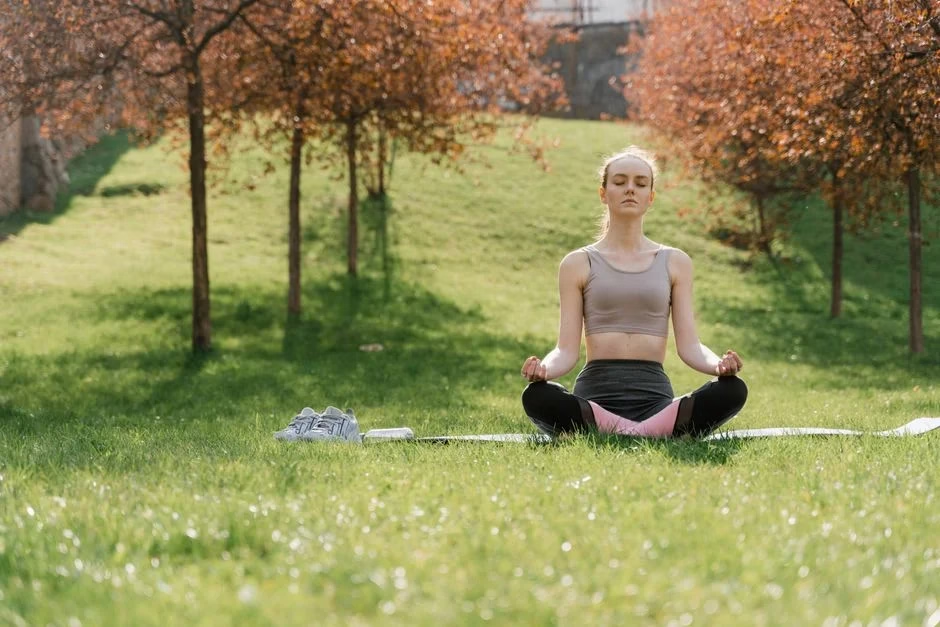
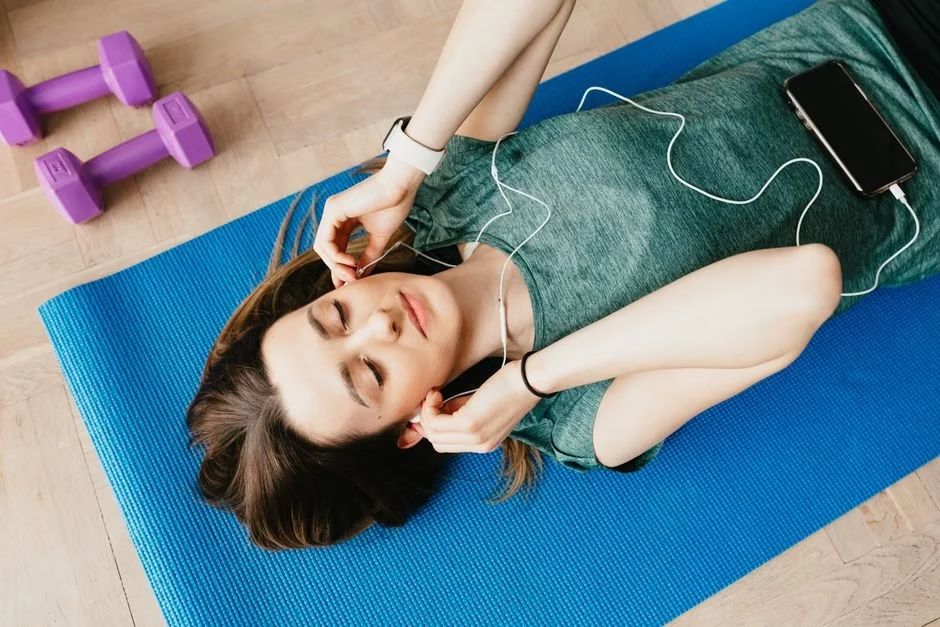
- Stress relief workouts at home: You don’t need a gym. Gentle yoga videos, slow stretching routines, or even a few minutes of intentional deep breathing combined with movement are all valid options — especially on days when leaving the house feels like too much.
The goal here isn’t fitness. It’s regulation. You’re not trying to prove anything or hit a target. You’re trying to help your nervous system settle — and gentle, consistent movement is one of the most effective ways to do that.
What to Try When Stress Feels Overwhelming Right Now
Sometimes stress doesn’t feel like something you can plan around. It ambushes you. Your chest goes tight, your thoughts start piling on top of each other, and the idea of following any kind of structured advice feels almost offensive — like being handed a leaflet when your house is on fire.
On those days, try this:
- Start with just 5 minutes of easy movement. Walk slowly around your home, do gentle shoulder rolls, or stretch your arms above your head. The bar is deliberately low — because the point is to start, not to perform.
- Pay attention to your body, not your output. Notice where you’re holding tension. Let the movement be about softening that, not burning energy.
- Pair it with slow breathing. If you breathe out for longer than you breathe in — even a 4-count in and a 6-count out — your nervous system begins to slow down. Movement and breath together work faster than either one alone.
- Don’t wait until you feel ready. The shift in how you feel often comes during or after the movement, not before it. You’re unlikely to feel motivated first — and that’s completely normal.
Stress is heavy. You’re not being dramatic, and you’re not weak for finding it hard to manage. But here’s something worth holding onto: you don’t need to fix everything tonight. You just need to get up, move for five minutes, and let your body remember that it knows how to come down from this. It does. It just needs the chance.
How to Fit Stress-Relieving Movement Into a Busy Day
One of the biggest myths about exercise for stress relief is that it needs a dedicated block of time you rarely have. In reality, the nervous system responds to short, frequent bursts of gentle movement just as well — often better, because you’re far more likely to actually do them. The goal isn’t to carve out an hour; it’s to scatter tiny doses of movement through the day.
- Take a two-minute stretch or walk between tasks to discharge built-up tension.
- Use everyday moments — stairs, a walking phone call, pacing while the kettle boils.
- Try a slow, five-minute wind-down walk in the evening to signal safety to your body.
- On your hardest days, aim for the smallest possible version — a single lap of the room still counts.
When even light movement feels like too much, it often helps to pair it with a calming practice you can do anywhere. Our roundup of creative outlets for stress relief offers gentle, low-pressure ways to release stress that sit beautifully alongside a little daily movement.
Frequently Asked Questions
The best exercise for stress relief is honestly the one you'll do consistently. Walking, light yoga, gentle stretching, and even slow cycling are all well-supported options. Research suggests light physical activity can be especially effective on stressful days — so you don't need an intense workout. What matters most is that the movement feels manageable enough to repeat, even on your hardest days.
Yes — walking for stress relief is one of the most well-supported tools available. It lowers stress hormones, releases mood-lifting endorphins, breaks the mental loop of worry, and helps your body physically come down from high alert. A short walk after lunch or following a difficult moment can make a meaningful difference, even if it only lasts 10 minutes.
They can. You don't need a long session to feel the benefit. Even 5 to 10 minutes of gentle movement can shift tension, interrupt anxious thinking, and begin to lower your body's stress response. If a full workout feels impossible on a hard day, breaking it into smaller chunks — like three 10-minute walks — is a genuinely effective alternative.
Both are effective, and the better choice depends on what you'll actually do. Walking is easy to slot into any day and works quickly to reduce stress hormones. Yoga and progressive muscle relaxation go a step further by targeting physical tension and calming the mind at the same time. Many people find that combining both — a short walk plus a few minutes of stretching — works better than either alone.
Less than most people think. General guidance suggests 150 minutes of moderate activity per week, but research shows even small amounts help. Daytime movement in short bursts — a 10-minute walk here, a few minutes of stretching there — is associated with feeling calmer by evening. Consistency over time matters more than the length of any single session.
Author’s note
Thank you for taking the time to focus on your well-being and for being your own cheerleader in this journey called life. I truly appreciate you for choosing to invest in yourself today, and I’m honored that you spent a part of your day here. Remember, every small step you take matters, and you’re doing an amazing job. Keep going—you’ve got this!