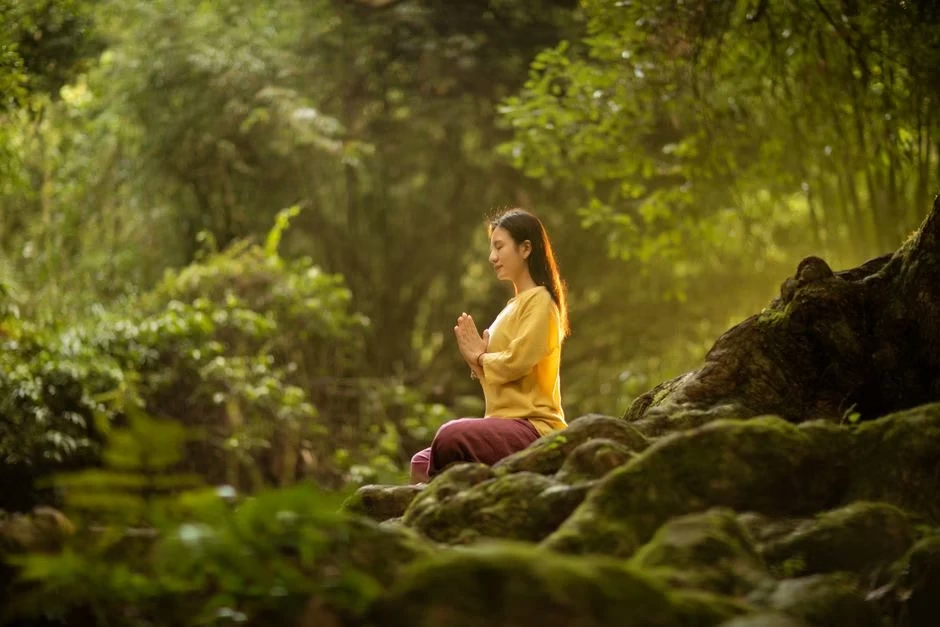
You’re walking through a park, or washing the dishes, or just sitting quietly — and something shifts. The world feels more vivid than usual. You feel a strange sense of connection, like everything is somehow joined up. Your usual worries go quiet for a moment, and underneath them, there’s something that feels like peace.
That experience has a name. Many people call these spiritual awakening signs — and they’re more common than you might think. What’s less commonly talked about is what it actually means, why it can sometimes feel frightening, and how to know whether what you’re going through is a beautiful expansion or something that needs a little more support. This post walks you through all of it, grounded in real psychological research, with no jargon and no assumptions about your beliefs.
By the end, you’ll have a much clearer picture of the spiritual awakening signs to look for, what the process can feel like over time, how it connects to mental health, and — most importantly — how to look after yourself through it.
Relevant blog to read: Emotional Dysregulation is Real Why You Feel So Much So Fast
Table of contents
- What a Spiritual Awakening Actually Feels Like
- Where These Experiences Come From
- The Spiritual Awakening Process: It's Not One Moment
- Spiritual Awakening and Mental Health: Knowing the Difference
- How to Support Yourself Through a Spiritual Awakening
- Common Myths About Spiritual Awakening Signs
- Frequently Asked Questions
- Author's note
What a Spiritual Awakening Actually Feels Like
The word “awakening” can sound dramatic — like a lightning bolt moment that changes everything in an instant. But research tells a quieter story. Psychologists and transpersonal researchers describe spiritual awakening as a shift in awareness, not necessarily a single explosive event. It can arrive gradually, almost gently, across weeks or months.
- Heightened presence: Ordinary moments — a cup of tea, the sound of rain — feel unusually rich or meaningful.
- Expanded compassion: You find yourself feeling more empathy for people, even strangers. Cruelty feels harder to witness. Kindness feels more instinctive.
- Altered sense of time: The usual rush of the day slows down. Past and future feel less pressing. Right now feels more real.
- Inner quiet: That constant mental chatter — the to-do lists, the self-criticism, the low-level anxiety — softens or pauses.
- A sense of deeper meaning or unity: Things that used to feel random start to feel connected. You may find yourself thinking about what really matters to you.
- Shifts in what you value: Ambitions or habits that once felt essential may suddenly feel hollow. New priorities surface.
These spiritual awakening symptoms don’t require any particular belief system. A 2017 review by the British Psychological Society, which examined 90 documented awakening experiences, found that the most significant after-effect was a greater sense of trust, confidence, and optimism — not a dramatic religious conversion, just a quieter, more grounded relationship with life.
So if you’ve been wondering how to know if you’re spiritually awake, the signs are less about visions and more about a changed quality of attention — the way you notice, feel, and relate to the world around you.
Where These Experiences Come From
Here’s something worth knowing: you don’t need to be in a monastery or doing anything extraordinary for a spiritual awakening to begin. The same British Psychological Society review found that around a quarter of awakening experiences happened in natural surroundings — just being outdoors, noticing trees or light or open sky. The third most common trigger, at a similar frequency, was spiritual practice like meditation, prayer, yoga, or tai chi.
That’s worth pausing on. These experiences can start in the middle of a forest walk, a quiet yoga class, or even while you’re making art or listening to music. They don’t require a dramatic life crisis or a particular set of beliefs.
Neuroscience offers some tentative ideas about why this happens. Researchers suggest that these experiences may involve shifts in the brain networks that normally keep our sense of self tightly bounded — the parts that maintain a firm distinction between “me” and “everything else”. When those networks become less dominant, even briefly, perception can feel unusually open, vivid, or unified. This doesn’t reduce the experience to “just” brain chemistry. It simply helps explain why an ordinary afternoon in a garden can sometimes feel quietly extraordinary.
The Spiritual Awakening Process: It’s Not One Moment
One of the most reassuring things psychology tells us about the spiritual awakening process is this: it’s a journey, not a destination. That initial shift in awareness — however it arrives — is really just the beginning. What happens next, and how grounded and meaningful the experience becomes, depends almost entirely on integration.
Integration simply means weaving what you’ve experienced into your actual daily life. Not performing it. Not turning it into a personality. Just letting it quietly change the way you move through ordinary things — how you speak to people, what you’re willing to waste time on, what you can no longer pretend doesn’t matter to you.
Research-informed models of the awakening process describe something like this path:
- A shift in perception: Something changes in how you see yourself or the world. It may feel sudden or it may creep in slowly.
- A period of disorientation: Old beliefs, habits, and identities may feel shaky. This is normal. It can feel uncomfortable before it feels freeing.
- Reflection and meaning-making: You begin to understand what the experience means to you — through journaling, conversation, or simply sitting with it.
- Grounding and stabilisation: Ordinary routines, sleep, movement, and connection with others help the experience settle into something stable and useful.
- Lasting change: Over time, the shift becomes part of how you live — in the choices you make, the care you give, and the way you relate to yourself.
The disorientation phase is the one that catches people off guard. If you’ve felt a little unmoored — like the life you built no longer quite fits — that’s not a sign something has gone wrong. It can be a sign that something is shifting and hasn’t found its new shape yet. That’s uncomfortable, but it’s part of the process.
Spiritual Awakening and Mental Health: Knowing the Difference
This is the part that matters most, and it’s worth being really honest about. Spiritual awakening and mental health are genuinely connected — not because awakening is a mental illness, but because intense experiences of any kind affect our minds, our sleep, and our sense of self. The key question isn’t whether something unusual is happening. It’s whether you’re still functioning, sleeping, and feeling basically safe.
Psychologists and clinicians who work in this area draw a clear line between two different things:
- A spiritually significant experience: You feel a shift in awareness, maybe some emotional intensity, possibly some confusion about who you are or what matters. But you can still sleep reasonably well, engage with people you care about, carry out daily responsibilities, and you don’t feel afraid of yourself or others.
- An experience that needs professional support: The intensity doesn’t settle. Sleep becomes severely disrupted for more than a few days. You notice paranoia, grandiosity (a strong belief that you have a special mission or power), confusion about what’s real, or you’re making decisions that put you or others at risk.
These two things can look similar from the outside, and even from the inside. Which is exactly why it matters to have at least one person in your life who knows what you’re going through — not to explain it away, but to be a second pair of eyes when you’re too deep inside the experience to see it clearly.
Spiritually intense experiences are not automatically a sign of illness. But they deserve to be explored with care, not just excitement.
How to Support Yourself Through a Spiritual Awakening
If you’re in the middle of the spiritual awakening process and it feels big, here are some genuinely useful ways to look after yourself. These aren’t about dampening the experience — they’re about giving it the best possible chance to become something lasting and good.
- Protect your sleep: This one matters more than almost anything else. Poor sleep intensifies unusual perceptions and makes integration much harder. Treat rest as non-negotiable.
- Keep a simple journal: Just a few lines each day — how you slept, how you felt, what you noticed. This helps you spot meaningful patterns and also catches any signs that things are becoming too intense.
- Use grounding practices: When things feel overwhelming, simple physical routines help — walking outside, stretching, slow breathing, a warm meal. Your body is an anchor.
- Stay connected to ordinary life: Meals, work, chores, conversations with people you love. These aren’t interruptions to your awakening — they’re the ground it needs to grow in.
- Spend time in nature: Research consistently links natural settings with these kinds of experiences. Even a short walk can help integrate and settle what you’re feeling.
- Talk to someone you trust: A friend, a counsellor, or a therapist who can listen without judging or over-explaining. You don’t need someone with all the answers — just someone who can sit with you in the question.
- Pause and seek evaluation if needed: If you notice severe insomnia lasting more than a few days, paranoia, confusion about what’s real, or any behaviour that feels out of control, please reach out to a mental health professional. That’s not failure — it’s wisdom.
The most grounded, deeply changed people who come through a spiritual awakening aren’t the ones who chased the experience furthest. They’re the ones who took it slowly, stayed curious, and kept one foot on the earth while the other explored something wider. That balance is available to you too.
Common Myths About Spiritual Awakening Signs
There’s a lot of noise around this topic, and some of it can leave you feeling like you’re either doing it wrong or not doing it at all. Clearing up a few common misconceptions makes the whole experience far less confusing — and a lot less lonely.
- Myth: A spiritual awakening is always blissful. In reality, many of the most genuine spiritual awakening signs arrive alongside grief, restlessness, or a period of feeling unmoored. Discomfort doesn’t mean something has gone wrong.
- Myth: It happens in a single dramatic moment. For most people it unfolds slowly, in quiet layers, over months or years.
- Myth: You need a special teacher or tradition. Awakening can begin anywhere — in nature, in stillness, or in the middle of an ordinary Tuesday.
- Myth: Once it starts, life becomes effortless. Old patterns still surface. The difference is how you meet them.
If any of this resonates, be gentle with yourself. Learning to name and sit with intense feelings is part of the work — something we explore more in how to talk about mental health.
Frequently Asked Questions
The most common spiritual awakening signs include a heightened sense of presence, expanded compassion for others, a quieter inner world, altered perception of time, and a feeling that everyday life carries deeper meaning. These shifts can be subtle and gradual rather than dramatic. A 2017 British Psychological Society review found that greater trust, confidence, and optimism were the most reported after-effects of awakening experiences.
No — they are not the same, though they can sometimes overlap in ways that deserve careful attention. A spiritual awakening typically preserves your ability to function, sleep, and stay connected to reality. If an intense experience is accompanied by severe insomnia, paranoia, confusion about what's real, or risky behaviour, those are signs worth discussing with a mental health professional — not because the experience isn't real, but because you deserve proper support.
There's no single answer, because a spiritual awakening is better understood as a process than a single event. The initial shift in awareness might last hours or days, but the deeper changes — in values, perception, and how you relate to others — can unfold over months or even years. How long it takes often depends on how actively you integrate the experience into your daily life through reflection, grounding, and connection.
Yes, it can. Research reviewed by the British Psychological Society identified meditation, prayer, yoga, and tai chi as among the most common triggers for awakening experiences — roughly as frequent as contact with nature. This doesn't mean meditation is risky. For most people it's a gentle, supportive practice. If meditation ever feels too intense or destabilising, simply slow down the practice and spend more time on grounding activities like walking or gentle stretching.
Start by grounding yourself in the basics — sleep, regular meals, movement, and time outdoors. Keep a short daily journal to track how you're feeling. Talk to someone you trust who can listen without judgment. If the intensity doesn't settle, or if you notice severe sleep disruption, paranoia, or confusion about what's real, reach out to a mental health professional. Getting support doesn't diminish the experience — it helps you carry it well.
Author’s note
Thank you for taking the time to focus on your well-being and for being your own cheerleader in this journey called life. I truly appreciate you for choosing to invest in yourself today, and I’m honored that you spent a part of your day here. Remember, every small step you take matters, and you’re doing an amazing job. Keep going—you’ve got this!