

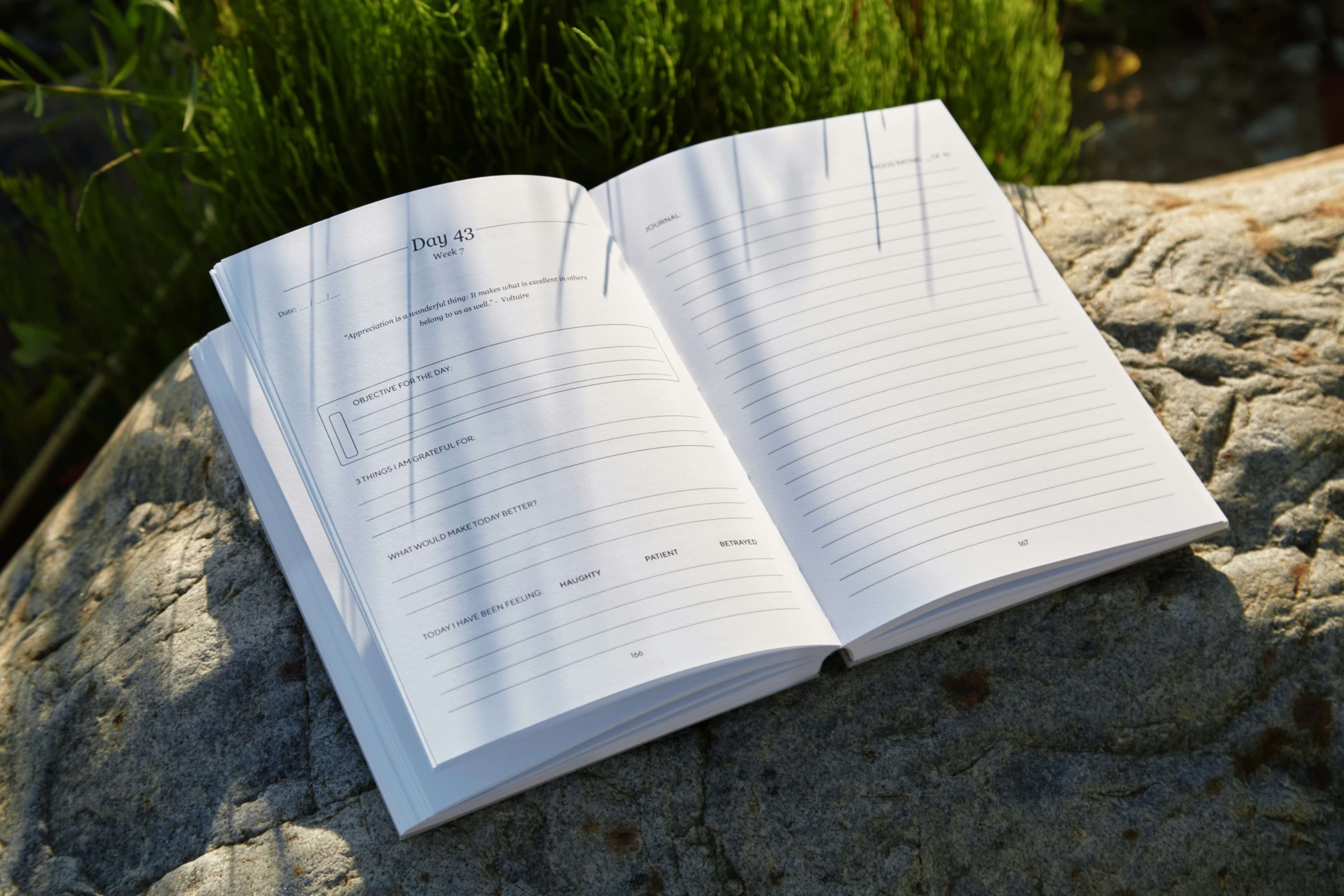
In the journey toward emotional well-being, our most powerful tools are often the simplest ones. They are the intentional words we speak to ourselves and the quiet moments we spend reflecting on our inner world. While journaling and affirmations are powerful on their own, when used together, they create a synergistic toolkit that can profoundly accelerate the healing process. Affirmations plant a positive seed in the mind, and journaling provides the fertile ground for that seed to grow and flourish.
This blog is your comprehensive guide to unlocking the combined power of journaling and affirmations. We’ll explore how these two practices work in tandem, provide a clear framework for combining them, and offer real-world examples for different age groups.
Relevant blog to read: Unlock Your Worth: How Journaling for Self-Esteem Builds Unshakeable Confidence
How Journaling + Affirmations Create a Powerful Toolkit
Think of your mind as a garden. Without conscious effort, weeds (negative self-talk and past hurts) can take over.
- Affirmations Are the Seeds: An affirmation is a positive statement you repeat to yourself. It’s the “seed” you plant in your mind’s garden. A phrase like, “I am worthy of peace,” is a small, intentional act of nurturing.
- Journaling Is the Soil: Journaling is the process of tilling the soil. It’s where you uproot the weeds of negative thought patterns and emotional blockages, creating a safe space for the seeds of affirmation to grow.
The power of combining them lies in this simple cycle: affirmations tell you what you want to believe, and journaling helps you explore and process the emotions that prevent you from believing it. This is how you transform a simple phrase into a deeply held truth.
Relevant blog to read: New Week Affirmations: Start Fresh with Positivity, Purpose & Power
A Step-by-Step Guide
Here is a simple, actionable guide for combining these two practices.
- Morning: Plant the Seed (Affirmations)
- Start your day by choosing one affirmation that resonates with you.
- Repeat it silently or out loud three to five times.
- Example: “I am safe and secure,” or “I am worthy of love.”
- How it helps: This sets a positive tone for your day and primes your mind for a new, healthier narrative.
- Evening: Till the Soil (Journaling)
- End your day by taking 10 minutes to journal.
- Write down any resistance you feel to your affirmation. Did a part of your mind say, “No, you’re not safe”?
- Explore why that resistance is there. What happened today that made you feel unsafe? What old memory does it remind you of?
- How it helps: Journaling provides a safe space to process and release the emotions that affirmations might trigger, preventing them from being buried.
- Throughout the Day: Nurture the Garden (Mindfulness)
- Use a mindful break to come back to your affirmation.
- If you feel overwhelmed, take three deep breaths and repeat your affirmation.
- How it helps: This reinforces your new belief, training your mind to use a compassionate mantra instead of a negative thought pattern.
Journaling + Affirmations in Action: Examples
The synergy of these two practices can be applied to a wide range of emotions and challenges.
1. For a Teenager Struggling with Self-Worth
- Affirmation: “I am a kind and worthy person.”
- Journal Prompt: “What happened today that made me feel unworthy? How would I speak to a friend who was feeling this way?”
- How it works: The affirmation reinforces self-worth, and the journaling helps them process the specific event that caused them to feel otherwise.
Relevant blog to read: 100 Journaling Prompts for the Sunny Season
2. For a Professional Experiencing Burnout
- Affirmation: “I am allowed to rest without guilt.”
- Journal Prompt: “What does ‘rest’ look like for me, and what is one small thing I can do this week to honor my need for it?”
- How it works: The affirmation gives them permission to rest, and the journaling helps them turn that permission into a practical, actionable plan.
3. For a Parent Overwhelmed by Guilt
- Affirmation: “I am doing my best, and that is enough.”
- Journal Prompt: “What guilt am I holding onto today? What is the story behind this guilt, and what would a compassionate parent say to me right now?”
- How it works: The affirmation directly addresses their guilt, and the journaling helps them process its source and find a kinder inner voice.
4. For Someone Healing a Past Hurt
- Affirmation: “I am ready to release this pain.”
- Journal Prompt: “What am I still holding onto from [the past event]? What is this resentment costing me, and what would my life look like if I was free from it?”
- How it works: The affirmation creates an intention to let go, and the journaling provides a safe space to process and release the resentment.
Common Mistakes to Avoid
When you first pair journaling and affirmations for healing, it is easy to slip into habits that quietly blunt the benefits. None of these mistakes are serious, and all of them are easy to correct once you notice them. Keeping an eye out for these patterns helps the practice stay honest, gentle, and genuinely restorative.
- Writing affirmations you do not believe yet: if “I am confident” feels false, soften it to “I am learning to trust myself,” so your mind can accept it.
- Rushing the journaling: a few unhurried sentences beat a page written on autopilot; let yourself actually feel what you write.
- Only writing on hard days: steady, everyday practice builds the emotional foundation, much like a regular morning affirmations ritual.
- Judging your own words: your journal is not an audience; messy, honest entries heal more than polished ones.
- Expecting overnight change: emotional healing is cumulative, and small daily deposits add up over weeks, not minutes.
Give yourself permission to be imperfect here. The point is not a beautiful notebook. It is a kinder, more honest relationship with yourself.
Final Thoughts: Your Journey Inward
The most profound changes in life often begin with the quietest of acts. The combination of journaling and affirmations is a simple yet revolutionary way to heal emotional wounds, reduce stress, and build a foundation of mental and emotional resilience. By consistently nurturing your inner garden, you are not just managing your mental health; you are actively shaping a future of greater peace, clarity, and purpose.
Frequently Asked Questions
A. Affirmations plant a positive narrative, and journaling provides a space to explore and anchor that narrative in your own life experience, making it more authentic and powerful.
A. Consistency is more important than frequency. Aim for a few minutes of affirmations in the morning and a few minutes of journaling at night.
A. That’s okay. The goal is not instant belief, but consistent repetition. Your subconscious mind will gradually absorb the message, even if your conscious mind is skeptical.
A. Yes. Journaling is a safe, private space to process pain. It externalizes the feeling, which can make it feel less overwhelming and give you a new perspective.
A. No. While they are powerful tools for self-help, they are not a substitute for professional therapy for trauma or deep-seated issues. They are excellent complementary practices.
Author’s note
Thank you for taking the time to focus on your well-being and for being your own cheerleader in this journey called life. I truly appreciate you for choosing to invest in yourself today, and I’m honored that you spent a part of your day here. Remember, every small step you take matters, and you’re doing an amazing job. Keep going—you’ve got this!




2 Comments