

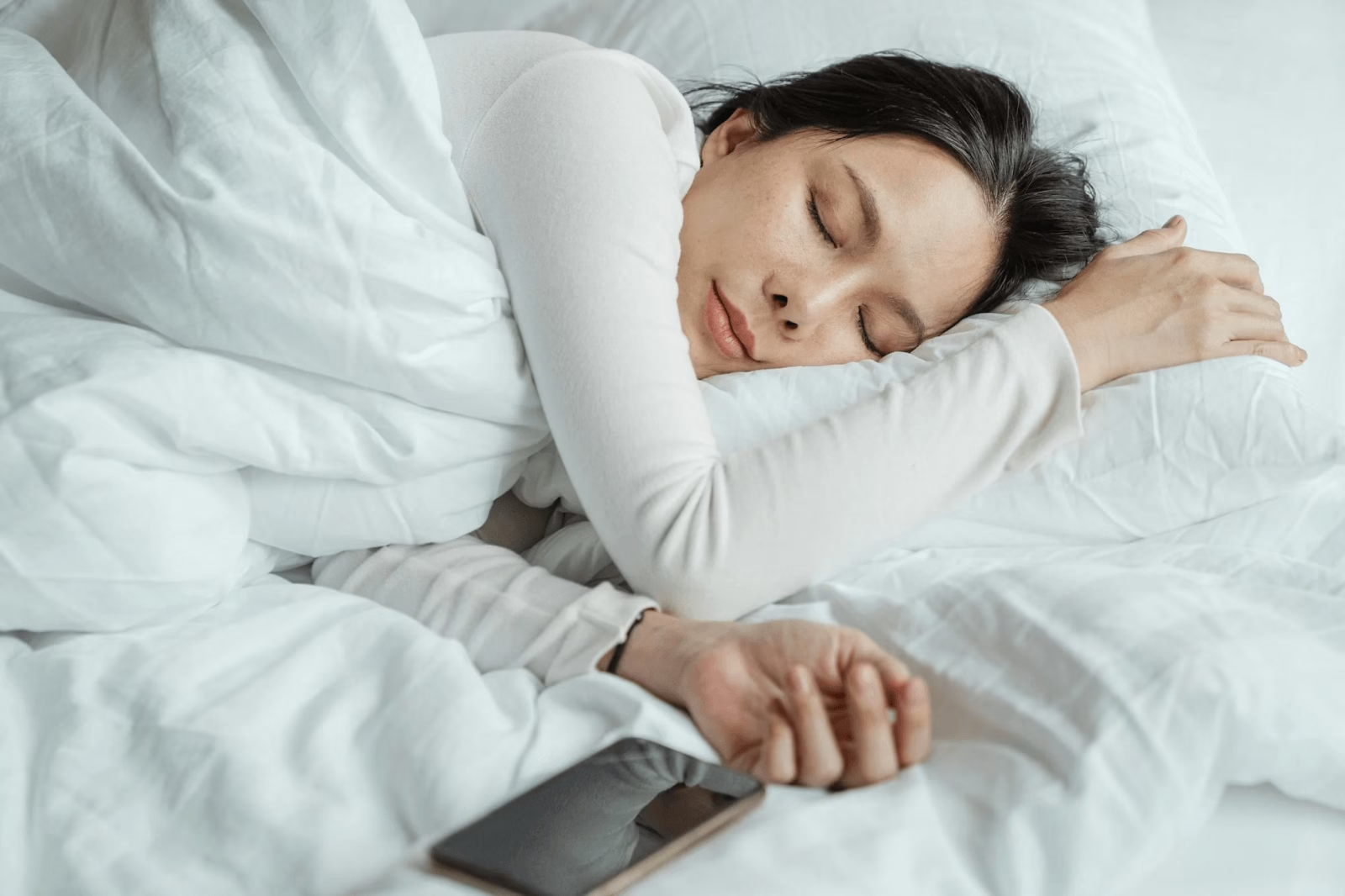
Have you ever wondered why you feel a sudden dip in energy around 3:00 PM, or why you wake up just minutes before your alarm goes off? This isn’t a coincidence; it’s the work of your circadian rhythm.
Often referred to as your “internal body clock,” your circadian rhythm is the invisible conductor of your biological orchestra. When it’s in sync, you feel vibrant, focused, and rested. When it’s out of sync, even ten hours of sleep won’t make you feel “awake.”
Relevant blog to read: How Lights Affect Sleep and Your Circadian Rhythm
What is the Circadian Rhythm?
The circadian rhythm is a natural 24-hour cycle that regulates when your body feels awake, sleepy, hungry, alert, or relaxed.
It is controlled by a small area in the brain called the suprachiasmatic nucleus (SCN), which responds primarily to light and darkness.
In simple terms:
👉 It tells your body when to wake up, when to wind down, and when to sleep.
How the Circadian Rhythm Works
At the center of this system is a small group of cells in your brain called the suprachiasmatic nucleus (SCN), located in the hypothalamus.
Its main cues:
- Light (most powerful signal)
- Darkness
- Temperature
- Regular daily habits (sleep, meals, movement)
When light enters your eyes in the morning:
- Melatonin (sleep hormone) decreases
- Cortisol and alertness rise
- Your body prepares for activity
When it gets dark:
- Melatonin increases
- Body temperature drops
- Your body prepares for rest
Why Does Your Circadian Rhythm Matter?
When your circadian rhythm is aligned:
- You feel mentally clearer
- Emotions are easier to regulate
- Anxiety and irritability reduce
- Energy feels more stable
When it’s disrupted (late nights, screens, irregular schedules):
- Sleep becomes poor
- Anxiety and low mood increase
- Focus and motivation drop
- Hormones fall out of balance
What the Circadian Rhythm Controls
Your circadian rhythm affects much more than sleep:
- Sleep–wake cycle
- Focus, memory, and cognitive performance
- Mood and emotional regulation
- Digestion and appetite
- Energy levels and physical performance
- Hormone release (melatonin, cortisol, insulin)
- Immune function and metabolism
This is why poor sleep often affects mood, anxiety, cravings, and stress tolerance.
A Simple Daily Timeline (Example)
| Time | What’s Happening |
|---|---|
| 6–8 AM | Cortisol rises → wakefulness |
| Morning | Peak focus & learning |
| Afternoon | Slight dip in energy |
| Evening | Melatonin starts rising |
| Night | Body cools, prepares for sleep |
| 10 PM–12 AM | Deep sleep initiation window |
Why Does it Get Out of Sync?
In our modern world, we are living in a “Circadian Mismatch.” Our ancient biology is clashing with modern technology. Common culprits include:
- Blue Light Exposure: Screens mimic the sun, tricking the SCN into thinking it’s mid-day at 11:00 PM.
- Irregular Sleep Schedules: “Social Jetlag” (staying up late on weekends and waking early on weekdays) confuses the Master Clock.
- Lack of Morning Sunlight: If you spend your morning in a dim office, your brain never gets the “Day has started” signal.
- Late-Night Eating: Digestion requires energy and heat; eating late raises your core body temperature when it should be dropping for sleep.
How to Support a Healthy Circadian Rhythm (Practical Tips)
Morning (Most Important)
- Wake up at the same time daily
- Get 10–30 minutes of natural light
- Avoid checking your phone immediately
- Gentle movement or stretching helps
Daytime
- Eat meals at consistent times
- Do focused work during late morning
- Get some daylight exposure if possible
Evening
- Dim lights after sunset
- Reduce screen brightness
- Avoid heavy meals close to bedtime
- Choose calming activities
Night
- Keep sleep time consistent
- Dark, cool, quiet bedroom
- No screens 60 minutes before bed (even partial reduction helps)
How Long Does It Take to Reset the Circadian Rhythm?
- Small improvements: 3–5 days
- Noticeable sleep & mood changes: 1–2 weeks
- Full adjustment: 3–4 weeks
Consistency matters more than perfection.
Circadian Rhythm Affirmations (Gentle & Grounded)
These work best when repeated in the morning or evening, not forced.
- “My body knows how to rest and restore.”
- “I allow my natural rhythm to guide my energy.”
- “I feel safe slowing down at night.”
- “My sleep supports my mental and emotional balance.”
- “I trust my body’s timing.”
Final Thought
You don’t need to fix yourself.
You often just need to realign your timing.
When your circadian rhythm is supported, mental wellness becomes easier—not because you try harder, but because your body works with you, not against you.
Frequently Asked Questions (FAQs)
A. Yes. A 10,000-lux light box can serve as an effective “Zeitgeber” if you live in a dark climate or wake up before the sun. Use it for 20 minutes while having breakfast.
A. Most people can see a significant shift in 3 to 7 days of consistent morning light exposure and evening dark hygiene.
A. Indirectly, yes. Caffeine blocks adenosine, the chemical that builds “sleep pressure” throughout the day. If you have caffeine too late, you may stay awake past your natural circadian “sleep window,” causing a desync the next day.
A. This often happens when you miss your “sleep window.” If you don’t go to bed when your melatonin peaks, your body may release a stress hormone like cortisol to keep you going, making it much harder to fall asleep later.
Author’s note
Thank you for taking the time to focus on your well-being and for being your own cheerleader in this journey called life. I truly appreciate you for choosing to invest in yourself today, and I’m honored that you spent a part of your day here. Remember, every small step you take matters, and you’re doing an amazing job. Keep going—you’ve got this!



One Comment