Women’s Day mental health deserves more than flowers and a single day of attention. International Women’s Day is often celebrated with flowers and brunches, but for the modern woman, it is also a critical opportunity for an emotional audit. Between the “mental load” of household management and the “glass ceiling” of professional life, women are uniquely prone to burnout and empathy fatigue.
This guide reframes Women’s Day as a launchpad for long-term mental and emotional resilience.
Relevant blog to read: Volunteering and Mental Health: How Helping Others Heals You
Beyond the Celebration: Prioritizing Women’s Mental Health
While International Women’s Day is a time to celebrate global achievements, it is also a vital moment to address a quiet crisis: the emotional exhaustion of the modern woman. Statistics consistently show that women are more likely to experience anxiety and depression, often due to the “invisible labor” they perform daily.
This year, make the best of Women’s Day by turning the focus inward.
The Strategy: The Three Pillars of Women’s Wellness
1. Addressing the “Mental Load”
The mental load is the invisible cognitive labor of managing a household and family (e.g., remembering a child’s vaccination date or noticing the milk is low).
- Strategy: Use Women’s Day to practice “Extant Tasking.” Sit down and list every “invisible” task you do. Visualize it. This makes the invisible visible, allowing you to delegate or drop unnecessary stressors.
2. Radical Self-Compassion
Women are often socialized to be “nurturers,” which can lead to a harsh inner critic when they aren’t “doing it all.”
- Strategy: Replace the “perfectionist” voice with a “mentor” voice. Ask yourself: Would I speak to my best friend the way I am speaking to myself right now?
3. Setting “Soft” and “Hard” Boundaries
- Hard Boundaries: Saying “no” to extra work or social obligations that drain you.
- Soft Boundaries: Protecting your peace by silencing notifications or taking 20 minutes of “non-negotiable” alone time every evening.
Your 24-Hour Women’s Day Reset Plan
- 08:00 AM – Digital Fast: Avoid social media for the first two hours of your day. This prevents “comparison traps” and allows you to start the day on your own terms.
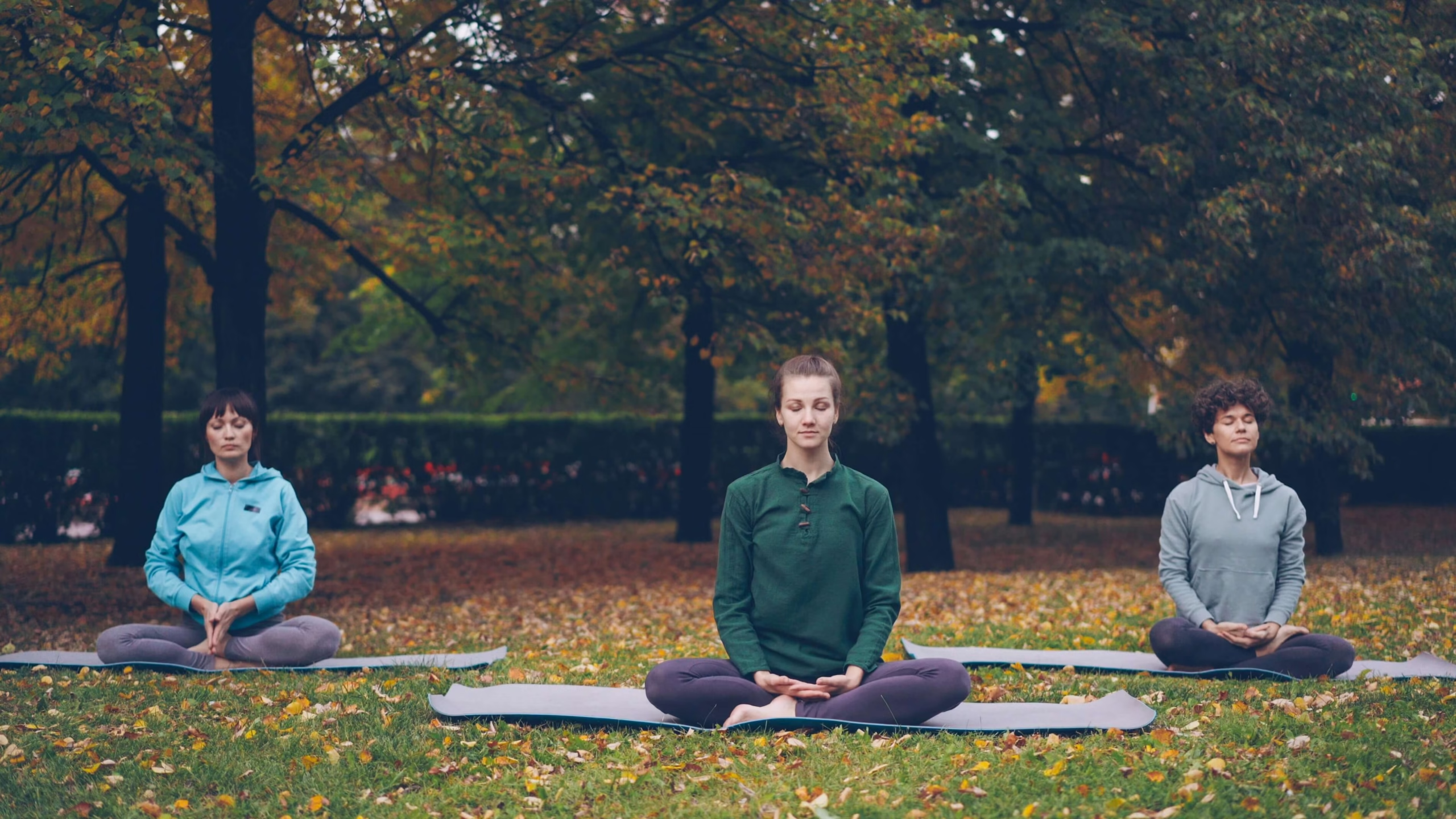
- 10:00 AM – Movement as Medicine: Engage in 20 minutes of gentle movement, such as walking or yoga. Shift your focus toward how your body feels and breathes rather than how it looks.
- 01:00 PM – The “No” List: Take ten minutes to identify three specific tasks or social obligations you will decline this month to preserve your emotional energy.
- 04:00 PM – Meaningful Connection: Reach out to a woman who inspires you or a friend you can be vulnerable with. Authentic conversation is a proven way to lower cortisol levels.
- 08:00 PM – Gratitude Ritual: Write down three things you genuinely admire about yourself. Focus on your character, resilience, or talents rather than your productivity or roles for others.
Tips for Long-Term Emotional Health
- Audit Your Circle: Surround yourself with women who “refill” your cup rather than just those who “leak” into it.
- Schedule “Do Nothing” Time: In a productivity-obsessed culture, doing nothing is a radical act of self-care.
- Professional Support: Don’t wait for a crisis. Therapy is a tool for maintenance, not just repair.
Making Women’s Day Mental Health a Year-Round Priority
The real power of Women’s Day mental health work comes not from a single reflective afternoon, but from the small habits you carry into the rest of the year. A celebration fades in a day; a sustainable routine keeps protecting your emotional battery through every busy season that follows.
Think of this day as the anchor point for a longer commitment. If you build even one supportive practice now, you give your future self something steady to lean on when the mental load inevitably picks back up.
- Schedule a recurring 20-minute “self-check” each week to notice stress before it builds.
- Protect one genuinely restful activity that is just for you, with no productivity attached.
- Revisit your boundaries every few months, since your capacity changes with the seasons.
- Move your body regularly, which is one of the most reliable mood stabilisers available.
Consistent movement is a cornerstone here — our guide to building lasting mental strength shows how small, repeatable actions compound into real resilience over time.
Frequently Asked Questions (FAQs)
A. Women’s Day is about empowerment. You cannot be truly empowered if you are operating from a place of chronic depletion. Mental health is the foundation of all other forms of success.
A. The best gift you can give another woman is validation. Acknowledge her hard work, listen without trying to “fix,” and offer specific help (e.g., “I’ll take the kids for two hours so you can rest”).
A. Self-indulgence is a temporary distraction (like a glass of wine); self-care is a discipline that preserves your future self (like setting a boundary or getting 8 hours of sleep). Both have a place, but self-care provides the lasting emotional health.
A. Yes. The “marginal gains” theory suggests that improving your life by just 1% in multiple areas (sleep, boundaries, hydration) leads to massive cumulative results.
Related Reading
- Mental Health Awareness: From Knowing to Actually Helping
- Mental Health Advocacy: How Young Voices Change Everything
- Mental Health Stigma: How Words Hurt More Than We Know
- Exercise for Mental Health: How Much Is Enough?
Author’s note
Thank you for taking the time to focus on your well-being and for being your own cheerleader in this journey called life. I truly appreciate you for choosing to invest in yourself today, and I’m honored that you spent a part of your day here. Remember, every small step you take matters, and you’re doing an amazing job. Keep going—you’ve got this!