


Have you ever felt exhausted—not just physically, but emotionally—trying to keep everything in your life in order? From schedules to relationships, finances to feelings, we often find ourselves gripping tightly with anxiety, hoping that if we just try hard enough, nothing will fall apart. But this constant need to control might be the very thing keeping us anxious.
Let’s take a compassionate journey inward—into the psychology of control, the peaceful power of surrender, and the well-being practices that can help us gently loosen the grip and find calm, clarity, and connection again.
Relevant blog to read: Anxiety and The Nervous System: How to Break Free
Why the Need for Control Creates Stress
It starts innocently. We crave control because it makes us feel safe. When we know what’s coming next, when we plan well, when things happen on our terms—we feel powerful. But life, as we all know, has other plans.
Trying to control every outcome, person, or situation places enormous pressure on your nervous system. Over time, this creates chronic stress, anxiety, and a sense of never being able to rest.
Our minds race with “what ifs,” muscles stay tense. Our sleep becomes restless. We’re doing everything right—and yet, we feel stuck in fear.
This tension between wanting control and facing uncertainty is what keeps anxiety lodged in our bodies. And often, the harder we try to grip, the more overwhelmed we feel.
So what’s the alternative?
Introducing Surrender: The Inner Release Valve
If control is a clenched fist, surrender is an open hand.
Surrender doesn’t mean we give up or stop caring. It means we stop fighting reality. Instead of resisting, we start allowing. Instead of controlling everything, we begin trusting—ourselves, others, and the unfolding of life.
This idea of surrender is deeply rooted in wisdom traditions:
- Stoicism teaches us to focus only on what we can control.
- Buddhism invites non-attachment to outcomes.
- Modern psychology encourages “radical acceptance”—welcoming life as it is.
Surrender isn’t passive. It’s powerfully intentional. When we let go of control, we reclaim energy, reduce mental friction, and rediscover inner peace.
But how do we get there?
The Peace of Radical Acceptance
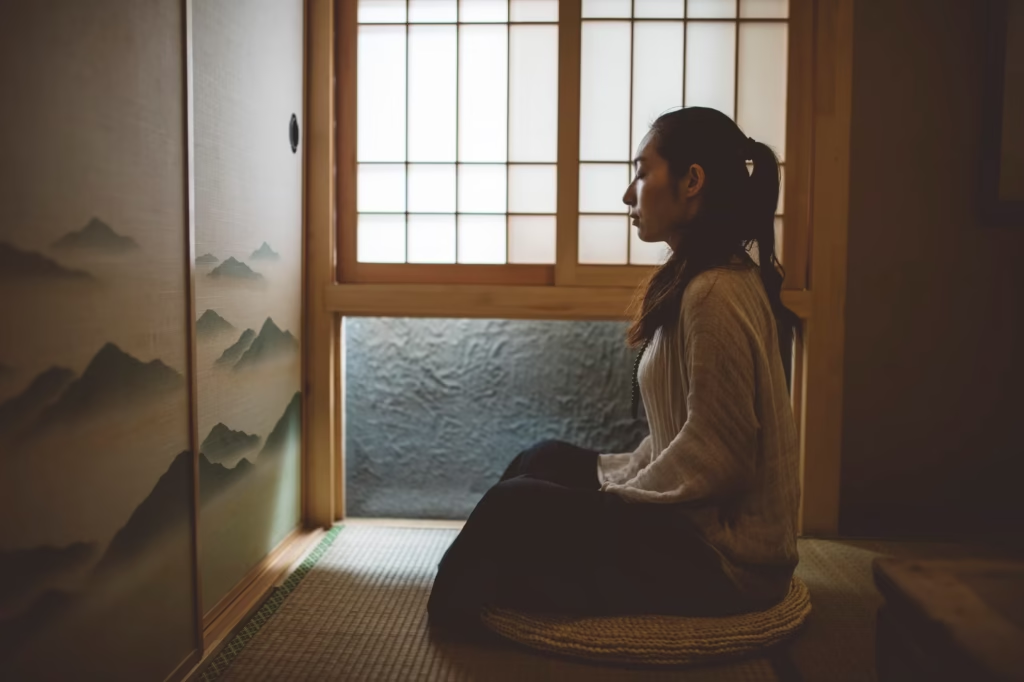
To practice surrender in daily life, we start with radical acceptance—a psychological practice of acknowledging what is, without trying to fix or change it immediately.
Let’s say a plan falls through, or someone disappoints you, or your body doesn’t feel its best today. Radical acceptance doesn’t mean you like these things. It means you stop fighting them. You meet reality with grace rather than resistance.
By doing this:
- You create space in your nervous system to breathe.
- You reduce emotional reactivity.
- You give yourself a chance to respond, not just react.
Acceptance is the first step to freedom. And it becomes easier with regular well-being practices.
Daily Practices to Shift from Control to Calm
Let’s explore how we can start integrating surrender into our daily routine—slowly, gently, and with self-compassion.
☀️ 1. Morning Check-In
Before you dive into the day, ask yourself:
- What can I truly control today?
- What’s outside my control that I can release?
- How do I want to feel, no matter what happens?
This simple check-in reorients you from stress to self-alignment.
🌬️ 2. Breathing to Regulate Stress
When the body feels out of control, breathing brings us back home. Try this:
4-7-8 Breathing:
- Inhale for 4 seconds
- Hold for 7 seconds
- Exhale slowly for 8 seconds
- Repeat 4 rounds
This calms the vagus nerve and shifts the body into a more relaxed state.
Relevant blog to read: Breathing Techniques for Anxiety: 5 Proven Ways to Calm Your Mind
📓 3. Control Inventory Journaling
Each night, reflect:
- What did I try too hard to control today?
- What could I have let go of?
- What might tomorrow look like with more ease?
This builds awareness and compassion toward your control patterns.
Relevant blog to read: Journaling and Why You Should Do It: The Life Changing Benefits
How Affirmations Reinforce Surrender
Your mind believes what you repeatedly tell it. Affirmations act like gentle rewiring tools for the subconscious.
When used intentionally, especially during moments of stress or before sleep, they help shift your mindset from fear to faith.
Here are a few to begin with:
- “I let go of the need to control everything.”
- “I surrender to what I cannot change.”
- “I trust that life supports me.”
Repeat these daily, write them in your journal, or even record them in your own voice.
Long-Term Practices to Cultivate Inner Peace
To truly shift from chronic control to lasting surrender, you need deeper, nourishing habits that work at a soul level.
🧘♀️ Mindfulness Meditation
Sitting with your thoughts without judgment helps you see how much you try to control your feelings. Over time, mindfulness builds resilience and emotional space.
🌼 Nature Walks Without a Plan
Let nature show you how to flow. No steps to count. No path to follow. Just walk. Observe. Listen. Breathe.
📚 Wisdom Reading
Books like “The Untethered Soul” by Michael A. Singer or “When Things Fall Apart” by Pema Chödrön are beautiful reminders that life is meant to be lived—not managed.
🧘♂️ Somatic Movement & Yoga
Practices that connect you to your body—like Yin Yoga, dancing, or stretching—help you get out of your head and into presence.
Relevant blog to read: The Ultimate Guide to a Well-being Routine: Nurturing Your Mind, Body, and Soul
How to Recognize Anxiety-Driven Control in Everyday Life
Much of our daily anxiety hides inside habits that look like being responsible or organized. Learning to spot these patterns is the first step toward loosening the grip and choosing surrender instead.
Notice the moments when your mind insists on managing everything at once. A few common signs that control is running the show:
- Over-planning every detail of a situation you cannot fully predict.
- Replaying conversations or decisions long after they are done.
- Struggling to delegate because “no one will do it right.”
- Feeling restless or irritable the moment a plan changes.
- Seeking constant reassurance to quiet an uneasy feeling.
When you catch one of these patterns, pause and name it gently: “This is my need for control.” That simple recognition creates space, and in that space you can practice cultivating inner peace and let a calmer, more trusting response take its place.
Final Thoughts: When You Loosen the Grip, Life Softens
Letting go is one of the hardest—and most healing—things we can do.
We’re taught that control is power. But the real power is in knowing what to hold on to and what to release. When we soften, we open ourselves to a deeper kind of strength—the kind that doesn’t need certainty to feel safe.
You are not here to control every detail.
You’re here to experience, learn, and grow with grace.
Let life unfold and yourself rest. Let go—and come home to peace.
FAQs
Control is trying to manage every detail; surrender is trusting what’s outside your control while staying grounded in your response.
It challenges our sense of safety and identity. But with awareness, it becomes a liberating act of self-trust.
Yes. Releasing control reduces resistance and soothes the nervous system, helping you live with more ease.
Daily! Morning, during stress, or before sleep are ideal times to repeat calming, surrender-based affirmations.
Absolutely. Surrender is not about passivity—it’s about taking action without attachment to rigid outcomes.
Related Reading
- How to Calm an Anxious Nervous System
- How to Cultivate Inner Peace in a Chaotic World
- Effective Breathing Techniques to Reduce Anxiety
- The 4-7-8 Breathing Technique for Calm
Author’s note
Thank you for taking the time to focus on your well-being and for being your own cheerleader in this journey called life. I truly appreciate you for choosing to invest in yourself today, and I’m honored that you spent a part of your day here. Remember, every small step you take matters, and you’re doing an amazing job. Keep going—you’ve got this!



3 Comments