

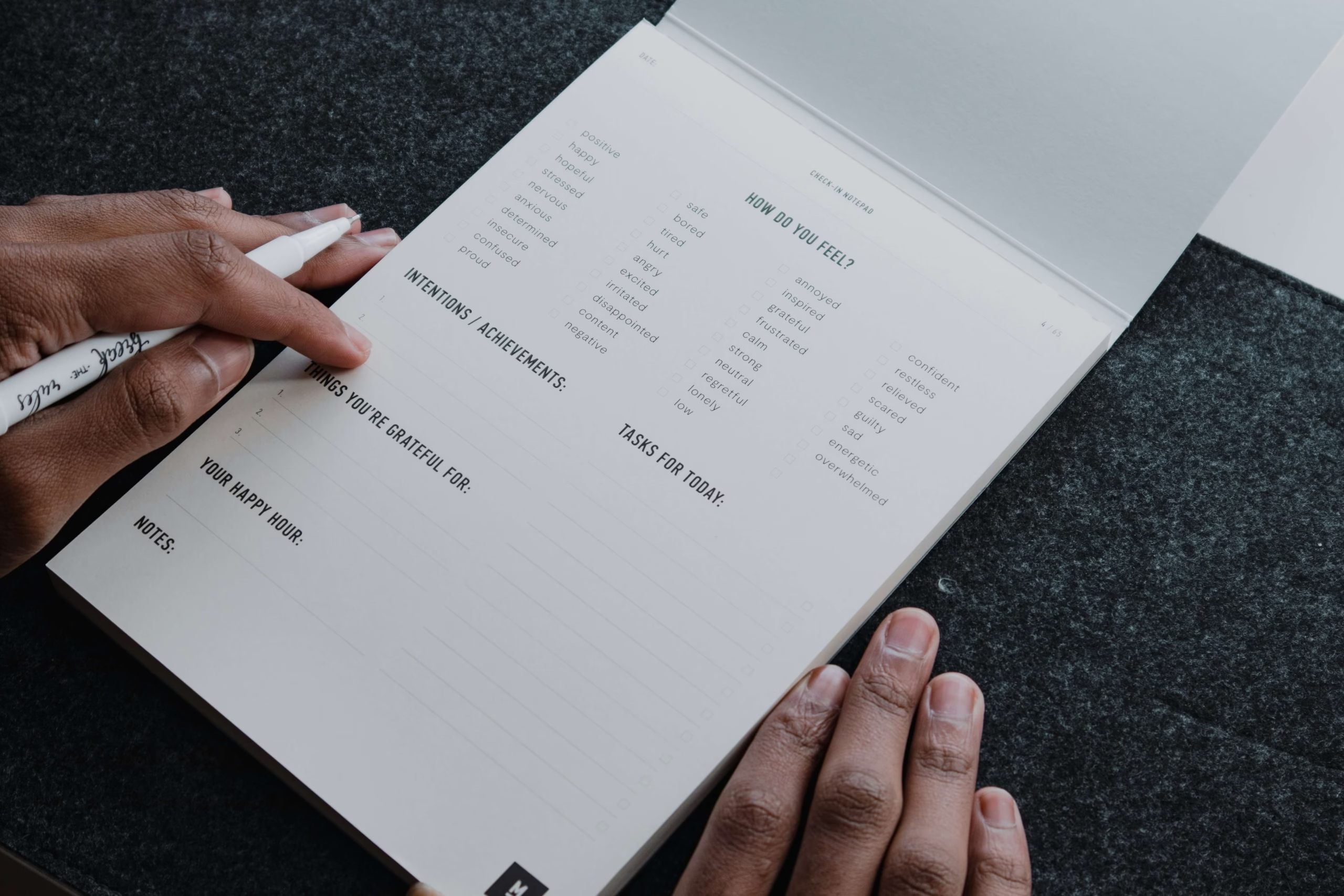
Daily anxiety isn’t always a single, sweeping fear; often, it’s a mosaic of small worries stemming from different parts of your life. Whether it’s the stack of bills, a tense family discussion, or the pressure of an upcoming deadline, these stresses pile up and overflow into chronic anxiety. Journaling is one of the most powerful, non-pharmacological tools you have to combat this. It’s not about writing beautifully; it’s about externalizing those looping, anxious thoughts, which instantly lowers their volume. This guide provides targeted journaling prompts for daily anxiety to help you pinpoint the source of your stress across your home, relationships, career, and finances.
Relevant blog to read: Difference Between Anxiety and Overthinking
Why Targeted Journaling Works
When you journal without a prompt, your mind often spirals back to the same general worries. A targeted prompt forces your brain to analyze the worry rather than just replay it.
We will focus on four high-stakes domains where anxiety often takes root.
1. Work & Career Anxiety Prompts
Workplace stress often stems from a fear of failure, feeling overwhelmed by workload, or difficult professional relationships.
| Goal | Prompt |
|---|---|
| Addressing Perfectionism | What is one task I can complete today at 80% quality, and how would that 80% still be perfectly acceptable? |
| Managing Overwhelm | List the three projects causing me the most stress. Underneath each, write the single, smallest action I can take right now to move it forward. |
| Pre-Meeting Calm | What is the worst-case scenario for the meeting today, and what is one clear, calm sentence I can say to handle that scenario? |
| Imposter Syndrome | Write down 3 specific, verifiable accomplishments from the last month that prove my competence. |
| Boundary Setting | If I say “yes” to this new task, what existing commitment will I have to let go of? What is the script for saying “no” clearly? |
| Performance Review Fear | What are two constructive criticisms I can anticipate, and what is my non-defensive plan to address them? |
2. Family & Relationship Anxiety Prompts
Anxiety in relationships is often rooted in communication fears, lack of boundaries, or fear of disappointing loved ones.
| Goal | Prompt |
|---|---|
| Clarifying Resentment | Who am I currently doing too much for, and what boundary was crossed that led to this feeling of exhaustion? |
| Post-Argument Reflection | What specific words or actions triggered my anxiety during the conflict, and what is one thing I wish I had said instead? |
| Setting Digital Limits | How can I communicate a clear “no phone at the dinner table” boundary to my family without causing conflict? |
| Managing Conflict | Write out a difficult conversation I need to have. Rehearse the first three lines where I use “I feel…” statements. |
| Guilt & People-Pleasing | If I choose to prioritize my own mental health today, what is the real consequence? Is this consequence worth my peace? |
| Unspoken Expectations | What is one expectation I am projecting onto a loved one (e.g., “They should know I’m tired”), and how can I express it openly instead? |
| Appreciation Deficit | List three things a loved one did today that I appreciated, but failed to thank them for. |
3. Financial Anxiety Prompts
Money worries often feel vague and overwhelming. Journaling provides clarity and an action plan, moving you from fear to control.
| Goal | Prompt |
|---|---|
| Vague Worry to Specific Action | What is the single biggest money worry I have right now? What is one 15-minute action I can take tomorrow to address it? |
| Budgeting Fear | What is the emotion that stops me from looking at my bank account? What evidence proves this emotion is a distorted thought? |
| Debt Focus | If I could only pay off one debt this month, which one would it be and why? Write a simple plan of attack. |
| Future Security | What does “financial security” look like, specifically? (e.g., $X saved, no debt). Focus only on what I can control right now. |
4. Household & Routine Anxiety Prompts
Anxiety related to your environment is often tied to feelings of being out of control or disorganized, which can be fixed with small, consistent habits.
| Goal | Prompt |
|---|---|
| Combating Clutter | Name one corner or item in my home that causes stress. What is the one action (not ‘clean everything’) I can take in five minutes to fix it? |
| The Morning Rush | List every step of my morning routine. Which step can I move to the night before to reduce rush-hour anxiety by 5 minutes? |
| Self-Care Scheduling | Where in my day can I legitimately carve out 10 minutes of complete quiet, and what must I sacrifice to protect that time? |
| Task Avoidance | What is one household task I am putting off, and what simple reward will I give myself the moment it is finished? |
| Feeling Overwhelmed by Chores | If I only completed one household activity today, which one would provide the most lasting relief? |
Consistency is Your Compass
The power of these journaling prompts for daily anxiety lies not in a single use, but in consistency. Aim for just 5-10 minutes of journaling at the start or end of your day.
If you struggle to know where to start, choose the category (Work, Family, Finance, or Household) that is causing you the most agitation right now, pick one prompt, and write without judgment for five minutes. You will be amazed at the clarity that emerges.
How to Get More From Each Journaling Prompt
A prompt is only a doorway; how you walk through it decides how much relief you feel. The journaling prompts for daily anxiety in this guide work best when you slow down and let your honest thoughts land on the page, rather than writing the tidy answer you think you should give.
If a prompt feels flat, try one of these gentle ways to go deeper without turning journaling into another chore:
- Ask “and then what?” after your first answer, following the worry one honest step further until it loses its charge.
- Name the feeling, then locate it – notice where the anxiety sits in your body as you write, which often loosens its grip.
- End on one small action – close each entry with a single, doable next step, so the page becomes a plan rather than a spiral.
There is no wrong way to respond, and you never have to finish a prompt that does not fit your day. The goal is simply to move the worry out of your head and onto the page, where it feels smaller, clearer, and far more manageable.
Frequently Asked Questions (FAQs)
A: The most effective times are either first thing in the morning or last thing at night. Journaling in the morning helps you “brain dump” anticipated worries before they can control your day. Journaling at night helps you process the day’s events and offload anxious thoughts before sleep, promoting better rest.
A: Absolutely not. The quality of the tool doesn’t matter; the consistency of the practice does. You can use a digital note app, a scrap piece of paper, or a dedicated journal. The key is making it easily accessible when you feel anxiety spiking.
A: This can happen if you are simply re-hashing negative thoughts without processing them. If you feel worse, ensure you are using a forward-looking prompt (like those above) that demands a solution or an action, not just a complaint. Always end your session with an affirmation or a list of things you are grateful for, to switch your mindset before closing the book.
Related Reading
- 100 Journaling Prompts for the Sunny Season
- The Ultimate Guide to Travel Journaling: Benefits, Tips, and Why You Should Start
- Why Should a Teenager Journal? The Ultimate Guide to Mental Clarity, Resilience, and Future Success
- 5 Unique Journaling Styles for a New Year Breakthrough (Beyond the Diary)
Author’s note
Thank you for taking the time to focus on your well-being and for being your own cheerleader in this journey called life. I truly appreciate you for choosing to invest in yourself today, and I’m honored that you spent a part of your day here. Remember, every small step you take matters, and you’re doing an amazing job. Keep going—you’ve got this!




2 Comments