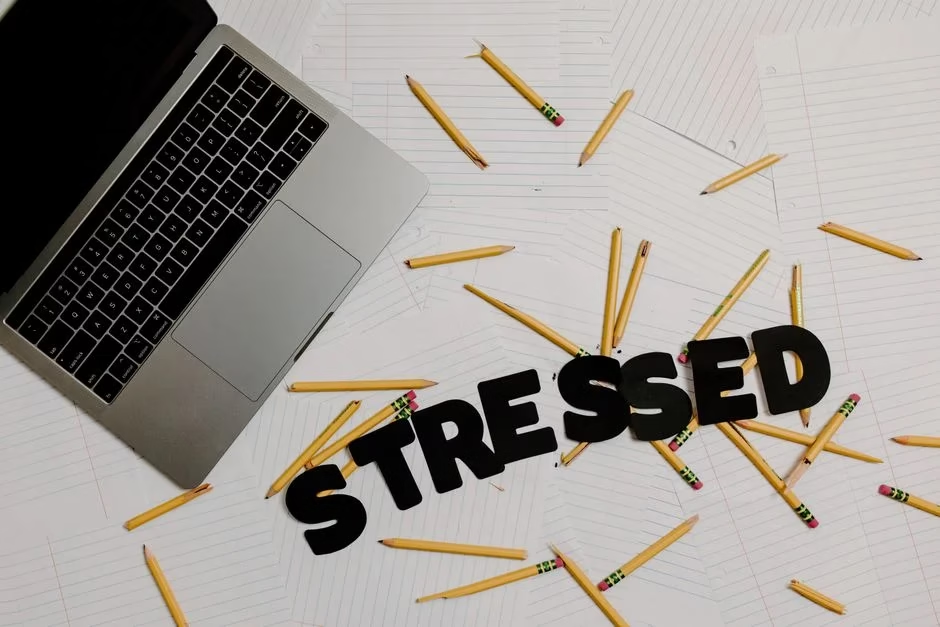
You check your emails before you’ve even gotten out of bed. By 9am, you already feel behind. By 3pm, your shoulders are up around your ears and you can’t quite remember what you were supposed to be focusing on. Sound familiar?
Workplace anxiety management is one of the most searched wellbeing topics online right now — and that’s not a coincidence. Millions of people are sitting at their desks feeling quietly overwhelmed, quietly ashamed, and quietly convinced that the problem is them. It isn’t. Or at least, not in the way you might think.
This post is going to walk you through what’s actually driving anxiety at work — including some factors that most wellbeing advice completely ignores — and give you real, grounded tools to help you feel steadier, whether your workplace changes or not.
Relevant blog to read: Stress Management Techniques That Actually Work
Table of contents
The Biggest Myth About Anxiety at Work
Here’s the thing that almost nobody says out loud: anxiety at work is very often a completely logical response to a genuinely difficult environment. It’s not a character flaw. It’s not weakness. It’s your nervous system doing exactly what it was designed to do — detecting threat and sending you an alarm signal.
The problem is that modern workplaces are accidentally very good at setting off that alarm. Research consistently links workplace anxiety to specific job conditions — things like the type of work you do, how many hours you put in, and how much pressure sits on your shoulders. When those conditions pile up, average anxiety levels across a whole workforce rise. Not because the people are fragile, but because the environment is genuinely stressful.
This matters because if you’ve spent years telling yourself to just push through, just be more organised, just worry less — and it hasn’t worked — there may be a very good reason for that. You can’t meditate your way out of a structurally anxious workplace. At least, not entirely.
What’s Really Causing Workplace Anxiety Symptoms
Before we talk about what helps, it’s worth naming what’s actually going on. Workplace anxiety symptoms don’t appear out of nowhere. They tend to grow slowly, in specific conditions. You might notice persistent worry that you can’t switch off, trouble concentrating, snapping at people you like, missing deadlines despite working flat out, or that heavy, dread-filled feeling on Sunday evenings.
The causes behind those symptoms are often structural. Research points to a consistent set of workplace anxiety causes and conditions:
- Unclear priorities: When nobody can tell you what “good” looks like, your brain fills the uncertainty gap with worry. You’re not being anxious for no reason — you genuinely don’t know where you stand.
- Low autonomy: Having little control over how or when you do your work is one of the most reliable anxiety triggers there is. Humans need a sense of agency to feel safe.
- Always-on communication norms: When there’s an unspoken expectation to respond to messages at all hours, your nervous system never fully switches off. You stay in a low-level alert state for hours, sometimes days, at a time.
- Excessive workload: Long hours and unrealistic expectations don’t just make you tired — they create a chronic sense of falling behind that feeds anxiety directly.
- Poor manager support: A manager who dismisses stress, ignores distress signals, or makes you feel like struggling is a performance problem can quietly make everything worse.
- Job insecurity, bullying, or discrimination: These are serious stressors. They belong on this list because they’re real, they’re common, and they deserve to be named.
The World Health Organisation has recommended that workplaces address these conditions directly — not just offer employees breathing exercises — through things like flexible working, manager training, and tackling harassment. That’s how seriously the evidence takes this.
Why Your Workplace Might Be the Problem (Not You)
Imagine you start a new job. You’re capable, motivated, and reasonably calm. But within three months, you never quite know what your boss actually wants. Deadlines appear from nowhere. You’re copied into 47 emails a day that may or may not require action. Your manager’s door is technically open but walking through it feels like a risk. And you’ve noticed that people who admit they’re struggling tend to get quietly sidelined.
In that environment, anxiety isn’t a personal failing. It’s the only sensible response.
This is what researchers mean when they talk about psychological safety — or the lack of it. When employees can’t ask questions, flag problems, or admit mistakes without fear of being humiliated or penalised, the entire workplace starts running on suppressed anxiety. People look fine on the surface. Underneath, they’re exhausted.
Experts who study this are clear: psychological safety has to be built into the daily habits and norms of a team — not just written in a policy document. When it’s genuinely present, managing work stress and anxiety becomes significantly easier for everyone, because the environment itself stops generating so much of it.
Practical Workplace Anxiety Management That Actually Works
Now for the part you can actually use today. These tools work on two levels — things you can do yourself, and things worth advocating for in your workplace if you have any influence there.
Things You Can Do for Yourself
- Name your three priorities each morning: Write them down. Not ten things — three. When your brain knows what “done well” looks like today, it has less to catastrophise about. Clarity is genuinely calming.
- Set a response-time boundary per channel: Decide that emails get a response within four hours, messages within one hour, and then communicate that expectation clearly. You stop the always-on cycle one boundary at a time.
- Protect one focus block daily: Block one hour in your calendar where you turn off notifications and do actual work. Even one hour of uninterrupted time can reduce that overwhelmed, scattered feeling significantly.
- Take real breaks: Not just switching tabs. Stand up, step away, breathe. Short breaks throughout the day — especially during high-pressure stretches — reset your body’s stress response and reduce physical tension.
- Notice your anxious thoughts without fighting them: When anxiety spikes, pause and ask: what triggered this? What am I actually afraid of here? Tracing anxiety back to its root — unclear feedback, a looming deadline, a difficult relationship at work — makes it feel less like a fog and more like something you can work with.
- Try five minutes of quiet before you open anything: Before the first email, before Slack, before the calendar check — just five minutes of sitting with your coffee and not being available to anyone. It sounds small. But starting the day on your own terms, even briefly, changes the register of the whole morning.
Things Worth Asking For
If you have an anxiety disorder, you may be entitled to reasonable adjustments or anxiety disorder accommodations at work. These can include things like a quieter workspace, a flexible start time, permission to take short breaks when tension builds, or support with planning and time management. These aren’t special favours — they’re recognised tools that help people do their best work.
You don’t have to share a diagnosis to ask for what helps you. Many people find that framing it around output — “I do my best thinking with one focus block a day” — opens doors that feel otherwise closed.
How to Talk to Your Manager About Anxiety
This is the conversation most people rehearse in their head for weeks and then never have. And it makes sense — telling a manager you’re struggling with anxiety isn’t like flagging a technical problem. There’s no clean script. There’s the fear of being quietly filed under “difficult” or “fragile.” The worry about what gets written down somewhere. The sick-making uncertainty of not knowing how they’ll look at you afterwards.
You don’t have to lead with a label. You could start with the impact — “I’ve been finding it hard to focus when priorities shift quickly, and I’d love to work out a better system” — and see how they respond. A good manager will ask questions and try to help. If yours doesn’t, that’s genuinely useful information about what kind of support you can expect, and it may be worth exploring what other resources your workplace offers, like an employee assistance programme.
You deserve to work somewhere that takes this seriously. And even if your current workplace isn’t quite there yet, knowing that the anxiety you feel is real, valid, and not a reflection of who you are as a person — that’s a solid place to start.
Frequently Asked Questions
Workplace anxiety often shows up as persistent worry you can't switch off, difficulty concentrating, irritability with colleagues, avoiding certain tasks or meetings, physical tension like headaches or a tight chest, and that heavy dread feeling before the working week begins. You might also notice missed deadlines despite working hard, or lying awake replaying work conversations. These signs tend to build gradually, which is why many people don't notice them until they're quite worn down.
You don't have to lead with a diagnosis. Many people find it easier to start with the impact rather than the label — for example, saying you've been finding it hard to focus when expectations aren't clear, and asking if you can work out a better system together. If your workplace has an employee assistance programme, that's another route to support without a difficult conversation first. Choose a calm moment, not a high-pressure one, and remember you're allowed to ask for what helps you work well.
Reasonable adjustments for anxiety at work can include a quieter or more private workspace, flexible start or finish times, permission to take short breaks during high-stress periods, written rather than verbal instructions, and access to coaching or mentorship for planning and time management. You don't always need a formal diagnosis to request changes — framing requests around what helps you do your best work is a practical starting point. Your HR department or occupational health team can advise on what's available.
Yes, and it's worth understanding why — not to alarm you, but because it explains a lot. Anxiety pulls your brain toward threat-monitoring rather than clear thinking, which makes focusing, making decisions, and remembering things much harder. Research shows that work-related psychological distress is linked to increased absence, higher staff turnover, and reduced productivity across workplaces. This is why managing anxiety at work matters for organisations, not just individuals — it's a workplace issue, not just a personal one.
Grounding yourself before the meeting helps more than most people expect. Take three slow breaths before you walk in or join the call — this genuinely settles your nervous system slightly. If you can, review the agenda beforehand so your brain isn't caught off guard. During the meeting, focus on one speaker at a time rather than mentally preparing your next response. If you feel anxiety rising, press your feet gently into the floor — it brings you back to the present moment quickly and quietly.
Related Reading
- Stress Management Techniques That Actually Work
- Inner Peace Techniques That Actually Work Daily
- Stress Resilience Strategies That Actually Work
- Gratitude Practices That Actually Work
Author’s note
Thank you for taking the time to focus on your well-being and for being your own cheerleader in this journey called life. I truly appreciate you for choosing to invest in yourself today, and I’m honored that you spent a part of your day here. Remember, every small step you take matters, and you’re doing an amazing job. Keep going—you’ve got this!