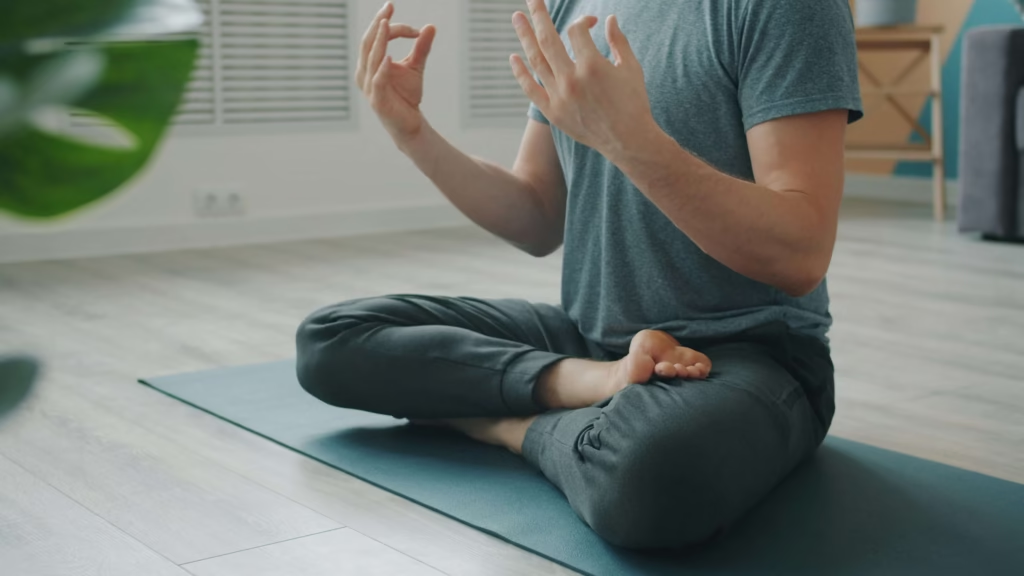
You’ve tried it. Maybe more than once. You sat down, closed your eyes, and attempted to “clear your mind”, only to spend eight minutes mentally composing your grocery list, replaying an awkward conversation from 2019, and wondering if you’re doing it wrong. You’re not doing it wrong. You just hate meditation. And you’re not alone.
A 2020 study published in PLOS ONE found that roughly 25% of regular meditators experience unwanted side effects, including anxiety, restlessness, and frustration. If meditation makes you feel worse, that’s a known thing. It’s not a character flaw.
But here’s the uncomfortable truth: the underlying need that meditation is trying to address the stress, the mental noise, the inability to be present, doesn’t go away just because the solution doesn’t work for you.
So what do you actually do?
Relevant blog to read: The Midday Reset: Why Afternoon Meditation is Your New Power Nap
First, understand what meditation is really trying to give you
Meditation isn’t magic. It’s a delivery mechanism for a few specific mental health benefits: reduced cortisol (your stress hormone), better attention regulation, and a moment of deliberate stillness in a day full of noise.
The good news: those benefits are available through other doors.
The goal isn’t to become someone who meditates. The goal is a calmer nervous system and a clearer head. Keep that in mind as you read the alternatives below.
5 things that work when meditation doesn’t
1. Breathwork: Meditation’s practical cousin
If sitting in silence feels impossible, guided breathing is often the better entry point. It gives your mind something to do rather than asking it to do nothing.
The 4-7-8 technique is a good start: inhale for 4 counts, hold for 7, exhale slowly for 8. Do this four times. It activates your parasympathetic nervous system, the “rest and digest” mode within minutes.
The My Well-being app has a guided breathing feature with soothing background music, which makes this even easier if you find silence uncomfortable.
Try it: Next time you’re overwhelmed, don’t sit and meditate. Just breathe, with a timer, for 3 minutes.
2. Movement as mindfulness
Your brain doesn’t care whether you achieve stillness sitting cross-legged or moving through the world. What it cares about is whether your attention is fully in the present moment.
For many people, that’s far easier to achieve through movement.
A 15-minute walk where you deliberately notice what you see, hear, and feel underfoot is mindfulness. So is slow yoga, swimming, or even washing dishes without your phone nearby.
The key is singular focus. One thing at a time, fully.
3. Journaling as a “brain dump”
One reason meditation feels impossible is that we’re asking a busy mind to suddenly go quiet. It’s like trying to sleep before you’ve finished a conversation. The mind resists because it has unfinished business.
Journaling gives that unfinished business somewhere to go.
Spend 5–10 minutes writing whatever is in your head. No structure, no grammar, no audience. Just get it out. Once it’s on the page, your mind often quiets down naturally which is, ironically, exactly what meditation was trying to achieve.
A few prompts to start if you’re staring at a blank page:
- What am I carrying right now that I haven’t said out loud?
- What’s the thing I keep pushing to the back of my mind?
- What would I feel if I had nothing to do for the next hour?
4. Sensory grounding
When your mind won’t cooperate with anything “mindful,” come back to your body through your senses.
The 5-4-3-2-1 technique: name 5 things you can see, 4 you can touch, 3 you can hear, 2 you can smell, 1 you can taste.
It sounds almost too simple. But it works because it reroutes your attention from the abstract chatter of your thoughts to the very concrete reality of your physical environment. Anxiety lives in the future. Your senses only exist in the present.
5. A structured “do nothing” slot
This one is underrated.
Pick 10 minutes in your day and defend them from productivity. No phone, podcast, or task. Just sit on your balcony, in a park, at your kitchen table, and let your mind wander without trying to manage it.
This is not meditation. You’re not trying to achieve anything. You’re just giving your brain the unscheduled time it rarely gets.
Research on “default mode network” activity shows that this kind of undirected mind-wandering is essential for creativity, emotional processing, and self-reflection. Most of us have accidentally optimised it out of our lives.
A note on trying meditation again (someday)
If you hated meditation, chances are you tried a specific version of it – probably silent, probably solo, probably with the pressure of “doing it right.”
There are other forms worth knowing about:
Guided meditation: someone talks you through the whole thing. Apps, YouTube, and podcasts offer thousands of these. You don’t have to figure it out alone.
Body scan meditation: instead of clearing your mind, you move your attention slowly through different parts of your body. It’s concrete, directed, and much easier for restless people.
Loving-kindness meditation (Metta): you silently repeat kind phrases directed at yourself and others. People who find “empty mind” meditation frustrating often respond well to this because it gives the mind a job.
You don’t have to like meditation. But you might find that one of its cousins fits you better.
The real point
The wellness industry has done a strange thing: it’s taken one particular tool and made it feel like the only path to mental calm.
It isn’t.
What your mind needs is regular, deliberate moments of non-doing; of stepping off the treadmill, even briefly. How you get there is far less important than whether you get there.
Find your version. Build it into your day. The rest will follow.
The My Well-being app includes guided breathing, journaling prompts, and daily well-being check-ins. All designed for people who want to build these habits without the pressure of a rigid routine. Download it free on iOS and Android.
Frequently Asked Questions
A. Yes. Meditation is one tool, not the only tool. If it consistently causes frustration or anxiety, the stress of forcing it outweighs any benefit. The alternatives in this post — breathwork, journaling, movement — deliver the same core benefits through a different path.
A. This is more common than most wellness content admits. For people with anxiety or trauma, turning inward in silence can amplify rather than quiet distressing thoughts. Starting with something more active — like a body scan, guided audio, or walking meditation — tends to work better before attempting silent practice.
A. Research suggests even 5 minutes of focused breathwork can measurably lower cortisol. For journaling, consistency matters more than duration — 10 minutes three times a week beats one long session you dread. Start smaller than you think you need to.
A. Absolutely — the app is built around breathing exercises, journaling, and habit tracking, not traditional meditation. You can build a full daily wellness routine without ever sitting in silent meditation.
Author’s note
Thank you for taking the time to focus on your well-being and for being your own cheerleader in this journey called life. I truly appreciate you for choosing to invest in yourself today, and I’m honored that you spent a part of your day here. Remember, every small step you take matters, and you’re doing an amazing job. Keep going—you’ve got this!