

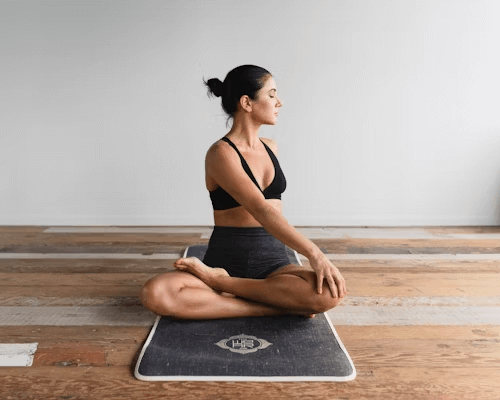
Have you ever wondered why taking a deep breath actually makes you feel better? Or why a splash of cold water on your face feels like a mental reset? The secret lies in the Vagus Nerve.
Often called the “Wandering Nerve” (derived from the Latin vagus, meaning wandering), it is the longest cranial nerve in your body. It acts as a bidirectional “superhighway” connecting your brain to your heart, lungs, and digestive tract. Most importantly, it is the primary commander of your Parasympathetic Nervous System—the system responsible for “rest and digest.”
By learning specific, deterministic vagus nerve exercises, you can effectively “hack” your biology to move from a state of high-alert (fight or flight) to a state of profound calm and safety.
Relevant blog to read: How to Prepare Yourself for Mental Health Awareness Month
What is the Vagus Nerve and Why Does It Matter?
The vagus nerve is responsible for regulating your heart rate, digestion, and respiratory rate. When your “vagal tone” is high, your body can relax faster after a stressor. When it is low, you may find yourself stuck in a cycle of chronic anxiety, poor digestion, and sleep disturbances.
Stimulating the vagus nerve sends a chemical message to your body that it is safe to relax. This is not just a “feeling”—it is a physiological shift that involves lowering your heart rate (HR) and blood pressure (BP).
5 Deterministic Vagus Nerve Exercises for Instant Calm
To get the most benefit, these exercises should be integrated into your daily well-being routine.
1. The “Salamander” Exercise (Ocular Reset)
This technique uses eye movements to shift the position of the first two cervical vertebrae, which are closely tied to the vagus nerve.
- How to do it: Sit comfortably. Without turning your head, look as far as you can to the right. Hold your gaze there until you feel a spontaneous yawn, sigh, or swallow. Repeat on the left side.
- Why it works: This signals to the brainstem that the body is safe, triggering a relaxation response.
2. Cold Water Immersion
Cold exposure is one of the fastest ways to increase vagal tone.
- How to do it: Splash ice-cold water on your face for 30 seconds, or end your shower with 30–60 seconds of cold water.
- Why it works: The “Diving Reflex” is activated when your face hits cold water, immediately slowing the heart rate and increasing blood flow to the brain.
3. Humming, Chanting, or Gargling
The vagus nerve is connected to the vocal cords and the muscles at the back of the throat.
- How to do it: Hum your favorite tune, chant a low-frequency “OM,” or gargle vigorously with water for 60 seconds during your morning routine.
- Why it works: The physical vibrations in the throat stimulate the nerve directly.
4. Auricular (Ear) Massage
A branch of the vagus nerve (the auricular branch) supplies the skin of the ear canal and the “concha” (the hollow part of the ear).
- How to do it: Using your index finger, gently massage the hollow area of your ear just above the ear canal in circular motions for 2–3 minutes.
- Why it works: This provides a direct path to stimulate the nerve via the skin.
5. Resonant Breathing (The 4-7-8 Technique)
As we discussed in our guide on Mindful Living, breathwork is the most accessible tool for nervous system regulation.
- How to do it: Inhale for 4 seconds, hold for 7 seconds, and exhale forcefully through the mouth for 8 seconds.
- Why it works: Extending the exhale longer than the inhale is a biological “brake” for the heart. It forces the parasympathetic nervous system to take over.
The Benefits of High Vagal Tone
When you consistently practice these vagus nerve exercises, you will notice a shift in your overall “baseline” of wellness:
- Improved Digestion: The nerve signals the stomach to produce acid and the intestines to move.
- Lower Inflammation: The vagus nerve plays a key role in the “cholinergic anti-inflammatory pathway.”
- Better Emotional Regulation: You become less “reactive” to external stressors.
- Enhanced Sleep: It helps the body transition into the deep, restorative sleep cycles needed for brain health.
Integrating Vagus Nerve Stimulation into Your Life
For long-term success, don’t just wait for a crisis to use these tools.
- Morning: Start with cold water and humming.
- Workday: Use the Salamander exercise during transitions between meetings.
- Evening: Use auricular massage and 4-7-8 breathing as part of your End-of-Day Reflection.
How Vagal Tone Shapes Anxiety and Long-Term Resilience
Consistent vagus nerve exercises do more than create a momentary sense of calm—they gradually retrain how your nervous system responds to pressure. Every time you activate the parasympathetic “brake” through humming, cold exposure, or a long exhale, you strengthen the neural pathways that carry you back to safety. Over weeks, this raises your baseline nervous system regulation, so everyday stressors feel smaller and recovery happens faster.
Researchers measure this capacity through heart rate variability (HRV)—the subtle variation in time between heartbeats. Higher HRV signals a flexible, well-toned vagus nerve and is closely linked to lower anxiety, steadier moods, and better emotional recovery. The encouraging part is that vagal tone is trainable. Much like a muscle, the more you practice these exercises alongside intentional breathwork for anxiety, the more resilient your system becomes.
Frequently Asked Questions (FAQs)
A. You can often feel a shift in your heart rate and mental state within 60 to 90 seconds of performing an exercise like gargling or cold splashing. However, improving your overall “vagal tone” requires daily consistency over 2 to 3 weeks.
A. For most healthy individuals, these gentle exercises are safe. However, if you have underlying heart conditions or suffer from “vasovagal syncope” (fainting), consult with a professional before beginning a rigorous cold exposure or deep massage routine.
A. The best time is during your “Digital Sunset” or right after a high-stress event. Stimulating the nerve before bed ensures your body is physically prepared for sleep rather than just mentally exhausted.
A. 80% to 90% of the fibers in the vagus nerve are sensory, meaning they carry information from the gut to the brain. By calming the nerve, you often calm “gut feelings” of anxiety and improve your digestive health simultaneously.
Sources & Further Reading
Related Reading
- Meditation for Stress Relief: How It Rewires Your Brain
- Mindful Walking for Stress Relief: What Really Works
- Mindfulness for Stress: How It Changes Your Brain
- Visualization Meditation for Stress Relief
Author’s note
Thank you for taking the time to focus on your well-being and for being your own cheerleader in this journey called life. I truly appreciate you for choosing to invest in yourself today, and I’m honored that you spent a part of your day here. Remember, every small step you take matters, and you’re doing an amazing job. Keep going—you’ve got this!



2 Comments