

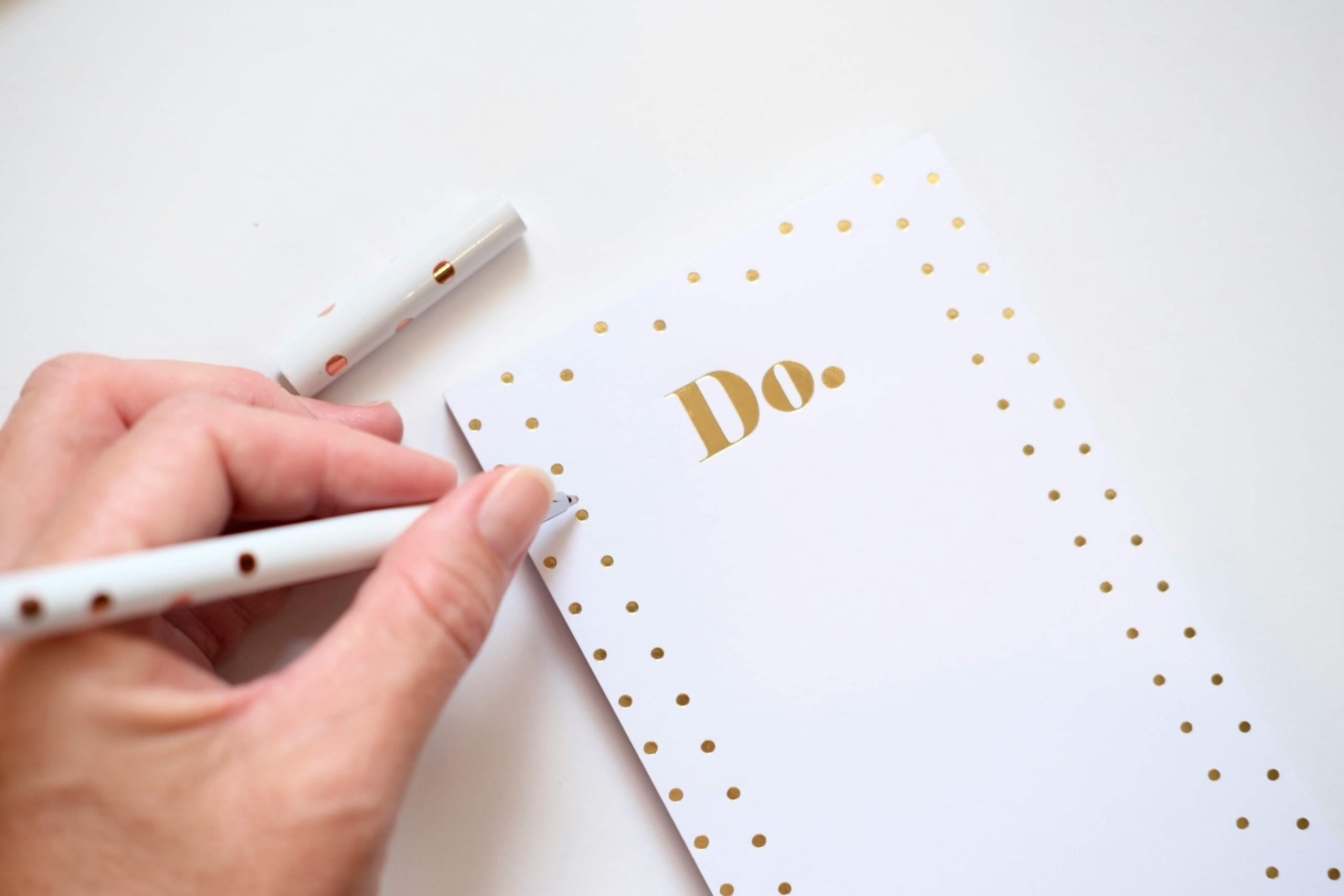
We often feel that there aren’t enough hours in the day, but the reality is often that we lack a deterministic map for the hours we have. Daily planning is not just about checking off tasks; it is a vital well-being practice that reduces “decision fatigue,” lowers cortisol levels, and ensures your actions align with your long-term vision.
Whether you are a morning person or a night owl, understanding the science of daily planning can transform your day from a series of reactions into a proactive journey of success.
Relevant blog to read: Morning Habits to Avoid and How to Build a Routine for Success
The Great Debate: Planning at Night vs. Planning in the Morning
Both methods have unique psychological benefits. The best choice depends on your personality and your specific needs for mental clarity.
The Benefits of Planning the Night Before
Planning before sleep is an act of “subconscious priming.”
- Mental Dump: By writing down your tasks at night, you clear your “mental RAM,” preventing your brain from ruminating on chores while you try to sleep.
- Morning Momentum: You wake up with a “Pre-Flight Plan.” There is no wasted energy wondering what to do first; you hit the ground running.
- Subconscious Solving: When you identify a challenge the night before, your subconscious mind often works on solutions while you sleep.
The Benefits of Planning in the Morning
Morning planning aligns with your current energy and “Cortisol Awakening Response.”
- Real-Time Accuracy: You can adjust your plan based on how you actually feel that morning.
- Intention Setting: It allows you to align your tasks with the “mood” of the day, making your schedule feel more authentic and less rigid.
The Tools of the Trade: Journals vs. To-Do Lists
While they are often used interchangeably, journals and to-do lists serve very different purposes in your daily planning strategy.
How Journaling Helps
Journaling provides the “Why” behind the “What.” It allows for a narrative approach to your day. By journaling, you can:
- Identify Emotional Blocks: “I’ve been avoiding this task for three days; why?”
- Practice Gratitude: Starting your plan with a win from yesterday keeps you in a high-vibration state.
- Record Insights: It’s a space to capture the “a-ha” moments that a simple list would ignore.
How To-Do Lists Help
To-do lists are tactical. They provide the “What” and the “When.”
- Dopamine Hits: Physically crossing off a task provides a small neurochemical reward that keeps you motivated.
- Prioritization: Tools like the “Eisenhower Matrix” help you separate what is urgent from what is truly important.
Planning for Every Lifestyle: Who Benefits and How?
Planning is not a “one size fits all” activity. Different roles require different deterministic strategies:
- For Parents: Planning is about “Buffer Management.” A parent’s plan must include “white space” to account for the unpredictable needs of children.
- For Working Professionals: Focus on “Time Blocking.” Dedicate specific hours to “Deep Work” where notifications are silenced.
- For Entrepreneurs: Focus on “ROI Tasks.” Your plan should prioritize actions that move the needle on your long-term vision rather than just busy work.
- For Artists & Creatives: Use “Rhythms over Schedules.” Plan chunks of time for inspiration rather than strict 15-minute intervals.
- For Athletes: Your plan must include “Recovery Windows.” Rest is as deterministic to your success as the training itself.
- For Homemakers: Focus on “Energy Cycles.” Plan heavy chores for high-energy times and administrative tasks for the mid-afternoon slump.
The “Continuous Improvement” Loop: Learning from Yesterday
To master daily planning, you must treat your schedule as a living document. At the end of each day, perform a 2-minute audit:
- What stayed on the list? If a task stays on the list for three days, it’s either not important or it needs to be broken into smaller “2-minute” steps.
- What surprised me? Did a specific meeting take longer than expected? Adjust your future planning to account for that reality.
- How did I feel? If you felt exhausted, perhaps your plan didn’t include enough “Self-Care Anchors.”
Integrating Well-being Routines
Your plan is not just about work. A successful day integrates your well-being rituals as “non-negotiable appointments.”
- Sleep Hygiene: Schedule your “Digital Sunset.”
- Movement: Mark your exercise on the calendar with the same importance as a client meeting.
- Mindfulness: Use your Sensory Vision Board or Color Breathing during planned transitions in your day.
Frequently Asked Questions (FAQs)
A. A plan is a guide, not a cage. Having a plan actually makes you better at handling crises because you know exactly what is being displaced and what needs to be rescheduled.
A. Aim for the “Rule of 3.” Identify three “Big Wins” that must happen. Anything else is a bonus. This prevents the feeling of failure at the end of the day.
A. Paper planning often leads to better memory retention and less distraction. Digital planning is better for recurring tasks and shared family/team calendars. Use a hybrid approach if needed!
A. This usually happens when your list is too long or contains “vague” tasks. Break big items like “Clean House” into “Vacuum Living Room.” Small, deterministic steps reduce anxiety.
Author’s note
Thank you for taking the time to focus on your well-being and for being your own cheerleader in this journey called life. I truly appreciate you for choosing to invest in yourself today, and I’m honored that you spent a part of your day here. Remember, every small step you take matters, and you’re doing an amazing job. Keep going—you’ve got this!



One Comment