

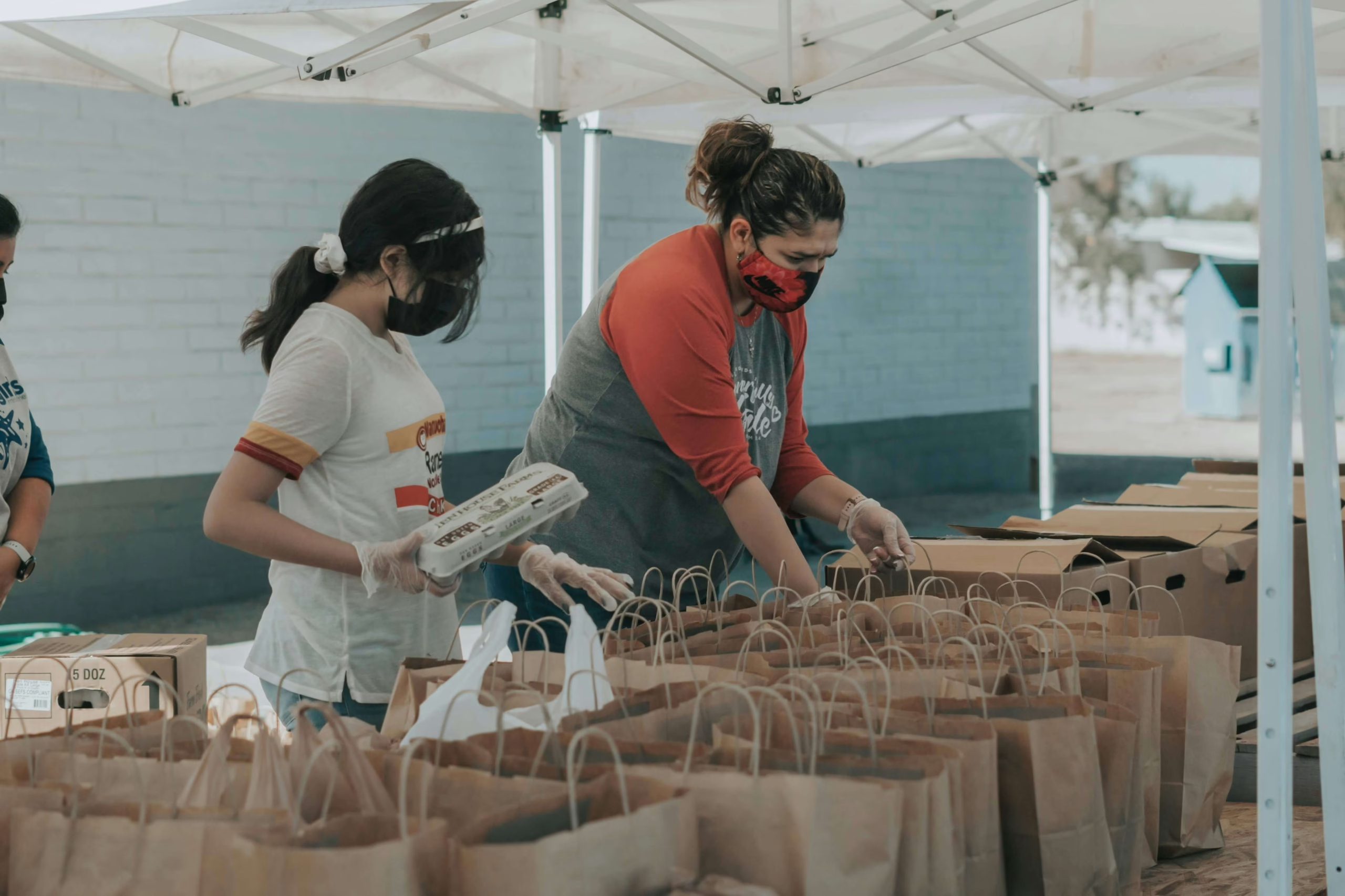
While many wellness routines focus on the “Self” (meditation, skincare, solo-fitness), the ultimate “hack” for emotional health may actually lie in the “Other.” Volunteering and mental health are linked through a profound biological feedback loop. By stepping outside of our own internal narratives to help others, we perform a vital act of Neural Sovereignty—reclaiming our brain from self-centered anxiety and anchoring it in community.
Relevant blog to read: A Guide to Mindfulness for Dissociation
The Biological “Helper’s High”
Volunteering isn’t just “good for the soul”; it is a pharmacological event for the brain. When we engage in altruistic acts, the brain triggers a specific chemical cocktail:
- The Oxytocin Surge: Often called the “bonding hormone,” Oxytocin lowers blood pressure and reduces the activity of the amygdala (the brain’s fear center).
- Dopamine Release: Helping others activates the mesolimbic system, providing a natural “reward” similar to achieving a personal goal.
- Serotonin Stabilization: Community service has been shown to improve mood regulation and combat long-term depression by increasing Serotonin levels.
How Volunteering Shapes and Heals Us
Beyond the chemistry, volunteering acts as a deterministic tool for personal growth. It shapes us in three distinct ways:
1. The Perspective Shift (The “View from Above”)
When we are immersed in our own problems, our world becomes microscopic. Volunteering forces us to “zoom out.” Seeing the challenges and resilience of others provides a Stoic perspective, making our own stressors feel manageable.
2. Social Co-regulation
Our nervous systems are designed to “sync” with others. In a support group or a volunteer setting, we practice Co-regulation. When we help calm someone else, our own nervous system “downshifts” as a byproduct. We become the “anchor” for others, which in turn stabilizes our own baseline.
3. Identity Expansion
Volunteering moves you from a “Consumer” identity to a “Contributor” identity. As we discussed in our guide to Affirmations, your brain believes the evidence of your actions. If you act like a helpful, valuable member of society, your subconscious begins to accept the identity of a “high-value, capable person.”
How to Fit Volunteering into a Busy Schedule
The most common barrier to volunteering is the “Time Scarcity” mindset. However, in 2026, we focus on Micro-Altruism and Integration.
- The 1-Hour Monthly Sprint: You don’t need to commit 20 hours a week. One hour of focused community service per month is enough to trigger the biological benefits.
- Skill-Based Integration: Volunteer a skill you already have. Are you an architect? Help a community project for an hour. Are you a writer? Help a non-profit with their newsletter. This reduces the “cognitive load” of learning something new.
- Family Habits: Make volunteering a family wellness routine. Instead of a movie night, spend two hours at a local shelter. This teaches children the deterministic power of community support.
Is Volunteering Necessary?
In a biological sense, yes. Humans are “obligatory gregarious” animals. We are wired to be part of a group. In the modern world, where the “group” has been replaced by the “algorithm,” we are experiencing a deficit of meaningful social utility.
Without a sense of being needed by others, the human brain often defaults to a state of existential anxiety. Volunteering is the deterministic solution to this deficit; it provides the “Social Anchor” required for long-term emotional survival.
Frequently Asked Questions (FAQs)
A. Start with “Digital Altruism.” Offer your skills online for a cause you believe in. Once your confidence builds, move to a small, quiet group setting. Remember, the goal is to expand your comfort zone, not shatter it.
A. It sounds counter-intuitive to add “more work,” but volunteering is restorative work. It activates different neural pathways than your day job, providing a “Mental Reset” that can actually lower professional burnout levels.
A. Align it with your Sensory Vision Board. What causes actually move you? If you love animals, go to a shelter. If you love nature, join a planting group. The more your volunteering aligns with your values, the more deterministic the mental health benefits will be.
A. Absolutely. The brain doesn’t distinguish between a formal non-profit and a neighbor in need. Any act that moves you from “Self-Focus” to “Other-Focus” triggers the Oxytocin and Dopamine response.
Author’s note
Thank you for taking the time to focus on your well-being and for being your own cheerleader in this journey called life. I truly appreciate you for choosing to invest in yourself today, and I’m honored that you spent a part of your day here. Remember, every small step you take matters, and you’re doing an amazing job. Keep going—you’ve got this!
One Comment