

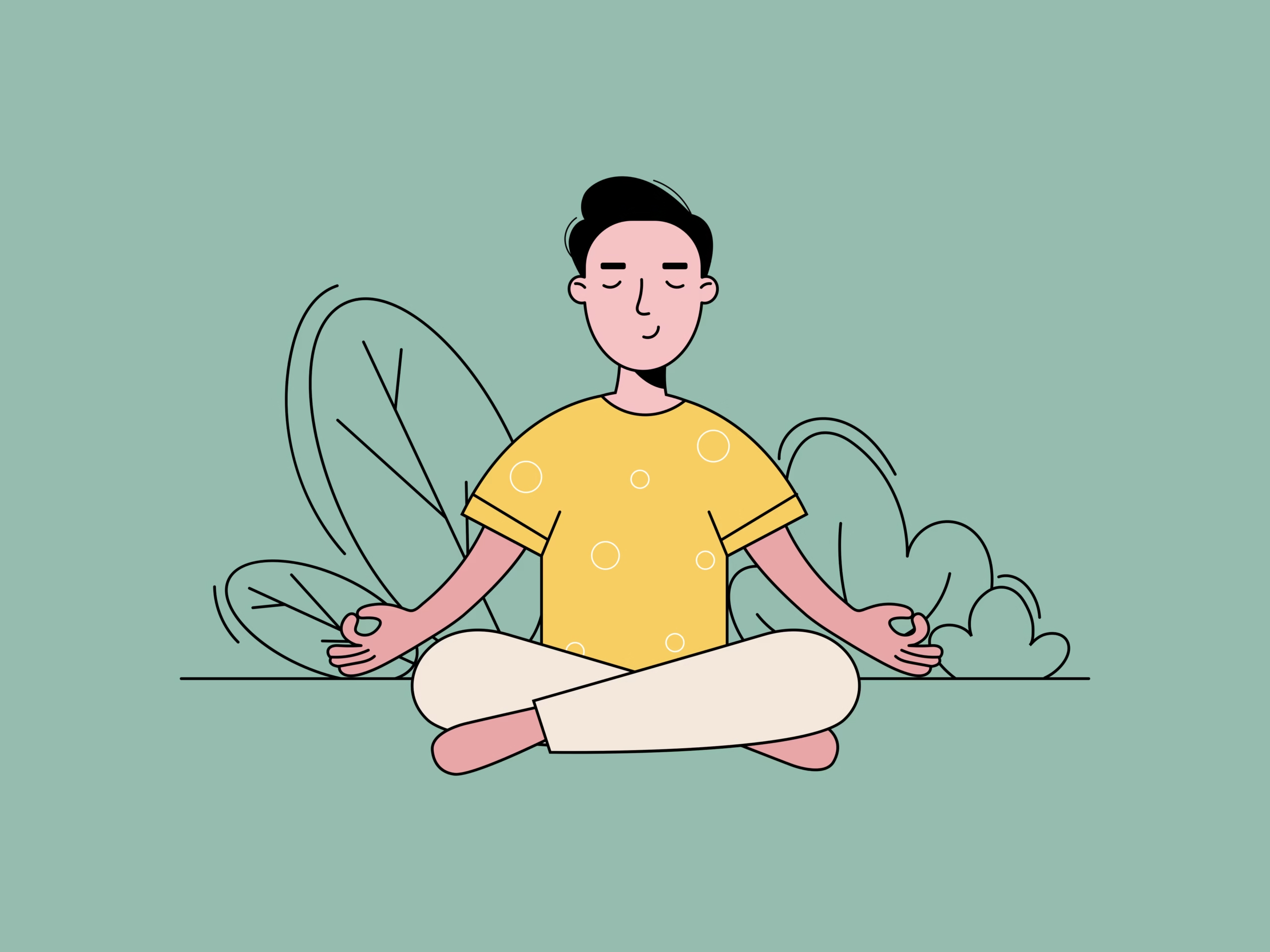
As we approach the dawn of 2026, many of us are drafting resolutions to “do more” and “be faster.” However, the secret to a successful and peaceful year might actually be doing less—but doing it with more intention. Embracing Mindfulness Over Multitasking is not just a trend; it is a vital shift for anyone seeking emotional balance and improved mental health in an increasingly digital world.
Relevant blog to read: Practice Gratitude in 2026: A New Year Resolution That Boosts Happiness
Why Mindfulness is Important for Our Well-being
Mindfulness is the practice of being fully present and engaged in the current moment, without judgment. In our fast-paced society, we often live in “autopilot,” worrying about the future or ruminating on the past.
Prioritizing Mindfulness Over Multitasking is important because it calms the nervous system. When we are mindful, we lower our heart rate and decrease the production of cortisol (the stress hormone). This presence allows us to experience life more vibrantly, improves our emotional regulation, and provides a sense of “mental space” that prevents us from feeling overwhelmed by daily demands.
How Multitasking Affects Us, Our Work, and Our Motivation
We often wear multitasking as a badge of honor, but science tells a different story. Research suggests that the human brain isn’t actually multitasking; it is “context switching”—flipping rapidly between tasks.
- Impact on Work Quality: Every time you switch focus, there is a “switching cost.” It can take several minutes to regain deep focus on a complex task. This leads to more errors and a decrease in creative problem-solving.
- The Motivation Drain: Multitasking creates a dopamine loop. We feel a “rush” when we check a quick notification, but this shallow satisfaction prevents us from reaching “flow state.” Over time, this erodes our motivation for deep, meaningful work, leaving us feeling busy but unproductive.
- Increased Anxiety: Constantly split focus keeps the brain in a state of high alert. Choosing Mindfulness Over Multitasking helps break the cycle of chronic anxiety by proving to your brain that you are safe and in control of your current environment.
When Multitasking is Good vs. When it is Avoidable
Not all multitasking is harmful. The key is understanding the “Cognitive Load.”
When it’s Good (Low Cognitive Load)
Multitasking is generally fine when one task is completely automatic. For example, listening to an educational podcast while folding laundry or walking on a treadmill. These “paired” activities don’t compete for the same mental resources.
When it’s Avoidable (High Cognitive Load)
You should avoid multitasking when both activities require conscious thought. Trying to write an email while participating in a Zoom call or texting while driving are dangerous uses of split focus. In these moments, choosing Mindfulness Over Multitasking ensures safety and quality.
The Reality of Necessary Multitasking: The “Motherhood” Factor
We must acknowledge that for some, like mothers, caregivers, or emergency workers, multitasking is often unavoidable. A mother may need to stir a pot of soup while keeping an eye on a toddler and answering a phone call.
In these scenarios, Mindfulness Over Multitasking takes a different form. It isn’t about doing only one thing; it’s about “Mindful Toggling.” Instead of feeling frantic, try to:
- Acknowledge each switch: “Now I am focusing on the stove. Now I am focusing on my child.”
- Take “micro-breaths” during transitions to reset your nervous system.
- Forgive the chaos: Realize that presence is a practice, not a perfection.
Best Tips and Practices for a Mindful New Year
To help you choose Mindfulness Over Multitasking in 2026, integrate these simple habits into your daily routine:
1. Mindful Eating
Instead of eating lunch at your desk or scrolling through your phone, try to eat one meal a day in silence. Notice the texture of the food, the various flavors, and the feeling of nourishment. This practice aids digestion and helps you recognize “fullness” cues, which improves your relationship with food.
2. Mindful Walking
During your commute or a break, practice “grounding.” Instead of planning your day, focus on the sensation of your feet hitting the pavement. Notice three things you can see, two things you can hear, and one thing you can smell. This immediate sensory input is a powerful way to stay present.
3. Mindful Conversation
In 2026, give people the gift of your full attention. When someone is speaking, put your phone face down. Listen not just to their words, but to their tone and body language. Choosing Mindfulness Over Multitasking in relationships builds deep trust and emotional intimacy that technology cannot replace.
Conclusion: A Clearer Mind for 2026
Choosing Mindfulness Over Multitasking is a radical act of self-care. It tells your brain that the present moment is enough and that you are capable of handling life one step at a time. As you move into the New Year, remember that your value isn’t measured by how many things you can do at once, but by how well you show up for the things that truly matter.
Frequently Asked Questions (FAQs)
A. Paradoxically, no. While it feels slower, focusing on one task at a time (single-tasking) usually results in finishing tasks faster and with higher quality because you avoid the “switching cost” of distractions.
A. Start small. You don’t need to meditate for an hour. Simply choose one routine activity—like brushing your teeth—and commit to doing it with total focus for two minutes. Consistency is more important than duration.
A. Not necessarily. While some people are better at switching focus than others, the human brain is biologically wired for sequential processing. Even the most “intelligent” multitaskers perform better when they focus on one thing at a time.
A. Use “Time Blocking.” Group similar tasks together (like answering all emails at 10 AM) so your brain doesn’t have to switch contexts as often. Communicate your “Deep Work” hours to colleagues to protect your focus.
Author’s note
Thank you for taking the time to focus on your well-being and for being your own cheerleader in this journey called life. I truly appreciate you for choosing to invest in yourself today, and I’m honored that you spent a part of your day here. Remember, every small step you take matters, and you’re doing an amazing job. Keep going—you’ve got this!



One Comment