You lace up your shoes, step outside, and walk — but your mind is still back at your desk, replaying the conversation you had at work, drafting tomorrow’s to-do list, rehearsing things you forgot to say. Sound familiar? That’s not really a walk. That’s stress wearing trainers.
Mindful walking for stress relief is something genuinely different. It’s not about walking faster or hitting a step count. It’s about being here while your feet move — and the research behind what that small shift does to your body and mind is quietly remarkable. This post covers why it works, what the science actually says, how to do it even if you’ve never tried meditation, and why you might not need a forest or a yoga mat to feel the difference.
Relevant blog to read: Sound Healing Frequencies Stress Relief
Table of contents
Why Walking Alone Doesn’t Always Relieve Stress
There’s a common assumption that exercise fixes stress. And yes, moving your body helps — but if your mind is running the same worried loop while your legs move, you’re only solving half the problem. The stress response isn’t just physical. It lives in your thoughts, your breathing, and the way your attention keeps pulling toward worst-case scenarios.
When you’re stressed, your breathing naturally gets shallow, your muscles tighten, and your brain shifts into a kind of anxious overdrive — scanning for problems, replaying worries, bracing for what’s next. A walk without intention can feel good in the moment, but that mental noise often follows you right back through the front door.
Mindful walking works differently because it targets both sides of that stress response at once. The rhythmic movement calms your nervous system through your body, while the act of paying attention on purpose gently interrupts the thought spiral. That combination — movement plus present-moment awareness — creates something that exercise alone simply can’t replicate.
What the Research Really Shows
This isn’t just feel-good wellness advice. The evidence is specific, and some of it is genuinely surprising.
A 2016 study found that mindful walking over several days reduced depression, anxiety, stress, and brooding — while also improving mood and measurable mindfulness skills. Not just “people felt a bit better.” Actual reductions across multiple markers of psychological distress.
But here’s the finding that tends to stop people mid-sentence: research by Teut and colleagues in 2013 found that just eight mindful walking sessions over four weeks produced striking reductions in physical stress symptoms and significantly improved quality of life in people with high psychological distress. Eight sessions. Four weeks. That’s roughly twice a week — less than most people spend scrolling before bed.
There’s also something happening in the brain. Short bouts of mindful walking have been shown to increase alpha brainwaves — the ones associated with being relaxed but still mentally alert and focused. It’s the same state you might drop into during a really absorbing conversation or a calm Sunday morning. Your brain isn’t switched off; it’s just no longer in fight-or-flight mode.
And for anyone who worries they’re too tired to exercise: research found that low-intensity mindful walking can boost energy levels by up to 65 percent in people who are sedentary and fatigued. That’s not a typo. Moving gently, with awareness, can actually give you more energy than you started with.
The Sleep Connection Nobody Talks About Enough
You know that feeling when you climb into bed exhausted, but your brain immediately starts listing every problem you’ve ever had? That’s your stress hormones still running the show, even though your body is horizontal and your eyes are closed.
Mindful walking works on sleep through more than one door at the same time. Physically, the gentle exertion creates natural fatigue that supports deeper rest. But the part that actually changes things happens in your head: spending 30 minutes deliberately returning your attention to your feet, your breath, the air on your skin — that’s not just a nice walk. That’s active practice in shifting your nervous system out of high alert. A 2023 study found that meditating while walking outdoors is associated with improved ability to cope with sleeping difficulties and mood disorders.
Walking mindfully in the afternoon or early evening seems to be particularly effective as a sleep preparation tool. You’re not just burning energy — you’re essentially teaching your nervous system how to shift gears from activated to calm. Over time, that transition gets easier and faster.
Does It Only Work in Nature?
This is one of the most common things people wonder — and the honest answer is: nature helps, but it’s not required.
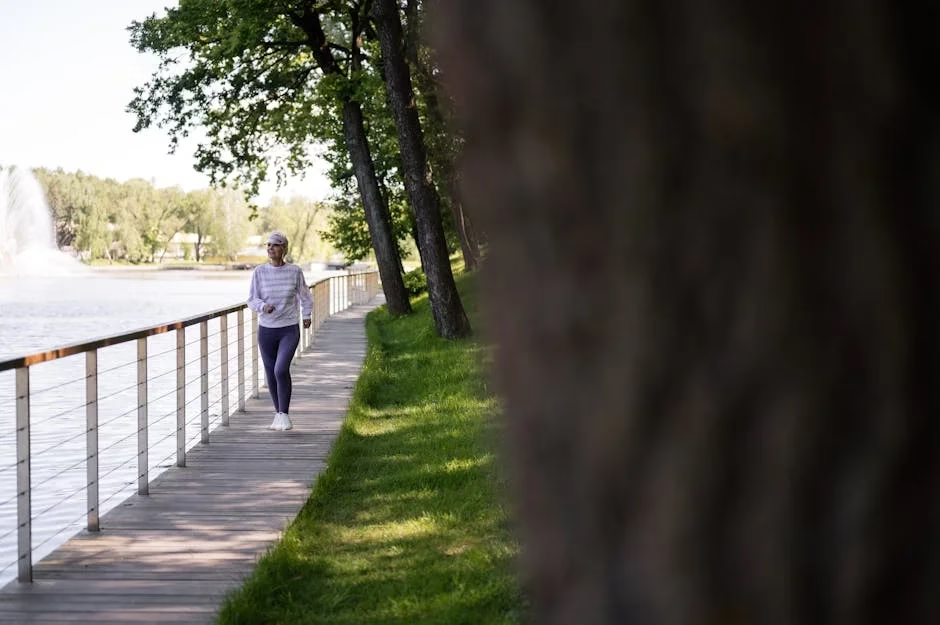
Walking in green spaces, parks, or near trees and water does add something extra. Research on shinrin-yoku — a Japanese practice often called forest bathing — shows that people who spend time walking in natural environments report less stress, lower blood pressure, reduced fatigue, and improved sleep quality. Sunlight, fresh air, and the sounds of nature all contribute to a calmer nervous system and a more positive outlook. If you have access to any patch of green, even a local park, it’s worth using it.
But here’s what matters most: mindful walking in urban environments — pavements, city streets, ordinary neighbourhoods — also produces meaningful improvements in mood, sleep quality, and anxiety levels. The mindfulness component is the active ingredient. Nature is a welcome bonus, not a requirement. If the only walk available to you is around the block, that walk still counts.
How to Practice Mindful Walking Daily — Starting Today
No app subscription. No previous meditation experience. No special route. You need about 30 minutes and a willingness to feel slightly self-conscious about paying attention to your own feet — though even 10 minutes is worth something when you’re just starting out.
- Start with a body check: Before you move, stand still for 30 seconds. Notice any tension in your shoulders, jaw, or chest. This gives you a baseline — and helps you notice the shift when you return.
- Synchronise your breath with your steps: Try breathing in for four steps and out for four steps. You don’t need to count forever — just enough to anchor your attention to the rhythm of your body rather than the noise in your head.
- Engage all five senses deliberately: What can you see right now — not in general, but specifically? What sounds are layered in the background? What does the ground feel like under your feet? What’s the temperature of the air on your face? This is the practice. Not clearing your mind — just noticing what’s actually here.
- When your mind wanders, gently return: It will wander. That’s not failure — that’s the exercise. Each time you notice you’ve drifted into tomorrow’s worries and bring your attention back to the feel of your feet on the ground, you’ve just done a mental push-up. The mindfulness skill genuinely strengthens with each repetition.
- Aim for 30–35 minutes when you can: Research suggests this duration not only maximises mental health benefits but can also add around 1,700 steps to your day — a meaningful boost for overall health without it feeling like a workout.
- Time it thoughtfully: A midday walk can interrupt a stress spiral. An afternoon or early evening walk can prepare your body and mind for better sleep. Experiment and notice what works for you.
- Do a body check at the end: Same as the start — stand still, scan your body. Most people notice their shoulders have dropped, their jaw has unclenched, their breathing has slowed. That contrast becomes its own motivation to come back tomorrow.
Consistency matters more than perfection here. The benefits build over time — each session strengthens your capacity to stay present, and that skill starts to spill into the rest of your day. You don’t need to be good at it. You just need to keep showing up.
A Common Misconception Worth Clearing Up
Some people try mindful walking once, spend the whole time thinking about dinner and their unread emails, and quietly conclude they’re broken. They’re not. A wandering mind isn’t a broken mind — it’s a normal mind. The practice isn’t about achieving a blank, peaceful state of perfect calm. It’s about noticing, returning, noticing, returning. That noticing is the mindfulness. The more you practise it, the more natural it becomes — not just on your walk, but in the middle of a stressful afternoon when you need it most.
Mindful walking is also not just regular walking with slightly more awareness bolted on. The research is clear that the mindfulness component creates a qualitatively different response in the body — different brainwave patterns, different effects on stress hormones, different outcomes for sleep and mood. It’s a genuinely distinct practice, and it’s one that almost anyone can access, regardless of fitness level, experience with meditation, or where they live.
How to Make Mindful Walking a Lasting Habit
Mindful walking for stress relief only pays off when it becomes something you actually return to. The good news is it asks for almost nothing — no gear, no class, no perfect setting. The trick is anchoring it to a life you already live so it survives busy weeks instead of vanishing after the first one.
- Attach it to something fixed. A walk after lunch or before bed sticks far better than a vague plan to “walk more.”
- Start absurdly small. Three mindful minutes you actually do beats thirty you keep postponing.
- Drop the perfection. A wandering mind isn’t failure — noticing it wandered and returning to your steps is the practice.
If you’d like to pair walking with other gentle resets, our colour breathing guide offers a calming technique you can even use mid-walk when your mind starts to race.
Frequently Asked Questions
Research suggests meaningful reductions in stress and anxiety can happen within four weeks of regular practice. One study found that just eight sessions over four weeks produced striking improvements in physical stress symptoms and quality of life. Even a single session can shift your brainwave activity toward a calmer, more alert state — so you don't have to wait weeks to feel something.
Regular walking moves your body while your mind does whatever it likes — which usually means replaying worries. Mindful walking involves deliberately paying attention to your breath, your steps, and your senses in the present moment. Research confirms this isn't just a subtle difference: mindful walking produces measurably greater reductions in stress and anxiety than physical activity alone, and creates distinct changes in brain activity.
Yes — and the evidence is fairly specific. A 2016 study found that mindful walking reduced depression and brooding while improving mood over multiple days of practice. For sleep, a 2023 study linked outdoor mindful walking to improved ability to cope with sleeping difficulties. The practice helps calm stress hormones and relax the nervous system, which addresses some of the core reasons both depression and poor sleep persist.
Nature does amplify the benefits — walking near trees, water, or green space adds extra reductions in blood pressure, fatigue, and stress. But research confirms that mindful walking in urban environments also significantly improves mood, anxiety, and sleep quality. The mindfulness component is the active ingredient. If a park isn't nearby, your local street still works.
Starting with two to three sessions per week for four weeks is enough to see measurable improvements, based on clinical research. Daily practice produces the fastest skill development — each session genuinely strengthens your ability to stay present. Even 10–15 minutes counts on busier days. The key is consistency over time, not perfection in any single walk.
Related Reading
- Mindfulness Meditation for Sleep: What Really Works
- Meditation for Stress Relief: How It Rewires Your Brain
- Visualization Meditation for Stress Relief
- Color Breathing: A Visualization Guide for Instant Stress Relief
Author’s note
Thank you for taking the time to focus on your well-being and for being your own cheerleader in this journey called life. I truly appreciate you for choosing to invest in yourself today, and I’m honored that you spent a part of your day here. Remember, every small step you take matters, and you’re doing an amazing job. Keep going—you’ve got this!