There’s a particular kind of heaviness that depression brings. Not just sadness — more like a fog that makes even small things feel impossibly far away. If you’ve ever Googled “does meditation help with depression” at a low moment, hoping it might be the thing that finally shifts something, you’re not alone.
Meditation can genuinely help with depression. But the way it’s often talked about — as something you simply sit down and do, and then feel better — misses something really important. Used in the right way, meditation for depression is less about finding peace and more about building a quiet, steady skill. And that small difference changes everything.
This post walks you through what the research actually shows, why stillness alone isn’t always enough, and how to build a practice that fits around real life — including the days when getting out of bed feels like climbing a mountain.
Relevant blog to read: Gratitude Practice Train Your Brain to Feel Better
Table of contents
What the Research Really Shows
The evidence for mindfulness meditation for depression is genuinely encouraging — with a few honest caveats worth knowing. A 2024 systematic review of 26 randomised controlled trials found that mindfulness meditation significantly reduced depressive symptoms compared to no treatment. Separately, an analysis supported by the National Center for Complementary and Integrative Health, covering more than 12,000 participants, found mindfulness approaches were comparable to other established treatments for depression and anxiety.
That’s meaningful. But “comparable to established treatments” doesn’t mean it works for everyone, in every situation, all on its own.
Here’s what the research suggests meditation actually does inside your mind and body:
- Reduces rumination: Depression often involves the mind looping over the same painful thoughts. Mindfulness gently trains you to notice when that’s happening — and to step back from it, rather than being pulled under.
- Improves emotional regulation: Over time, you get a little better at feeling a difficult emotion without immediately reacting to it. You create a tiny pause — and that pause can change everything.
- Builds self-compassion: Many people with depression are incredibly hard on themselves. A consistent meditation practice can soften that inner critic, slowly and genuinely.
- Supports sleep and stress management: Both of these are deeply tangled with depression, and mindfulness can help nudge them in a better direction.
Benefits are usually gradual. They build quietly, over weeks. That’s not a flaw — it’s just how real change tends to work.
The Biggest Misconception About Meditating When You’re Depressed
Here’s the thing most meditation guides don’t tell you: you are not supposed to empty your mind. That’s not the goal. Not even close.
When you sit down to meditate, your mind will wander. It will drift to worries, regrets, that embarrassing thing you said in 2014, the email you forgot to send. That’s completely normal. The practice is simply noticing that your mind has wandered — and gently, without any self-criticism, bringing it back. That’s it. That’s the whole skill.
For people dealing with depression, this matters enormously. Because depression often comes with a harsh inner voice that says things like “you’re doing this wrong” or “this isn’t working for you.” Meditation, done this way, is actually a direct and gentle challenge to that voice. Every time you notice a thought and return to your breath without judging yourself, you’re practising a kind of kindness toward yourself that many people with depression rarely experience.
It’s also worth knowing that some people do feel more anxious or distressed when they sit in stillness — especially if they’ve experienced trauma. If that sounds like you, that’s not a failure. There are gentler adaptations that work just as well, and we’ll get to those shortly.
How to Start — Without Forcing It
Depression often drains motivation. So building a meditation practice that relies on motivation to get started is a recipe for disappointment. The key is to make it as frictionless and small as possible.
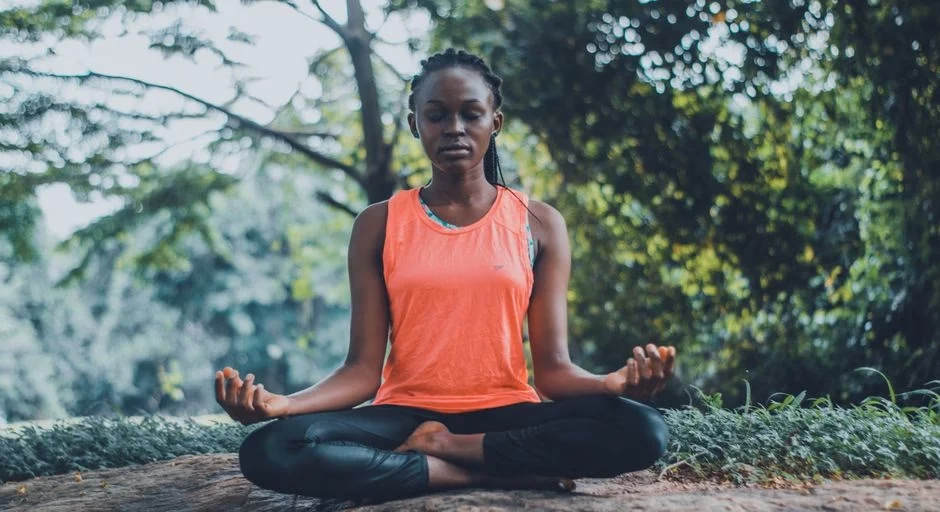
- Start with five minutes, once a day. Set a timer. Sit comfortably — on your bed, your sofa, the floor, wherever you already are. Close your eyes if that feels okay, or soften your gaze downward. Just follow the physical sensation of your breath: the slight rise of your chest, the air leaving your nose. You don’t need anything else right now.
- Attach it to something you already do. After brushing your teeth. After your first cup of tea. Linking the practice to an existing habit means you don’t need to remember or motivate yourself — it just happens.
- Label what comes up. When a feeling surfaces, try quietly naming it. “Worry.” “Sadness.” “Self-criticism.” Research suggests that simply naming an emotion can reduce its intensity — putting a word to something helps the brain process it rather than be overwhelmed by it.
- Then do one small thing. This is important. After your practice, do one concrete, real-world action. Send a message to someone. Eat something. Step outside for two minutes. Mindfulness alone doesn’t replace activity and connection — it works best when it leads you gently back toward both.
If sitting still makes you feel worse rather than better, walking meditation is a genuinely effective alternative. A slow, deliberate five-minute walk where you notice each footstep, the air on your skin, the sounds around you — that counts. Fully.
Using Meditation to Help Prevent Depression Coming Back
One of the most well-supported uses of mindfulness for preventing depression relapse is a structured approach called Mindfulness-Based Cognitive Therapy, often called MBCT. It combines meditation practice with tools from talking therapy, and it was specifically designed to help people who have experienced multiple episodes of depression recognise early warning signs before they become a full relapse.
You know that feeling when your mood starts sliding and some part of you thinks “oh no, not again” — and then you either panic or go very, very quiet? MBCT is built around that exact moment. It teaches you to catch the early signals — the withdrawal, the heaviness returning, the thoughts turning grey at the edges — before they’ve gathered enough weight to pull you all the way down. Clinicians often recommend it as part of an overall plan, alongside other support, especially for people who’ve had depression return more than once.
If you’re interested in this approach, looking for a structured programme led by a trained facilitator is the most effective way to access it — rather than trying to piece it together alone.
When to Pair Meditation With Other Support
Meditation works best as part of a wider picture — not instead of one. If your depression feels moderate or severe, or if it keeps coming back, or if you’re having thoughts of harming yourself, please reach out to a doctor or mental health professional. Meditation is not a replacement for that conversation, and there’s no version of this post that would suggest otherwise.
Here are some honest signs that meditation alone isn’t enough right now:
- Your symptoms are getting worse, not better, after two weeks of consistent practice.
- Hopelessness is increasing rather than staying steady or easing.
- You’re having thoughts of suicide or self-harm. Please contact a crisis line or emergency service — not a meditation app.
- Sitting still makes you feel significantly more distressed, especially if you’ve experienced trauma.
Tracking how you feel matters here. Keep a simple note for two weeks — not a wellness journal, just a few words before bed: how long you sat, whether sleep came easily, whether the day felt survivable or not. That record is more useful than it sounds. It shows you patterns you can’t see when you’re in the middle of them, and it gives you something concrete to bring to anyone supporting you professionally.
The most honest thing to say about meditation and depression is this: it’s a real tool, backed by real evidence, that works best when you treat it as part of a whole — not as the whole itself. Start small, stay curious, and be kind to yourself when it feels hard. That kindness, quietly practised day after day, is where the real change lives.
Frequently Asked Questions
Yes, meditation can genuinely help reduce depressive symptoms — but it works best as part of a broader plan, not as a stand-alone cure. An analysis of more than 12,000 participants found mindfulness approaches were comparable to established treatments for depression. The benefits are real but gradual, and they depend on consistent practice, appropriate guidance, and support from other areas of your life too.
Starting with just five to ten minutes once a day is enough — and often more sustainable than longer sessions when you're already low on energy. The key is consistency rather than duration. Practising daily for a short time tends to be far more helpful than doing a long session once a week. You can gradually increase the length as it starts to feel more natural.
Mindfulness-based approaches — particularly Mindfulness-Based Cognitive Therapy (MBCT) — have the strongest evidence for depression, especially for preventing relapse. If sitting still increases your distress, walking meditation or sensory grounding exercises are just as valid. The best type is honestly the one you can do consistently and that doesn't make you feel worse. Guided meditation for depression can also help if you find it hard to practise alone.
This is more common than people admit, and it doesn't mean you're doing it wrong. For some people — especially those who've experienced trauma — sitting in stillness can bring up difficult emotions or memories. If that's happening to you, try shorter sessions, eyes-open practice, or walking meditation instead. If distress keeps increasing, it's a good sign to speak with a mental health professional before continuing unsupervised practice.
No — and it's worth being really clear on this. Meditation can be a valuable addition to treatment, but it isn't a substitute for professional care, especially when depression is moderate to severe or keeps returning. The decision about medication or therapy is one to make with a doctor or mental health professional who knows your full picture. Meditation works best alongside those things, not instead of them.
Related Reading
- Gratitude Practice Train Your Brain to Feel Better
- Finding Purpose in Life Daily Practice
- How to Build Resilience for Life Ups and Down
- Inner Peace Techniques That Actually Work Daily
Author’s note
Thank you for taking the time to focus on your well-being and for being your own cheerleader in this journey called life. I truly appreciate you for choosing to invest in yourself today, and I’m honored that you spent a part of your day here. Remember, every small step you take matters, and you’re doing an amazing job. Keep going—you’ve got this!