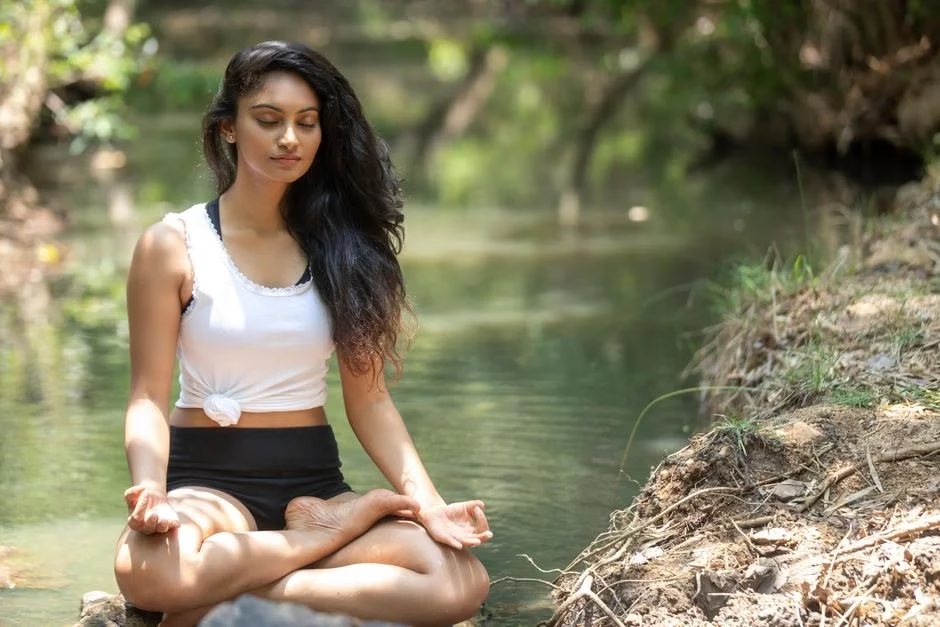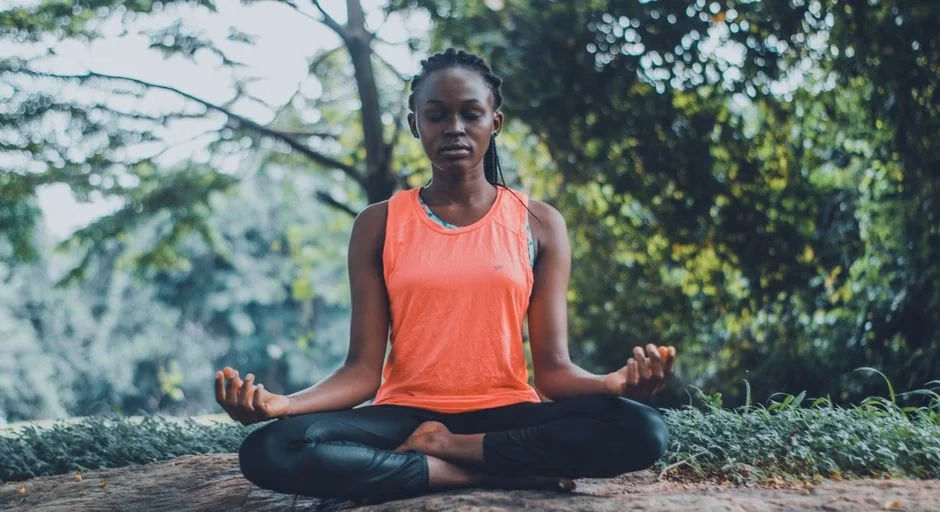
You don’t need to feel calm to be getting better at handling stress. That might sound strange, but it’s one of the most quietly important things to understand about meditation — and it changes everything about how you approach it.
Most people try meditation for stress relief expecting to feel peaceful within minutes. When they don’t, they assume they’re doing it wrong and quietly give up. But meditation isn’t really about switching off. It’s more like a training session for the part of your brain that decides how badly stress affects you. The calm comes later — and it builds gradually, like a muscle.
This post is for anyone who’s tried meditation and found it frustrating, or who’s never tried it because it seemed too slow or too “woo.” You’ll learn why stress physically changes your body, how even five minutes of practice can start to shift your response to it, and which approaches actually fit real life — including what to do when sitting quietly makes things worse.
Relevant blog to read: Gratitude Practice Train Your Brain to Feel Better
Table of contents
- Why Stress Makes Your Body Work Against You
- The Surprising Truth: Meditation Is Attention Training
- How to Match Your Practice to Your Stress
- A Simple 5-Minute Practice to Start Today
- What to Track (and Why Calm Isn't the Only Measure)
- When Meditation Makes Things Harder (And What to Do)
- Frequently Asked Questions
- Related Reading
- Author's note
Why Stress Makes Your Body Work Against You
Before you can understand why meditation helps, it helps to understand what stress is actually doing to you physically. Because it’s not just a feeling — it’s a full-body event.
When your brain senses a threat — a difficult email, a tense conversation, a looming deadline — it triggers a cascade of physical changes. Your breathing becomes shallow and fast. Your heart rate climbs. Your muscles tighten, especially in your shoulders and jaw. Your thinking narrows. This is your body’s ancient alarm system doing exactly what it was designed to do.
The problem is that this system doesn’t easily distinguish between a genuine emergency and a stressful Tuesday morning. And when it fires repeatedly throughout the day, your nervous system starts to feel chronically wound up. You stop noticing how tense you’ve become until it’s already a headache, a snapped comment, or a night of restless sleep.
This is where mindfulness meditation for stress and anxiety fits in — not as an off switch, but as an early warning system. With regular practice, you start catching the tension before it peaks. And that small gap between trigger and reaction is where everything changes.
The Surprising Truth: Meditation Is Attention Training
Here’s the insight most people miss: meditation doesn’t ask you to empty your mind. That’s one of the most persistent myths about it, and it puts people off before they even begin.
The actual skill you’re building is much simpler — and much more useful. You’re practising noticing where your attention has wandered, and gently bringing it back. That’s it. Every time your mind drifts to your to-do list and you quietly return your focus to your breath, you’ve done a repetition. You haven’t failed. You’ve just trained.
Think of it as attention training rather than a performance test. The goal isn’t to feel serene. The goal is to get a little quicker at noticing when your thoughts are spiralling — and a little better at choosing not to follow them all the way down.
A 2024 systematic review found that even a single session of meditation or breathing practice reduced physiological stress reactivity in 71% of studies reviewed, suggesting that brief, consistent practice can begin shifting your body’s response relatively quickly. You don’t need hour-long sessions or years of experience to start seeing a difference.
How to Match Your Practice to Your Stress
Not all stress feels the same, and not all meditation feels the same either. One of the most practical things you can do is choose a technique that fits what your body is actually doing in the moment — rather than forcing yourself through one approach and hoping for the best.
- Physical tension or racing heart: Try a breathing meditation for stress relief. Exhale slowly for slightly longer than you inhale — for example, breathe in for four counts and out for six. Do this for 60 to 90 seconds. The longer exhale activates the part of your nervous system that signals safety. Stop if you feel dizzy.
- Restless or agitated: Sitting still can sometimes make things worse. Mindful walking — moving slowly and noticing each foot lift, move, and land — gives your body an outlet while still anchoring your attention to the present moment.
- Self-critical or socially stressed: Loving-kindness practice, where you gently direct warm, friendly thoughts toward yourself and others, can soften the inner critic. It sounds unusual but research consistently shows it reduces self-directed stress and improves emotional regulation.
- Overwhelmed but stuck at a desk: A 5-minute body scan works well here. Close your eyes, and slowly move your attention from your feet upward, noticing sensations without judging them. Warmth, pressure, tension, tingling — just notice. This pulls your mind out of future-worry and into the present.
- Struggling to sleep: A guided meditation for stress relief before bed — especially one that combines slow breathing with a body scan — can help your nervous system downshift from the day. The key is doing it consistently, not just on the nights you feel worst.
A Simple 5-Minute Practice to Start Today
No app. No cushion. No clearing your schedule. Just five minutes and a willingness to feel a little awkward at first — because you probably will, and that’s fine.
- Find your position. Sit in a chair with your feet flat on the floor, or lie down if that’s more comfortable. You don’t need to close your eyes — especially if that feels unsettling.
- Set a timer for 5 minutes. This removes the temptation to keep checking how much time is left.
- Follow your breath. Don’t try to control it. Just notice the sensation of breathing — the air coming in, the brief pause, the air going out. Where do you feel it most clearly? The tip of your nose? Your chest? Your belly?
- When your mind wanders — and it will — just label it. Quietly say to yourself “thinking” or “planning” and gently return to the breath. No frustration needed. Wandering is normal. Returning is the practice.
- Finish with one deliberate breath. Before you move on with your day, take one slow, intentional breath and notice how your body feels right now compared to when you started.
Try attaching this to a daily cue — right after brushing your teeth in the morning, or before opening your email. Consistency matters far more than duration, especially in the first week or two.
What to Track (and Why Calm Isn’t the Only Measure)
One of the reasons people abandon meditation is that they judge each session by how relaxed they feel at the end. But that’s a bit like judging a gym session by whether you feel strong the moment you finish a set. The real gains show up over time, in the moments that used to derail you.
A 2024 review of mindfulness-based stress reduction programmes in university students found meaningful reductions in perceived stress, anxiety, and depression — with benefits becoming clear over several weeks of regular practice, not overnight.
So rather than asking “did I feel calm?” after a session, try tracking these instead — even just a quick note once or twice a week:
- Perceived stress: Rate your overall stress from 0 to 10. Are you seeing a gradual drift downward over weeks?
- Recovery speed: After something stressful happens, how long does it take you to feel like yourself again? This tends to shorten with practice.
- Sleep quality: Are you falling asleep more easily or waking up less wired?
- Irritability: Are small things setting you off less often?
- Concentration: Can you hold focus for longer without drifting?
These are the real indicators. And noticing them — even the small shifts — makes it much easier to keep going.
When Meditation Makes Things Harder (And What to Do)
This part doesn’t get talked about enough, and it matters. For some people, turning attention inward — closing their eyes, focusing on their body — can feel uncomfortable or even distressing. This is especially true for anyone who has experienced trauma, panic symptoms, or dissociation.
If sitting quietly brings up intrusive thoughts, a sense of unreality, or makes anxiety spike rather than ease, that’s not a sign you’re broken or doing it wrong. It’s a sign that a standard approach may not be the right fit right now — and that’s completely valid.
Some gentle alternatives that many people find more manageable include:
- Eyes-open practice: Keep your gaze soft and slightly downward. You stay grounded in the room around you while still practising attention.
- Movement-based practice: Mindful walking, gentle stretching, or slow, deliberate movement can provide the same attentional benefits without the inward focus that feels overwhelming.
- External anchoring: Instead of focusing on your breath, rest your attention on sounds in the room — birds, traffic, a fan — and simply notice them without following them.
If meditation consistently triggers panic, intrusive memories, or dissociation, opening your eyes, orienting yourself to the room, and moving around can help ground you. Speaking with a trauma-informed clinician before continuing is genuinely worth considering — not because something is wrong with you, but because you deserve support that’s shaped around how you specifically experience stress.
The best meditation for stress relief is the one that leaves you feeling slightly steadier than before — not the one in a trending video or a popular app. Start small, stay curious, and trust that even five quiet minutes, done regularly, can begin to change how stress moves through you.
Frequently Asked Questions
Meditation gradually trains your brain to notice stress signals earlier and react to them less automatically. Over time, regular practice improves attentional control, reduces rumination, and helps your nervous system recover more quickly after stressful events. It doesn't eliminate stress, but it changes your relationship with it — so difficult moments feel less overwhelming and pass more easily.
Starting with just five minutes a day is genuinely enough to begin seeing benefits. Consistency matters far more than duration, especially early on. A 2024 review of mindfulness programmes found meaningful reductions in perceived stress, anxiety, and depression over several weeks of regular practice — not from occasional long sessions, but from short, repeated ones.
There's no single best type — it depends on what your stress feels like. Slow breathing works well for physical tension, mindful walking helps when you feel restless, and a body scan is useful when your mind won't stop racing. The most effective approach is the one that feels manageable enough to do consistently, even on difficult days.
For some people, yes — especially those with trauma histories, panic symptoms, or dissociation. Turning attention inward can sometimes increase distress rather than ease it. If that happens to you, it doesn't mean you're broken. Eyes-open practice, mindful walking, or focusing on external sounds can be gentler starting points. A trauma-informed clinician can help you find what works.
It can be genuinely helpful, especially when done consistently rather than only on the worst nights. A slow breathing practice or body scan before sleep gives your nervous system a chance to downshift from the day. Pairing it with a fixed bedtime cue — like after you get into bed — helps your brain associate it with winding down over time.
Related Reading
- Gratitude Practice Train Your Brain to Feel Better
- Meditation for Stress Relief Rewires Brain
- Stress Management Techniques That Actually Work
- Body Scan Meditation Train Your Body to Feel Safe
Author’s note
Thank you for taking the time to focus on your well-being and for being your own cheerleader in this journey called life. I truly appreciate you for choosing to invest in yourself today, and I’m honored that you spent a part of your day here. Remember, every small step you take matters, and you’re doing an amazing job. Keep going—you’ve got this!