

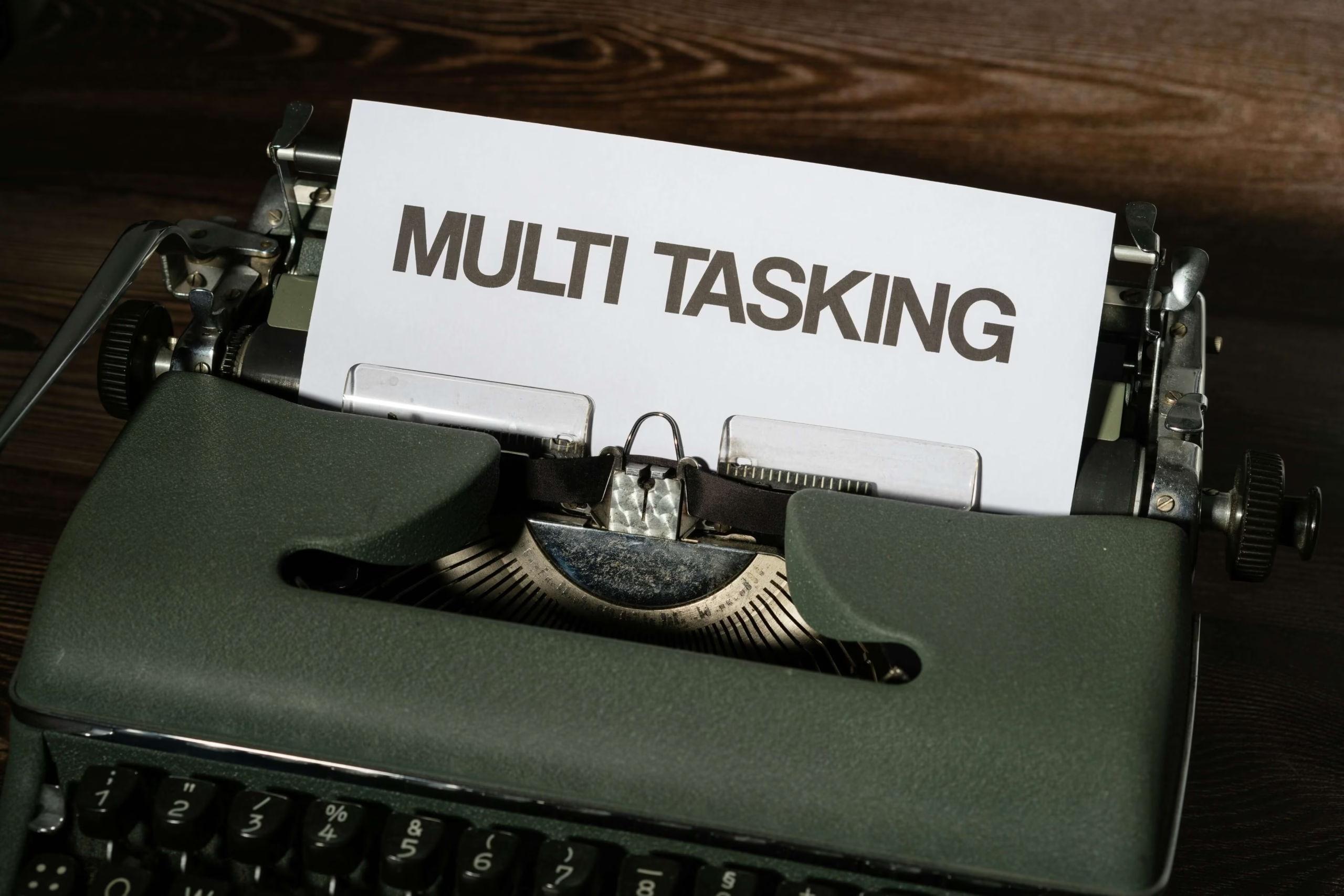
In our fast-paced world, being “busy” is often seen as a badge of honor. We answer emails while on a call, text while watching a show, and plan our weekend while sitting in a meeting. We’ve been told that multitasking is a skill to be proud of. But the truth is, this constant juggling act isn’t a sign of efficiency; it’s a direct path to burnout, anxiety, and a profound sense of mental exhaustion.
The glorification of busyness has convinced us that doing more at once is a good thing. The reality is that your brain isn’t built to do multiple things simultaneously. It’s built to focus, and every time you switch tasks, you pay a heavy cognitive price. This blog will challenge the myth of multitasking and show you how to embrace the powerful, well-being-boosting habit of slowing down.
Relevant blog to read: How to Protect Your Mental Health While Working from Home
The Myth of Multitasking
Neuroscience has proven that multitasking is a lie. What we call multitasking is actually rapid task-switching. Your brain isn’t doing two things at once; it’s frantically bouncing back and forth between them. With each switch, there’s a cost. Your brain has to re-engage, re-orient, and find its place in the new task. This constant start-stop cycle is incredibly draining.
This relentless switching leads to several serious mental and emotional consequences:
- Heightened Stress: The pressure of trying to keep up with multiple things at once puts your nervous system in a constant state of alert. This triggers a release of the stress hormone cortisol, leaving you feeling frazzled and overwhelmed.
- Increased Errors: When your focus is divided, you are far more likely to make mistakes. A missed detail in an email, a small error in a report, or a forgotten task can all lead to bigger problems later on.
- A Drained Feeling: By the end of the day, you feel like you’ve been running a marathon, even if you haven’t left your desk. This isn’t because you were productive; it’s because you exhausted your brain’s most valuable resource: its focused attention.
The Mental Health Benefits of Single-Tasking
The antidote to the chaos of multitasking is single-tasking. This is the simple yet revolutionary practice of dedicating your full, undivided attention to one task at a time. It’s a core practice in mindfulness, and its benefits for your mental health are immediate and lasting.
- Reduces Overwhelm: When your to-do list feels endless, tackling one item at a time makes it feel manageable. Instead of feeling like you’re drowning in a sea of tasks, you can simply focus on the next step in front of you. This is a powerful way to reduce the feeling of anxiety and helplessness.
- Increases Focus and Quality: When your attention is fully dedicated to one thing, your work is more accurate and efficient. You’re able to dive deeper into the task, leading to higher-quality results and a much greater sense of accomplishment.
- Creates a Sense of Calm: Single-tasking is a form of active meditation. By concentrating on one thing, you quiet the mental chatter and create a sense of calm and control. The chaotic energy of doing too much is replaced by the serene focus of doing what matters.
- Boosts Your Well-being: When you finish a single task, your brain rewards you with a small dose of dopamine, the motivation molecule. This positive feedback loop is a powerful way to boost your mood and create a sustainable sense of joy and fulfillment.
Your Toolkit for Slowing Down
Slowing down isn’t easy in a world that pushes us to go faster. But with a few simple, conscious habits, you can reclaim your focus and your peace of mind.
- The 20-Minute Rule: Set a timer for 20 minutes and dedicate that time to a single task with zero interruptions. Turn off your notifications, close all other tabs, and ignore the world. This trains your brain to sustain focus.
- Establish Digital Boundaries: Don’t let technology dictate your time. Turn off non-essential notifications on your phone and computer. Check emails and social media in designated time blocks, not whenever they pop up.
- Themed Work Blocks: Instead of bouncing between different types of work, group similar tasks together. Designate one hour for answering emails, another hour for creative work, and another for calls.
- Take Mindful Breaks: A real break is not a scroll through social media. Step away from your desk, stretch, grab a glass of water, or simply look out the window. This allows your brain to fully disengage and recharge.
- Celebrate Small Wins: After you complete a single task, take a moment to acknowledge it. This simple act reinforces the value of single-tasking and builds momentum for the next task.
Relevant blog to read: Finding Your “Flow State”: How to Get in the Zone and Boost Your Creativity
Final Thoughts: From a Hectic to a Peaceful Mind
The ability to slow down is the most powerful tool you have for protecting your mental health in a fast-paced world. Multitasking is a myth, a shortcut that only leads to exhaustion and poor results. Single-tasking is the path to true productivity, sustained focus, and a deep sense of peace. It’s not about doing less; it’s about doing what matters, one step at a time.
Frequently Asked Questions
A. Not always. Some forms of “passive” multitasking, like listening to a podcast while you do chores, are harmless. The danger is in trying to do two or more cognitively demanding tasks at once.
A. It’s a habit you need to unlearn. Start with the 20-Minute Rule. The more you train your brain to focus, the easier it will become.
A. You will actually be more productive. The quality of your work will improve, and you will spend less time on errors and corrections.
A. Try to manage your time by grouping similar tasks together. For example, if you have to manage a social media account and write reports, set aside separate time blocks for each task instead of doing them both at once.
How Chronic Multitasking Rewires Your Brain
Every time you switch between tasks, your brain pays a hidden “switching cost”—a few seconds of lost focus that quietly add up across the day. Research on attention shows that chronic multitasking trains your mind to crave constant novelty, making it harder to sit with a single task without reaching for your phone. Over time, this can shrink your attention span and leave you feeling scattered even during downtime.
The encouraging news is that the brain is wonderfully adaptable. Just as multitasking wires you for distraction, deliberate single-tasking rewires you for calm, sustained focus. Pairing focused work with intentional breaks—and clearing mental noise through a simple brain dump—helps your nervous system settle back into a slower, steadier rhythm.
Small shifts that rebuild your focus
- Work in short, distraction-free blocks and protect them from notifications.
- Keep one tab, one task, one window open whenever possible.
- Reset between tasks with a breath, a stretch, or a few focus-friendly habits instead of jumping straight to the next thing.
- When your mind feels overloaded, try a short dopamine detox to reset your baseline.
Related Reading
- Focus Strategies for Mental Health That Actually Work
- 21 New Year’s Mental Health Goals to Actually Keep in 2026
- 10 Small Self-Care Habits for Your Mental Health
- Time Management Strategies That Protect Your Mental Energy
Author’s note
Thank you for taking the time to focus on your well-being and for being your own cheerleader in this journey called life. I truly appreciate you for choosing to invest in yourself today, and I’m honored that you spent a part of your day here. Remember, every small step you take matters, and you’re doing an amazing job. Keep going—you’ve got this!



3 Comments