You know that feeling when your shoulders are up near your ears and you don’t even realise it until someone asks if you’re okay? That low-level hum of tension that just never quite goes away? That’s your nervous system asking for help — and it’s worth listening to.
There are a lot of promises out there about natural remedies for stress. Teas, supplements, quick fixes, miracle herbs. Some of them genuinely help. Some of them are more hype than substance. And the real truth — the one that actually changes things — is that the most effective approach isn’t one magic remedy. It’s building a small, personalised set of tools that work together, some fast-acting and some slow-burning, so your body and mind get support from more than one direction at once.
This post walks you through what the evidence actually says, separates the promising from the overhyped, and gives you a simple place to start — even if today has already been a lot.
Relevant blog to read: Stress Management Techniques That Actually Work
Table of contents
Why One Remedy Is Never Enough
Here’s the thing nobody tells you: stress isn’t just in your head. When you’re stressed, your whole body responds — your breathing gets shallower, your muscles tighten, your sleep suffers, your digestion slows down. That’s why a single supplement or one deep breath, while helpful, can only go so far on its own.
Think of your stress recovery like a stack — a small collection of tools, each doing a different job. One tool helps you calm down right now. Another supports your nervous system over time so stress doesn’t hit as hard tomorrow. Together, they do something that no single remedy can manage alone.
The most grounded approach pairs one immediate calming technique with one daily habit — and, if you choose, one carefully selected supplement. Not ten things. Not a complete lifestyle overhaul. Just a small, consistent stack you can actually stick to.
The Fastest Natural Way to Calm Stress in the Moment
When stress peaks, your breathing is usually the first thing to change. It gets faster and shallower without you noticing. This is your body’s alarm system switching on — and one of the quickest ways to switch it back off is to consciously slow your breath down.
Slow breathing works because it activates your parasympathetic nervous system — that’s the part of your body responsible for rest and recovery. When you breathe slowly and intentionally, you’re essentially sending a signal to your brain that the danger has passed. Your heart rate drops. Your muscles loosen slightly. The mental chatter quiets a little.
Two techniques that many people find genuinely useful:
- Box breathing: Breathe in for 4 counts, hold for 4, breathe out for 4, hold for 4. Repeat for 2 to 5 minutes. Simple enough to do before a stressful meeting or in a bathroom break at work.
- 4-7-8 breathing: Breathe in for 4 counts, hold for 7, breathe out slowly for 8. The long exhale is what triggers the calm. Even two or three rounds can take the edge off.
The National Center for Complementary and Integrative Health has found that relaxation techniques like these can reduce blood pressure, lower inflammation markers, and reduce oxidative stress in the body. That’s not a small thing — that’s your body physically shifting out of stress mode.
You don’t need to wait until you’re overwhelmed to try this. Practising when you’re only mildly stressed makes it much easier to use when you really need it.
Natural Stress Relief Techniques You Can Build Into Every Day
Fast-acting tools are brilliant for a crisis moment. But the real magic happens in what you do consistently, day after day. These are the habits that gradually lower your stress baseline — so that life’s inevitable pressures don’t knock you as far off balance.
- Movement: Even a 10-minute walk after lunch can reduce muscle tension and lift your mood. Exercise is one of the most reliable, low-cost ways to reduce stress naturally — and you don’t need a gym or a complicated routine. Brisk walking, gentle yoga, stretching — it all counts.
- Sleep protection: Poor sleep makes everything feel harder, and stress makes sleep harder — it’s a frustrating cycle. Going to bed and waking up at roughly the same time every day, even on weekends, can help stabilise your body’s stress response. The CDC recommends adults get seven or more hours per night, and consistency in sleep timing matters just as much as the total hours.
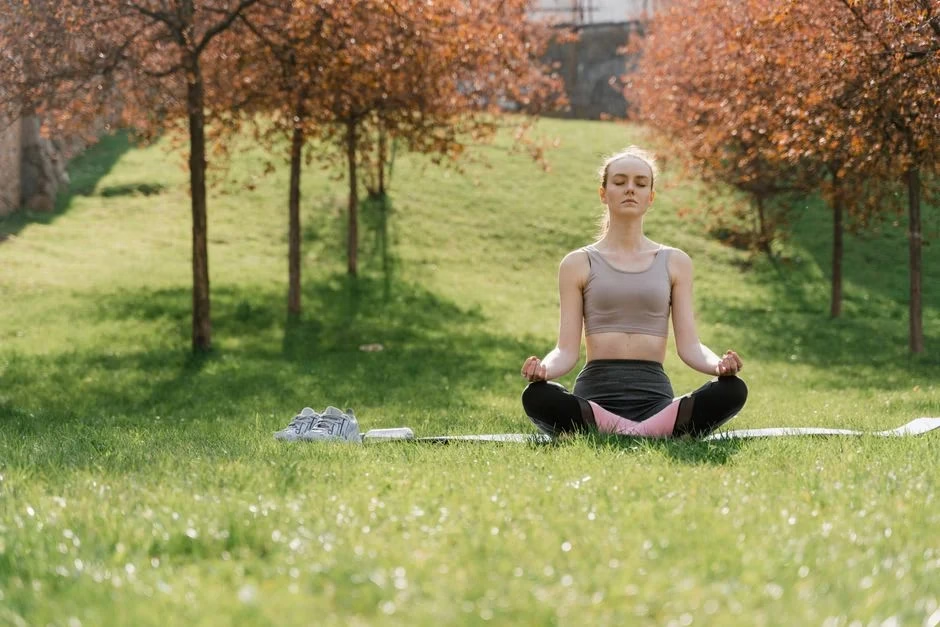
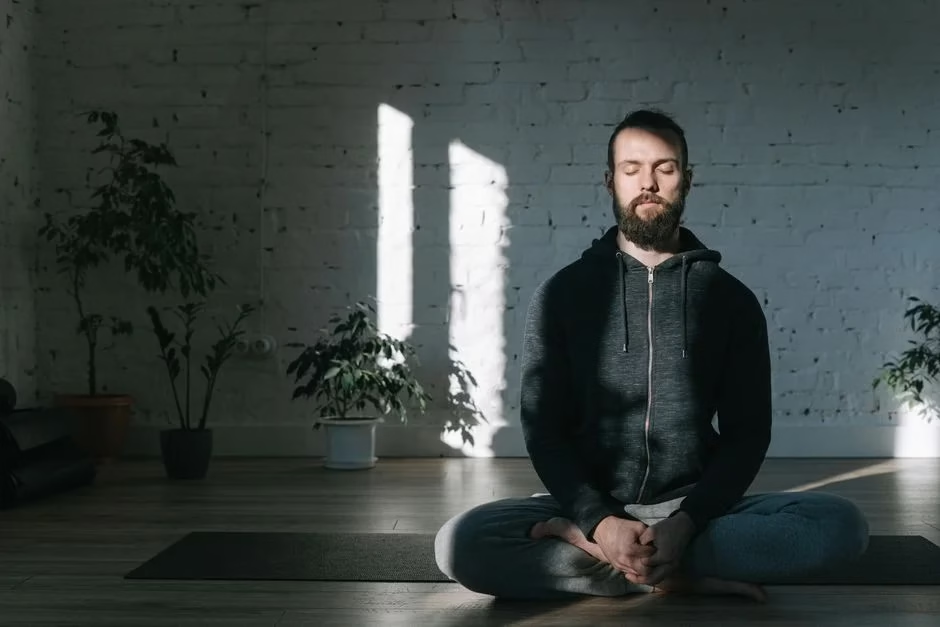
- Mindfulness in small doses: You don’t need to meditate for an hour. Five minutes in the morning, sitting quietly before you pick up your phone — just noticing your breath, the sounds around you, how your body actually feels — can genuinely shift how the rest of the day lands. Research from the National Center for Complementary and Integrative Health confirms that regular mindfulness practice reduces stress, anxiety, and depression, and improves sleep. The key word is regular. A little, often, beats a lot, occasionally.
- Time in nature: Spending even brief periods in green spaces — a park, a garden, near trees — has been linked with better mood and lower stress levels. It doesn’t need to be a hike. Ten minutes outside, genuinely looking around rather than scrolling, makes a real difference.
- Hydration and food habits: This one gets overlooked. Skipping meals, drinking too much caffeine in the afternoon, and not drinking enough water can all quietly amplify stress in your body. Swapping one afternoon coffee for water or a herbal tea is a small shift that many people notice has a surprisingly noticeable effect.
None of these are dramatic. That’s exactly the point. Small, repeated actions build a calmer nervous system over time — and that’s a much more stable foundation than any single remedy can provide.
Herbal Remedies for Stress: What the Evidence Actually Says
Here’s where it gets important to be honest with you. Herbal remedies for stress are enormously popular — and some of them genuinely show promise. But the evidence varies a lot between them, and the idea that natural always means safe or always means effective isn’t quite accurate.
Let’s look at what the research actually supports:
- Ashwagandha: This is one of the better-studied options. One clinical trial found that ashwagandha produced a 44% reduction in perceived stress scores, compared to just 5.5% with a placebo. That’s a meaningful difference. It also appears to help lower cortisol — one of the main hormones your body releases when stressed. That said, it’s not suitable for everyone, particularly those on certain medications or with specific health conditions, so checking with a healthcare provider first is wise.
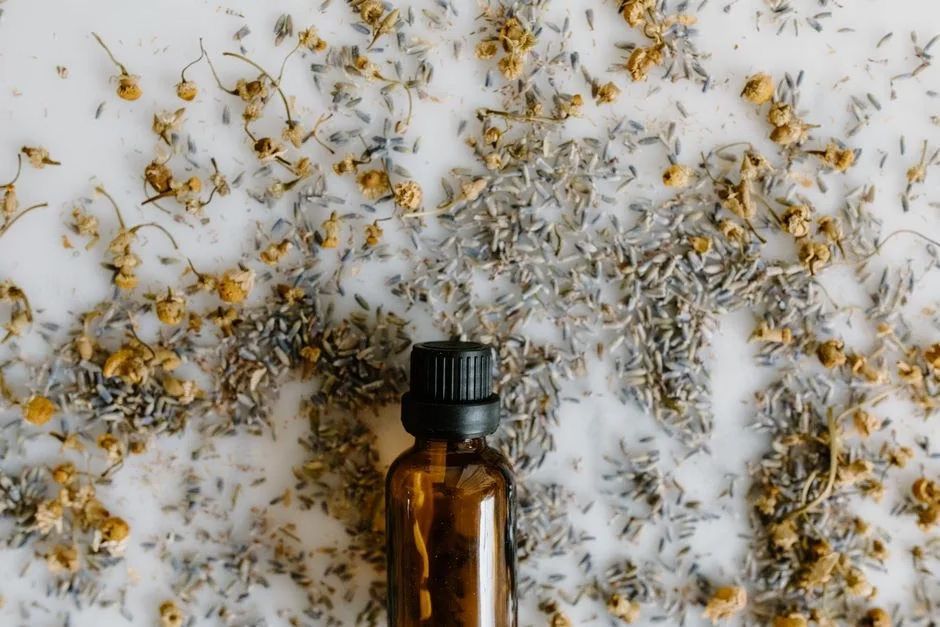
- Chamomile: Commonly found in teas and generally well tolerated. There’s some preliminary evidence it can have a gentle calming effect, though the research is not yet conclusive. It’s a low-risk option for most people and a pleasant wind-down ritual in itself.
- Lavender: Whether used in aromatherapy or as a supplement, lavender has some early evidence supporting its calming effects. The research is promising but still limited in scale.
- Rhodiola: Sometimes described as an adaptogen — something that helps your body cope with stress — rhodiola has mixed support in the research. Some studies suggest it may reduce mental fatigue and stress, but evidence is not yet strong enough to make firm claims.
- Kava: Worth a specific mention because it’s widely sold as a stress remedy — but kava has been linked to serious liver injury. This is one to approach with real caution, regardless of how it’s marketed.
The broader point here is that herbs and supplements are active interventions, not harmless extras. Quality varies between brands, doses matter, and some supplements interact with medications in ways that can cause problems. If you’re curious about adding a supplement to your routine, treating it with the same thoughtfulness you’d give any other health decision is the safest path.
How to Build Your Own Stress Recovery Stack
You don’t need to do everything on this list. In fact, trying to overhaul everything at once is itself a source of stress. The approach that tends to work best is simple: choose one thing from each layer, and start there.
- Pick one fast-acting tool. Box breathing before difficult moments. A five-minute progressive muscle relaxation session before bed. Something you can reach for when stress spikes.
- Add one daily habit. A short walk. A consistent bedtime. Ten minutes outside. Something small enough that you’ll actually do it on hard days.
- Consider one supplement — carefully. If you want to explore this layer, do a little research, check for any interactions with medications you already take, and start with something with a reasonable evidence base, like chamomile tea or, if appropriate for you, ashwagandha.
If you’re not sure where to begin, start even smaller than you think you need to. Pick the one thing on this list that felt most like oh, I could actually do that — and just do that. Not perfectly. Not every day forever. Just tomorrow. Because the nervous system doesn’t need a grand plan. It needs to feel, in small and repeated ways, that someone is paying attention to it. That someone being you.
Building this kind of personalised stack takes a little time, but what it gives you is something much more valuable than a quick fix — it gives you a way to feel genuinely steadier, day by day, that belongs entirely to you.
Frequently Asked Questions
The most evidence-backed natural remedies for stress aren't single supplements — they're combinations. Slow breathing and progressive muscle relaxation work quickly in the moment. Daily movement, consistent sleep, and brief mindfulness practice build long-term resilience. If you want to add a supplement, ashwagandha has the strongest current evidence, though it's not right for everyone. Starting with one tool from each layer works better than trying everything at once.
Some do show real promise. Ashwagandha has clinical trial evidence behind it — one study found a 44% reduction in perceived stress scores compared to 5.5% with a placebo. Chamomile and lavender have gentler, more preliminary support. However, herbal supplements aren't risk-free. Quality varies between brands, some interact with medications, and kava has been linked to serious liver problems. Treat them as active interventions, not harmless extras.
Start small and make it repeatable. A 10-minute walk, a consistent bedtime, swapping an afternoon coffee for water or herbal tea, and five minutes of mindful breathing are all low-effort habits that — when done regularly — gradually lower your stress baseline. The key is consistency rather than intensity. Even one new daily habit, done most days, compounds into real, noticeable change over a few weeks.
Slow, controlled breathing is one of the quickest tools available. When you breathe slowly — especially with a long exhale — you activate the part of your nervous system responsible for rest and recovery, and your body begins to physically calm down. Box breathing (4 counts in, hold 4, out 4, hold 4) or 4-7-8 breathing can both take effect in just two to five minutes. No equipment needed.
Yes — and the research backs it up. The National Center for Complementary and Integrative Health has found that regular mindfulness meditation can reduce symptoms of stress, anxiety, and depression, and can improve sleep. The word 'regular' matters here. Mindfulness tends to work much better as a daily habit than as something you turn to only when things feel unbearable. Even five to ten minutes a day makes a measurable difference over time.
Related Reading
- Stress Management Techniques That Actually Work
- Stress Resilience Strategies That Actually Work
- Stress Management Techniques That Actually Work
- Positive Psychology Interventions That Actually Work
Author’s note
Thank you for taking the time to focus on your well-being and for being your own cheerleader in this journey called life. I truly appreciate you for choosing to invest in yourself today, and I’m honored that you spent a part of your day here. Remember, every small step you take matters, and you’re doing an amazing job. Keep going—you’ve got this!