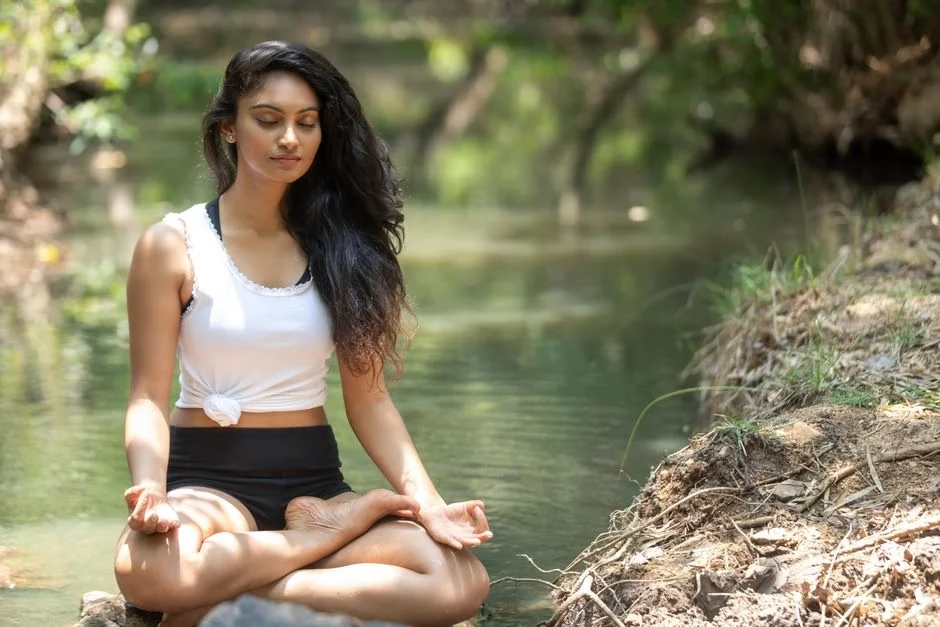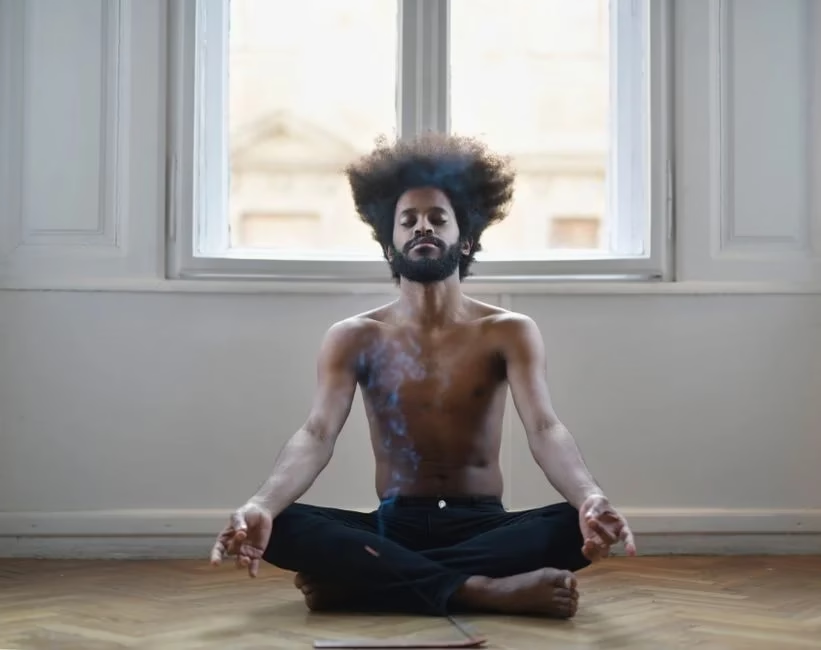
You’re lying in bed, eyes closed, completely exhausted. But your brain has other plans. It’s replaying an awkward conversation from Tuesday, writing tomorrow’s to-do list, and quietly asking, why am I still awake? The harder you try to fall asleep, the more awake you feel. Sound familiar?
That cruel loop has a name: pre-sleep hyperarousal. And it affects far more people than you might think. The CDC has found that around one in seven adults struggles to fall asleep most nights. If that’s you, you’re not broken — your nervous system is just stuck in the wrong gear at the wrong time.
This is where meditation for sleep earns its place. Not as a vague relaxation trick, but as a real, repeatable way to shift your body out of high-alert mode and into something that actually feels like rest. By the end of this post, you’ll know exactly why it works, what to do, and how to make it feel effortless every single night.
Relevant blog to read: Do Women Need More Sleep Than Men
Table of contents
- Why Trying Harder to Sleep Makes Everything Worse
- What Meditation for Sleep Actually Does to Your Body
- The Shutdown Sequence: How to Meditate Before Bed
- The Misconception That Keeps People Stuck
- Making It Stick: The Small Things That Make a Big Difference
- Frequently Asked Questions
- Related Reading
- Author's note
Why Trying Harder to Sleep Makes Everything Worse
Here’s the thing nobody tells you: sleep is the one thing that runs away the moment you chase it. The instant you start monitoring yourself — am I asleep yet? why isn’t this working? — your brain registers that as a threat and pumps out a small shot of stress hormones. You become more alert, not less. It’s exhausting in the most ironic way possible.
This is what sleep researchers call the hyperarousal cycle. Your body is physically tired, but your nervous system is still in daytime mode — scanning for problems, processing the day, bracing for tomorrow. Shallow breathing, a tense jaw, tight shoulders. You might not even notice it’s happening.
Meditation doesn’t try to force sleep. That’s its quiet superpower. It gives your nervous system something gentle to do — follow the breath, notice the body — instead of spinning in worry. It’s less about making yourself sleep and more about giving your brain an off-ramp from the motorway of your thoughts.
What Meditation for Sleep Actually Does to Your Body
When you slow your breathing down — especially when you make your exhale longer than your inhale — your body gets a very clear signal: the danger has passed, we can stand down now. Your heart rate drops. Your muscles soften. The part of your brain that’s been on high alert starts to quiet.
This isn’t wishful thinking. It’s your autonomic nervous system responding to a physical cue. The exhale, in particular, activates the branch of your nervous system responsible for rest and recovery. A longer out-breath is essentially a whisper to your body that says: you’re safe, you can let go.
Body scan meditation works through a slightly different door. Instead of focusing on the breath, you slowly move your attention from your toes up through your body — noticing how each part feels, and gently releasing any tension you find. Most people are shocked to discover how tightly they’ve been holding their jaw, their stomach, or their hands without even realising it. Noticing tension is the first step to letting it go.
The Shutdown Sequence: How to Meditate Before Bed
The most useful way to think about bedtime meditation is as a shutdown sequence — a repeatable set of steps your body learns to associate with sleep. The more consistently you do it, the faster your nervous system recognises the cue and starts winding down automatically. Think of it like a sleep trigger you build yourself, night by night.
You don’t need an app, a cushion, or a perfectly quiet room. Here’s a simple sequence that works:
- Dim the room and put your phone face-down at least 10 minutes before you start. Light and notifications keep your brain in alert mode. Reducing stimulation isn’t optional — it’s part of the practice.
- Lie in a comfortable position and set a soft timer for 10 to 15 minutes. This means you won’t keep checking the clock, which is its own form of sleep anxiety.
- Start with breathing exercises for sleep. Breathe in slowly for four counts, then breathe out for six or eight counts. That longer exhale is the key — it sends the calm signal. Repeat this for two to three minutes.
- Move into a body scan. Start at your feet. Notice how they feel — heavy, warm, cool, tense. Then slowly work your way up: calves, knees, thighs, hips, stomach, chest, hands, arms, shoulders, neck, face. At each area, just notice. Don’t force anything. If you feel tension, breathe into it and let the exhale carry it away.
- When thoughts arrive — and they will — just name them and return. You don’t need to stop thinking. That’s not the goal. Simply notice: there’s a thought, and gently bring your attention back to your breath or your body. Every time you do this, you’re training your brain. That’s the whole practice.
A Note on Guided Sleep Meditation
If silence feels too loud (and for many people with sleep anxiety, it does), guided sleep meditation can be a brilliant starting point. A calm voice gives your mind something to follow, which makes it easier to stop generating your own anxious commentary. Over time, you may find you need the guidance less — but there’s no pressure to ever stop using it. Whatever helps you actually do the practice is the right choice.
The Misconception That Keeps People Stuck
A lot of people try meditation for sleep once or twice, decide their mind is “too busy” for it, and give up. This comes from a very understandable but completely wrong idea about what meditation is supposed to do.
Meditation is not about clearing your mind. It never was. And yet that image — the perfectly serene person with zero thoughts, floating in mental silence — is somehow the one we all absorbed. It’s also the reason so many people lie there, notice a thought about the dishwasher, and conclude they’re doing it wrong.
The actual goal is much kinder than that. It’s about noticing when your mind has wandered, and gently bringing it back. That’s it. Every time you do that — even if it happens fifty times in ten minutes — you’re doing it right. You’re not bad at meditating. You’re just a human with a human brain, doing exactly what human brains do.
Consistency matters far more than doing it perfectly. Ten distracted minutes most nights will do more for your sleep than one flawless session a week. The bar is lower than you think. That’s the point.
Making It Stick: The Small Things That Make a Big Difference
The nervous system loves patterns. When you pair your meditation with the same small cue each night — the same lamp you switch off, the same position you settle into, even the same slow breath you begin with — your brain starts to connect that cue with sleep. Over time, just doing the first step can start to make you feel drowsy. That’s not magic. That’s your brain learning.
Here are a few small things that quietly make the whole practice more effective:
- Temperature: A cooler room helps your body temperature drop, which is part of your natural sleep process. Your meditation will feel noticeably easier in a room that isn’t too warm.
- Darkness: Even small amounts of light can keep your brain alert. Blackout curtains or an eye mask can genuinely change how quickly you feel sleepy.
- Low pressure: Before you begin, remind yourself of something that sounds almost too simple: tonight’s goal is not to fall asleep. Tonight’s goal is just to do the practice. Sleep isn’t something you achieve — it’s something that happens when you stop trying to achieve it. That single reframe is often what finally lets it arrive.
- Same time, same place: Your body clock responds to routine. Meditating at roughly the same time each night strengthens the signal you’re sending.
Sleep meditation for anxiety works especially well when it becomes part of a broader wind-down routine — not as the single thing that has to fix everything, but as one gentle, reliable anchor at the end of the day. Give it a few weeks of low-pressure consistency, and you may find the gap between closing your eyes and drifting off quietly starts to shrink.
Frequently Asked Questions
Body scan meditation and slow breathing exercises are two of the most reliably effective options. Body scan meditation works by shifting your attention away from racing thoughts and toward physical sensations, which helps release tension you didn't realise you were holding. Slow breathing with a longer exhale than inhale calms your nervous system directly. Many people find guided sleep meditation helpful too, especially at the start.
Even 10 minutes is enough to make a real difference. The research consistently shows that consistency matters more than length — a short practice done most nights outperforms a long one done occasionally. Start with 10 minutes and see how you feel. You can always extend it, but don't let the idea of needing more time stop you from starting with less.
It can, though it works best as part of a broader sleep routine rather than a standalone fix. Meditation is particularly useful if your insomnia is driven by racing thoughts, stress, or difficulty winding down — because it directly addresses the nervous-system hyperarousal that keeps you awake. Pairing it with a consistent sleep schedule and a dark, cool room tends to strengthen the results over time.
Yes — and for sleep purposes, lying in bed is actually ideal. Unlike daytime meditation where falling asleep mid-session is considered a distraction, the whole point here is to ease you toward sleep. Get comfortable in your usual sleeping position, set a gentle timer if you want one, and let the practice do its work. There's no need to sit upright.
For most people who are new to meditation or who deal with sleep anxiety, guided sleep meditation tends to be easier to stick with. A calm voice gives your mind a clear anchor, which makes it harder for anxious thoughts to take over. That said, silent breath or body scan practices work just as well once you're comfortable with them. Neither is better — the best one is whichever you'll actually do tonight.
Related Reading
- Do Women Need More Sleep Than Men
- How Screen Time Before Bed Affects Your Health and Sleep
- How to Make More Time in Your Day
- Body Scan Meditation for Sleep
Author’s note
Thank you for taking the time to focus on your well-being and for being your own cheerleader in this journey called life. I truly appreciate you for choosing to invest in yourself today, and I’m honored that you spent a part of your day here. Remember, every small step you take matters, and you’re doing an amazing job. Keep going—you’ve got this!