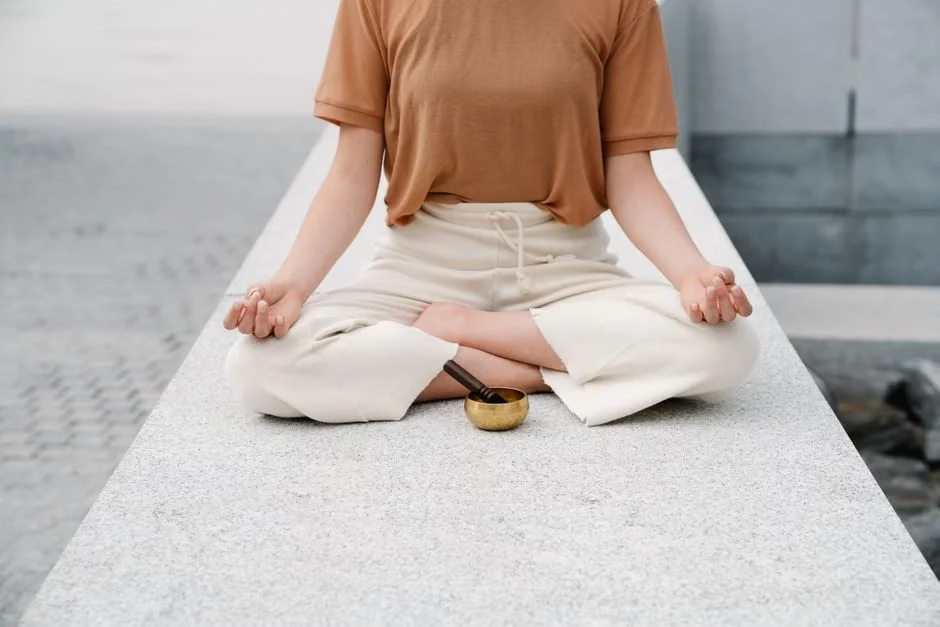
Most of us end our days by collapsing into bed, our minds still buzzing with the unfinished tasks and social interactions of the last 16 hours. This “open-loop” state is a primary driver of insomnia and chronic stress. To truly live an intentional life, you must learn the art of the “Close.”
End-of-Day Reflection is a deterministic practice that allows you to process your emotions, celebrate your wins, and mentally “archive” the day. It is the bridge between the chaos of doing and the peace of being.
Relevant blog to read: How Screen Time Before Bed Affects Your Health and Sleep
How End-of-Day Reflection Helps Your Wellbeing
Reflection is not just about looking back; it’s about clearing the path forward. Here is how it impacts your mental health:
- Closes Mental Loops: The brain has a tendency to remember uncompleted tasks more than completed ones (the Zeigarnik Effect). Reflection allows you to acknowledge what was done and consciously “defer” what wasn’t, which lowers evening anxiety.
- Facilitates Emotional Processing: By naming the emotions you felt during the day, you prevent them from becoming suppressed tension in the body.
- Tracks Progress: We often feel like we aren’t moving fast enough. Reflection provides the evidence of your growth, boosting your self-efficacy.
- Improves Sleep Quality: By “unloading” your thoughts onto paper or into a focused mental space, you reduce the likelihood of 3:00 AM ruminations.
What to Reflect Upon: The 4-Pillar Framework
If you aren’t sure where to start, use these four deterministic pillars to guide your End-of-Day Reflection:
1. The Wins (No Matter How Small)
Our brains are naturally wired with a negativity bias. You must intentionally search for the wins. Had you drunk enough water? Did you set a difficult boundary? Did you complete a focused hour of work?
- Why: This builds a “success identity,” which is crucial for manifestation.
2. The Lessons (The “Pivot” Points)
Identify moments that didn’t go as planned. Instead of judging yourself, ask: “What is the data here?” * Example: If you lost your temper, don’t just feel guilty. Reflect on the trigger: was it hunger, fatigue, or a specific comment?
3. The Gratitude (The Frequency Shift)
Identify at least three specific things you are grateful for from the last 24 hours. Be deterministic: instead of “my family,” try “the way my partner made me laugh during dinner.”
4. The Intention (Setting the Stage)
Briefly acknowledge one primary goal for tomorrow. This is the first step of the daily planning strategy we’ve discussed previously.
What to Do When It’s Hard to Reflect
There will be nights when you are too exhausted to journal or your mind feels “foggy.” When resistance is high, use these strategies:
- The 60-Second Micro-Reflection: Don’t aim for a page. Just name one win and one thing to let go of.
- The Voice Memo: If writing feels like a chore, record a quick 2-minute voice note for yourself. Sometimes hearing your own voice process the day is more therapeutic.
- The Body Scan: If your mind is too loud, focus on your body. Where are you holding tension? Breathe into those spaces and visualize the day’s stress leaving your body with every exhale (similar to Color Breathing).
How Prompts Help Deepen the Practice
Prompts act as a “neural spark” to get your thoughts moving. Here are 5 deterministic prompts for your End-of-Day Reflection:
- “What did I do today that my future self will thank me for?”
- “If I could relive one moment from today, which would it be and why?”
- “What was a moment today where I felt out of alignment with my values, and how can I adjust tomorrow?”
- “Who did I help or connect with today?”
- “What is one thing I am carrying right now that I can choose to put down before I sleep?”
Integrating Reflection into Your Routine
For best results, pair your reflection with another evening habit (Habit Stacking). Do it right after you put on your pajamas or immediately after your “Digital Sunset.” By making it a non-negotiable part of your well-being routine, you ensure that you aren’t just sleeping—you are truly recovering.
End-of-Day Reflection vs. Overthinking: Knowing the Difference
One of the biggest fears people have about End-of-Day Reflection is that it will tip into rumination — lying awake replaying every awkward moment. But reflection and overthinking are not the same thing. Reflection is intentional, time-bound, and forward-looking; overthinking is open-ended, repetitive, and rooted in anxiety. The difference is largely one of structure.
- Reflection has a container. You set aside five to ten minutes, then you close the notebook and the day.
- Reflection ends with a takeaway. Every session finishes with one insight or one intention, not an endless loop.
- Reflection is kind. You observe your day with curiosity rather than judging yourself for what went wrong.
If you notice your evening reflection sliding into worry, gently steer it back to the framework and pair it with a calming routine. Building small, restorative habits into your evenings — like those in our guide to small self-care habits — makes it far easier to close the day feeling settled rather than stirred up.
Frequently Asked Questions (FAQs)
A. While mental reflection is better than nothing, paper (journaling) is superior. The act of writing forces your brain to slow down and synthesize information, making the emotional release more effective.
A. Those are the days when End-of-Day Reflection is most important. Use it to find the “floor” of the day. Even if the only win was “I survived a hard day,” that is a win worth recording.
A. Five to ten minutes is the “sweet spot.” You don’t want it to become another heavy task on your to-do list.
A. Yes! Many people find that reflecting on today naturally leads into planning for tomorrow. It’s a great way to “close the book” on one day and prepare the canvas for the next.
Related Reading
- Why Daily Planning is the Key to Emotional Wellness and Success
- Mental and Emotional Wellness Month: How to Prepare for a Transformative May
- Emotional Healing: What It Really Takes to Feel Whole
- The Rise of the Glow-cation: Why 2026 is the Year of Wellness Travel
Author’s note
Thank you for taking the time to focus on your well-being and for being your own cheerleader in this journey called life. I truly appreciate you for choosing to invest in yourself today, and I’m honored that you spent a part of your day here. Remember, every small step you take matters, and you’re doing an amazing job. Keep going—you’ve got this!