

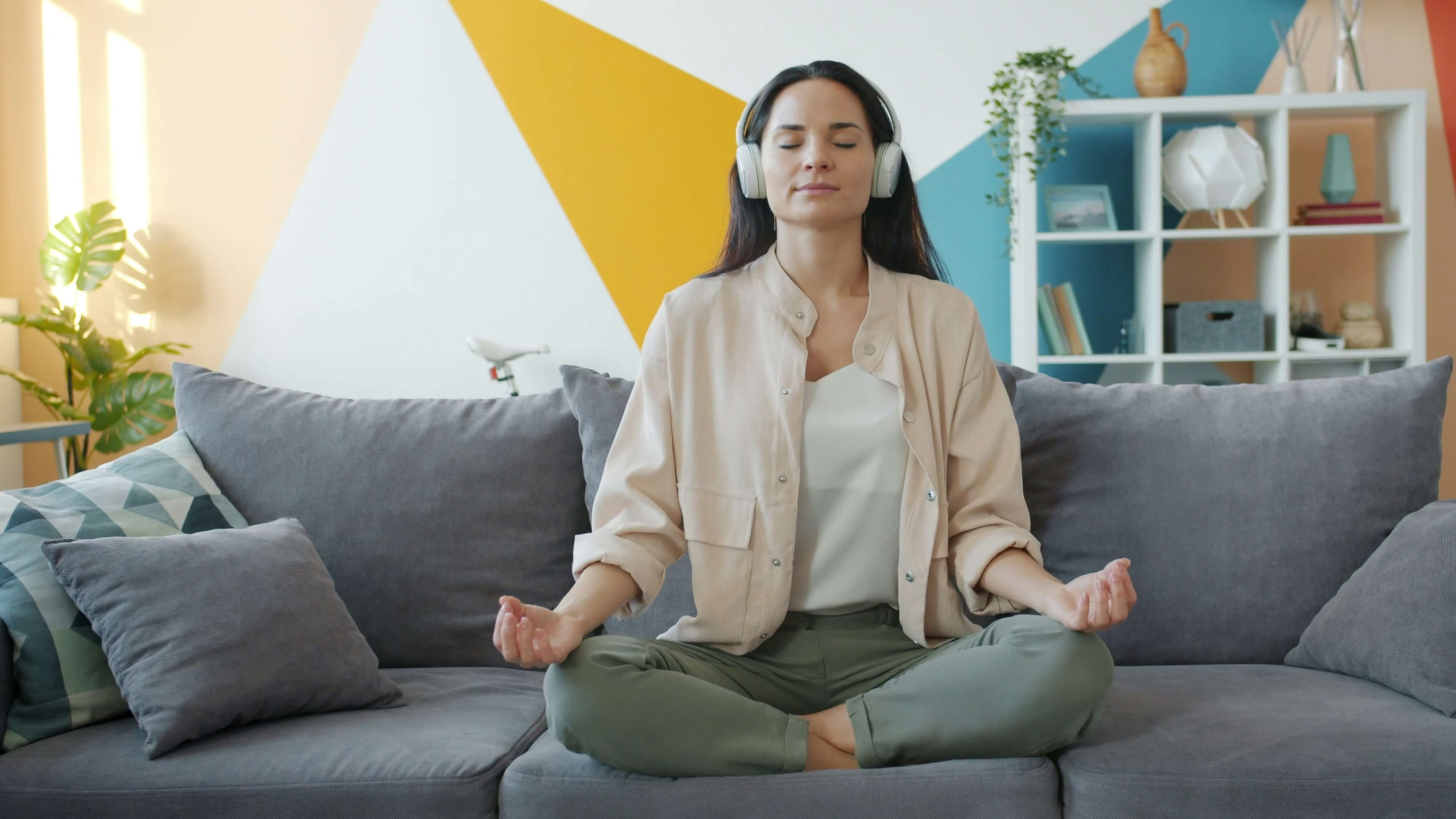
In the modern world, stress often feels like an unavoidable companion. While traditional meditation focuses on clearing the mind, Visualization Meditation for stress relief offers a different path: using the power of your imagination to build a sanctuary.
Also known as guided imagery, this practice is more than just “seeing” a happy place. It is a robust relaxation technique that requires you to employ your entire sensory toolkit—sight, sound, smell, touch, and even taste—to transport your nervous system from a state of high alert to a state of profound peace.
Relevant blog to read: Color Breathing: A Visualization Guide for Instant Stress Relief
What is Visualization Meditation?
Unlike basic mindfulness, visualization meditation is an active mental process. It involves imagining a detailed scene where you feel completely safe and free from tension. By immersing yourself in a specific setting, you signal to your brain that you are no longer in danger, allowing your body’s relaxation response to take over.
The key to success is personalization. Whether it is a sun-drenched tropical beach, a nostalgic childhood spot, or a quiet wooded glen, the setting must be one that appeals specifically to you—not what someone else suggests.
How to Practice Visualization Meditation for Stress Relief
To get started, you don’t need any special equipment, though many find that soothing music or sound machines (like the sound of ocean waves or forest birds) can help ground the experience.
1. Prepare Your Environment
Find a quiet, relaxed place where you won’t be interrupted. Because beginners often fall asleep during these sessions, it is helpful to sit up straight or even stand during the exercise to remain present.
2. Settle Your Mind
Close your eyes and take a few deep breaths. Allow your current worries to drift away like clouds. Begin to call forward your “restful place” in your mind’s eye.
3. Engage All Five Senses
Visualization works best when you incorporate at least three of your senses. The more detail you add, the more “real” the relaxation becomes for your brain.
4. Explore Your Sanctuary
Imagine you are walking through your chosen setting. If you are standing on a dock on a quiet lake, for example, don’t just look at the water. Explore it:
- Sight: Notice the specific colors of the sunset and the texture of the wood beneath your feet.
- Sound: Listen to the gentle lap of the water against the dock and the distant song of birds.
- Smell: Take a deep breath and notice the scent of nearby pine trees.
- Touch: Feel the cool water on your bare feet or the warmth of the fading sun on your skin.
- Taste: Notice the crisp, clean quality of the fresh air.
What to Expect: Normal Physical Responses
As you descend into deep relaxation, your body may react in ways that feel unusual. It is important to know that these are perfectly normal responses to the “letting go” process:
- Zoning Out: Losing track of time or where you are is common.
- Physical Sensations: You may feel a sense of heaviness or stiffness in your limbs.
- Involuntary Movements: Minor muscle twitches, yawning, or even coughing are natural signs that your nervous system is shifting gears.
Tips for Success
- Be Authentic: Let your own images come up naturally. If a specific image doesn’t work for you, let it go and try another.
- Use Audio Aids: If you find it hard to guide yourself, use an audio recording of a therapist or a guided imagery app.
- Practice Regularly: The more you practice Visualization Meditation for stress relief, the faster your brain will be able to access this “calm state” during actual stressful moments.
Frequently Asked Questions (FAQs)
A. Don’t worry if your internal “monitor” is blurry. Focus more on the feelings and the other senses, like the sounds or the temperature. The relaxation comes from the intent and the sensory engagement, not the high-definition quality of the image.
A. Absolutely. While a quiet room is ideal, you can do a “mini-visualization” at your desk for 2-3 minutes to reset your stress levels during a busy day.
A. Daydreaming is usually a passive, wandering thought process. Visualization Meditation for stress relief is a focused, intentional practice designed to trigger a specific physiological relaxation response.
A. A feeling of heaviness in the limbs is a classic sign of deep relaxation. It means your muscles are finally releasing the chronic tension they’ve been holding.
Author’s note
Thank you for taking the time to focus on your well-being and for being your own cheerleader in this journey called life. I truly appreciate you for choosing to invest in yourself today, and I’m honored that you spent a part of your day here. Remember, every small step you take matters, and you’re doing an amazing job. Keep going—you’ve got this!


One Comment