

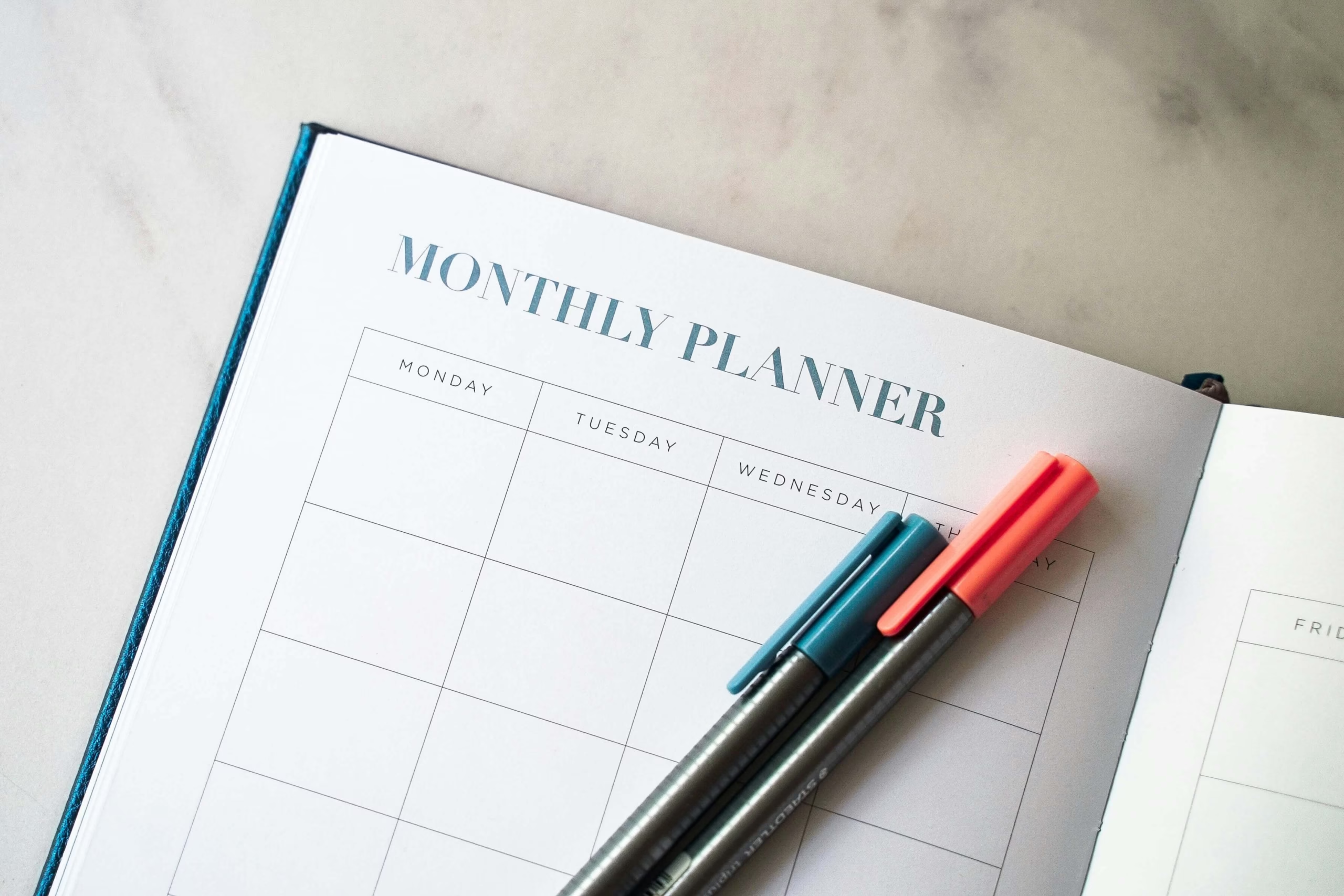
If a daily plan is your compass and a weekly plan is your map, then a monthly planner is your satellite view. While daily tasks keep you moving, the monthly perspective ensures you are moving toward the right destination.
In this guide, we explore why a monthly planner is the essential tool for anyone looking to maintain high-level momentum, stay ahead of others, and ensure that “busy-ness” never replaces true productivity.
Relevant blog to read: How a Weekly Planner Transforms Chaos into Clarity
How a Monthly Planner Helps You
A monthly planner serves as your strategic command center. It helps you by:
- Filtering the Noise: It forces you to distinguish between “urgent” distractions and “important” milestones.
- Managing Energy, Not Just Time: By seeing the month as a whole, you can plan for high-intensity work weeks and restorative “buffer” weeks.
- Visualizing Overlap: It allows you to see how different projects and life domains (health, finance, career) interact over a 30-day period.
The Monthly Audit: Introspecting on the Past
Before you can plan for the future, you must look at the data of the past. The first step in using a monthly planner is the “End-of-Month Review.”
1. Celebrating Achievements
List your top three wins from the last 30 days. This practice builds “Success Momentum.” It prevents you from feeling like you haven’t done enough and provides the emotional fuel for the month ahead.
2. Analyzing Backlogs and Carry Forwards
Review the tasks that didn’t get finished.
- The Backlog Audit: Why wasn’t this done? Was it a lack of time, or is the task no longer relevant?
- Carry Forwards: Be deterministic about what you move to the next month. If a task has been carried forward twice, it usually needs to be deleted or completely re-strategized.
3. Learning from the “Friction”
Identify where you felt the most stress last month. Was it a specific relationship, a recurring meeting, or a lack of sleep? Use this introspection to adjust your boundaries in the new month.
What to Plan: The Monthly Blueprint
When setting up your monthly planner, focus on the “Big Rocks” first:
- Monthly Milestone: What is the one major result that, if achieved, makes the month a success?
- Project Deadlines: Break large projects into 4-week phases.
- Financial Benchmarks: Review your income and savings goals.
- Personal Growth: Identify one new skill or habit you are focusing on for the next 30 days.
Why Weekly Planning is the Secret to Success
While the monthly view is your strategy, you must still plan your weeks ahead to keep the momentum. Planning your week within the context of your monthly planner is vital because:
- It Prevents “End-of-Month Panic”: By breaking the monthly goal into weekly sprints, you ensure a steady pace.
- It Keeps You Ahead of Others: Most people only plan one day at a time. By having a weekly map that connects to a monthly strategy, you are operating at a level of intentionality that 90% of the population lacks. You aren’t just working; you are out-thinking the competition.
- It Automates Decision-Making: When you plan your week on Sunday, you remove the need to make “what should I do next?” decisions on Wednesday.
The Cost of Chaos: What Happens Without a Plan?
When you don’t plan ahead, you pay a “Chaos Tax.” This manifests as:
- Missing Deadlines: Life feels like a series of emergencies.
- Stagnation: You spend your time on maintenance tasks and never get to the “needle-moving” growth tasks.
- Burnout: Without a monthly view, you don’t see the exhaustion coming until it’s too late.
Frequently Asked Questions (FAQs)
A. They serve different purposes. A digital calendar is great for specific time-slots and reminders. A physical or dedicated monthly planner is better for high-level strategy, introspection, and visual goal-tracking. Use a hybrid approach for the best results.
A. Dedicate 60 to 90 minutes at the very end of the month or the very first morning of the new month. This small investment saves you countless hours of misdirected energy throughout the month.
A. A monthly planner is a dynamic document. If a major life event or project shift occurs, perform a “Mid-Month Pivot.” Re-align your weekly goals to match the new reality without guilt.
A. Absolutely. By seeing your fixed expenses and expected income in one view, you can plan for “high-spend” periods and ensure your savings goals are automated and prioritized.
Author’s note
Thank you for taking the time to focus on your well-being and for being your own cheerleader in this journey called life. I truly appreciate you for choosing to invest in yourself today, and I’m honored that you spent a part of your day here. Remember, every small step you take matters, and you’re doing an amazing job. Keep going—you’ve got this!



One Comment