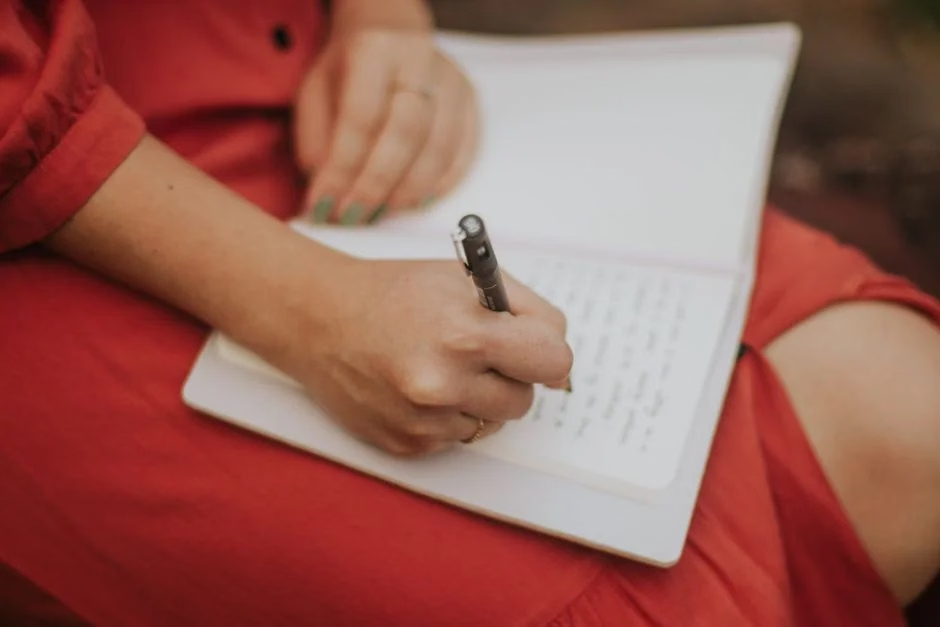
Imagine you sit down with a blank notebook, a cheap pen, and absolutely no plan. Five minutes later something small and strange is on the page — a half-formed idea, a doodle, three sentences that don’t quite connect. And somehow, without meaning to, you feel a little lighter.
That’s not magic. That’s what creative activities for personal growth can actually feel like when you strip away all the pressure of doing them ‘right’. You don’t need a gift. You don’t need expensive supplies. You just need a willingness to make something small and notice what happens next.
This post explores why creativity works as a growth tool, what the research actually says (and where it’s honest about its limits), and how you can build a simple, sustainable creative habit — starting today, with whatever you have around you.
Relevant blog to read: Creative Visualization Techniques That Actually Work
Table of contents
- Why Creativity and Personal Growth Are a Natural Pair
- What the Research Actually Shows (Honestly)
- Your Sketchbook Doesn't Care If You're Talented
- Matching Creative Activities for Mental Health to What You Actually Need
- Daily Creative Exercises for Personal Growth That Are Actually Doable
- Frequently Asked Questions
- Related Reading
- Author's note
Why Creativity and Personal Growth Are a Natural Pair
Personal growth, at its heart, is about one thing: learning to respond to life a little more skillfully than you did before. Creativity turns out to be a surprisingly good training ground for exactly that.
When you make something — anything — you go through a quiet process of choosing, trying, noticing what isn’t working, and adjusting. That’s the same loop you use when you’re navigating a hard conversation, changing a habit, or figuring out what you actually want from life. Creative practice is basically a low-stakes rehearsal for real growth.
Mental health professionals often describe creativity as a process rather than a performance. The choosing and revising matter far more than the finished result. Each small creative decision you make — even choosing which colour to use or how to start a sentence — builds what psychologists call self-efficacy: the quiet inner belief that you can figure things out.
And that belief, once you have it in one area of your life, tends to bleed into others.
What the Research Actually Shows (Honestly)
The evidence around how creativity improves mental health is genuinely encouraging — but it’s worth being honest about what it does and doesn’t prove, so you can go in with realistic expectations.
- Arts and crafts link to happiness: A study of 7,182 adults in the UK found that people who participated in arts and crafts reported higher happiness, greater life satisfaction, and a stronger sense that their life was worthwhile. The researchers were careful to note this was observational — meaning crafting was associated with wellbeing, not proven to cause it. (Anglia Ruskin University, reported 2024.)
- Gardening and mood during hard times: A US panel study tracking 3,725 adults across five months of the pandemic found that people who increased their gardening reported lower depression and anxiety symptoms and greater life satisfaction. Arts, crafts, and DIY were also linked to greater life satisfaction. (Journal of Epidemiology and Community Health, 2023.)
- Group creativity has extra power: A 2025 meta-analysis drawing on 39 studies from 21 countries found that older adults taking part in group painting, dance, or music showed reductions in both depression and anxiety. The social element — shared goals, supportive feedback, a sense of belonging — appears to add something that solo creative work can’t always provide on its own. (Queen Mary University of London, 2025.)
None of this means creativity is a treatment for clinical depression or anxiety on its own. If your symptoms are persistent or feel overwhelming, creative practice works best alongside professional support, not instead of it. But as a daily tool for building resilience and meaning? The evidence is quietly compelling.
Your Sketchbook Doesn’t Care If You’re Talented
Here’s the thing that holds most people back: the belief that creativity is a gift, not a practice. It isn’t. Gardening, cooking, journaling, rearranging a room, humming a melody while you wash the dishes — all of it counts. Creativity is simply the act of making decisions and seeing what happens.
The most useful shift you can make is from performance mode to experiment mode. A performance has a right answer. An experiment just has a result to notice.
When you treat a ten-minute drawing or a few journal lines as an experiment, something interesting happens: you stop being afraid to start. And starting — however messily — is where all the growth lives.
You’ve probably been meaning to try something for months. Waiting for a free weekend, a better notebook, some version of yourself that finally feels ready. Meanwhile the weeks go by and the blank page stays blank. That wait is the whole trap. The fumbling, slightly embarrassing start is the only way through it.
Matching Creative Activities for Mental Health to What You Actually Need
Not every creative activity does the same thing for you. The key is matching what you do to what you’re trying to grow. Here’s a simple way to think about it:
- Journaling for self-discovery and personal growth: Writing slows your thoughts down enough to see them clearly. A three-line structure works well — what I noticed today, what I felt, one possible next step. It’s reflection without pressure.
- Drawing, painting, or crafts for calm focus: These activities narrow your attention to what’s right in front of you. That’s why art therapy activities for anxiety so often involve hands-on making — it’s hard to spiral mentally when you’re counting stitches or mixing colours.
- Music and songwriting for emotional release: Putting feelings into sound — even just humming, drumming on a table, or writing a few lyric lines — can help you name and move through emotions that words alone don’t quite reach.
- Improvisation and playful making for flexibility: Activities with no fixed outcome — improv games, free-writing, spontaneous cooking with random ingredients — build your tolerance for uncertainty. That’s a quietly powerful life skill.
- Collaborative or group projects for connection: When isolation is part of what you’re carrying, shared creative experiences — a community class, a garden project, a group challenge — combine the benefits of making with something a solo practice can’t fake: other people who show up.
One honest note: access matters here. Cost, time, childcare, and confidence can all make it harder to participate. If a particular activity isn’t accessible to you right now, that’s a practical barrier — not a reflection of your motivation or desire to grow.
Daily Creative Exercises for Personal Growth That Are Actually Doable
Consistency matters far more than ambition. A brief, repeatable practice builds more over time than an occasional grand project that exhausts you. Here’s how to build something that actually sticks:
- Set a ten-minute timer and make something — anything. Don’t evaluate it until the timer ends. This single habit trains your brain to start without waiting for conditions to be perfect.
- Use a constraint to reduce decision fatigue. Give yourself a limit: three colours only, one page, five sentences, recycled materials. Constraints sound restrictive but they actually free you up to experiment.
- Keep a three-line creative journal. After any creative activity, jot: what I noticed, what I felt, one possible response. This turns making into meaning — and that reflection is where the real personal growth happens.
- Change one familiar thing each week. Take a different route. Cook with one ingredient you’ve never used. Rearrange your desk. Small novelty keeps your brain flexible and engaged.
- Record small wins, not just finished projects. After completing anything creative, write down one skill you used and one difficulty you handled. Progress tracked by engagement and insight feels more honest than tracking quality.
And if a creative practice ever brings up something that feels too heavy — an old memory, a wave of grief, something that doesn’t settle — please pause, ground yourself with a few slow breaths, and reach out to a qualified mental health professional. Creative work can open doors to emotions that need more than a journal to process, and there’s nothing weak about asking for that kind of support.
Ten minutes today, ten minutes tomorrow. That’s genuinely all this asks. And somewhere in the accumulation of those small, imperfect sessions, you’ll notice something has shifted — you’re a little less rigid, a little less afraid to try, a little more like the person you were hoping to become.
Frequently Asked Questions
Creativity builds personal growth by giving you a safe space to experiment, make decisions, and handle imperfection — all skills that transfer directly to real life. When you finish even a small creative project, you build quiet confidence in your own ability to figure things out. That confidence, called self-efficacy, is one of the most reliable drivers of lasting personal change.
Quite a wide range of activities can support mental health, including journaling, drawing, crafts, gardening, music, cooking, and even rearranging a space. The best activity is one that feels accessible and meaningful to you personally. Research suggests that active, absorbing participation matters more than which specific activity you choose — so start with whatever you're most likely to actually do.
It genuinely can help, though it works best as a regular practice rather than a one-off fix. Hands-on creative activities like crafts or drawing narrow your focus to the present moment, which interrupts the mental looping that feeds anxiety. That said, if anxiety is persistent or severe, creative practice works best alongside professional support — not as a replacement for it.
Keep it tiny. A ten-minute experiment with no evaluation, a three-line journal entry, or one small change to a familiar routine is enough. The goal isn't to produce something impressive — it's to show up and notice what happens. Brief and consistent beats ambitious and occasional every time, and measuring progress by engagement rather than quality makes it feel sustainable.
Art therapy, particularly in a group setting, shows promising results. A 2025 meta-analysis of 39 studies found that older adults participating in group arts activities like painting, dance, and music experienced reductions in both depression and anxiety symptoms. While art-based activities aren't a standalone treatment for clinical depression, they can be a meaningful and supportive part of a broader care approach.
Related Reading
- Creative Visualization Techniques That Actually Work
- Positive Self Talk That Actually Works
- Creativity and Mental Health Personal Growth
- Effective Communication Techniques That Actually Connect
Author’s note
Thank you for taking the time to focus on your well-being and for being your own cheerleader in this journey called life. I truly appreciate you for choosing to invest in yourself today, and I’m honored that you spent a part of your day here. Remember, every small step you take matters, and you’re doing an amazing job. Keep going—you’ve got this!