Picture this: it’s late, your mind won’t stop, and someone cheerfully tells you to “just be creative.” Maybe you rolled your eyes. Maybe you thought, I’m not artistic. That’s not for me. And honestly? That reaction makes complete sense.
Here’s the thing that most people get wrong about creativity for mental health — it has nothing to do with talent. It’s not about making something beautiful. It’s about giving your brain a different way to process what it’s carrying. And that’s something every single person can do.
This post is going to walk you through how creativity actually works as a mental health tool, why some activities suit certain moods better than others, and how to start gently — even on the days when getting off the sofa feels like a marathon.
Relevant blog to read: Childrens Mental Health Signs Every Parent Should Know
Table of contents
You Don’t Have to Be “Creative” for This to Help
Let’s clear something up straight away. The idea that creative activities only help artistic people is one of the most common — and most unhelpful — myths around. Doodling, humming, folding paper, taking photos on your phone, writing a messy stream of thoughts — none of these require skill. They just require a few minutes and a little willingness.
Here’s why that matters. When you’re stressed, anxious, or feeling low, your brain is often stuck in a loop — the same worries, the same heavy feelings, going round and round. Creative activity gives your brain something else to do. It pulls your attention gently into the present moment, creates a small sense of accomplishment, and gives emotions somewhere to go that isn’t just your chest.
Researchers call some of these effects “absorption” — that state where you’re so focused on making something that the noise in your head quiets down. You’ve probably felt it before, even if you didn’t call it that. The twenty minutes that disappears when you’re rearranging a playlist, or the calm that settles in when you’re cooking something from scratch. That’s the same mechanism at work.
The most useful creative activity isn’t the one you’re best at. It’s the one you can do without judging yourself.
How Creativity Actually Improves Mental Health
It helps to understand why this works before you decide what to try. Creativity supports mental health through several different pathways, and knowing which one you need can help you choose the right starting point.
- Emotional expression: Some feelings are hard to put into words. Visual making — drawing, collage, colour — can let you express something without needing to explain it. You don’t have to interpret what you made. The act of making it is what helps.
- Attention regulation: When anxiety spikes, attention scatters. A focused creative task — even something as small as a continuous-line doodle — gives your brain a single point of focus, which can gently calm that scattered, overwhelmed feeling.
- Behavioural activation: This is the science behind “just start small.” When motivation is low — which is very common with depression — doing anything feels impossible. But pairing a tiny creative action with an existing routine (like sketching while your coffee brews) can break the inertia without requiring willpower you don’t have.
- Meaning and identity: Making something, however small, can remind you that you’re a person with preferences, ideas, and inner life — not just a collection of symptoms or stresses.
- Social connection: Group creative activities — a craft circle, a community choir, an online drawing session — can reduce isolation in a low-pressure way. Belonging without having to perform.
A 2025 systematic review that looked at 28 studies on arts engagement and young people’s mental health found that the majority of results pointed to positive links between creative participation and wellbeing — though the researchers were careful to note that the evidence for a strong cause-and-effect relationship is still building. It’s promising, not a magic wand.
Match the Activity to What You Actually Need Right Now
This is the part most articles skip — and it might be the most useful thing here. Not every creative activity suits every emotional state. If you’re wound up and wired, you need something different from when you’re flat and exhausted.
When you feel anxious or overstimulated
Rhythmic activities tend to work well here. Drumming, walking while listening to music, knitting, or even repetitive mark-making can help regulate your nervous system — the rhythm gives your body something steady to follow when everything feels chaotic. Try making a three-song mood playlist and noticing how your breathing and muscle tension shift by the last track.
When you feel low, flat, or unmotivated
Start tiny. Not “paint a picture” tiny — more like “open the sketchbook” tiny. Depression makes starting feel impossibly heavy, so the goal is just to begin, not to produce. Set a ten-minute timer. Make something deliberately bad — a terrible poem, a wobbly drawing. Removing the pressure to be good is actually the point.
When your thoughts are tangled and hard to sort
Your brain is basically a browser with forty tabs open and no way to close them. Writing forces it to pick one tab, load it fully, and actually deal with it. You don’t have to write pages. Try a simple two-column journal: one column for “what I feel,” one for “what I need” — just one sentence each, every day. That’s it.
When you feel isolated or disconnected
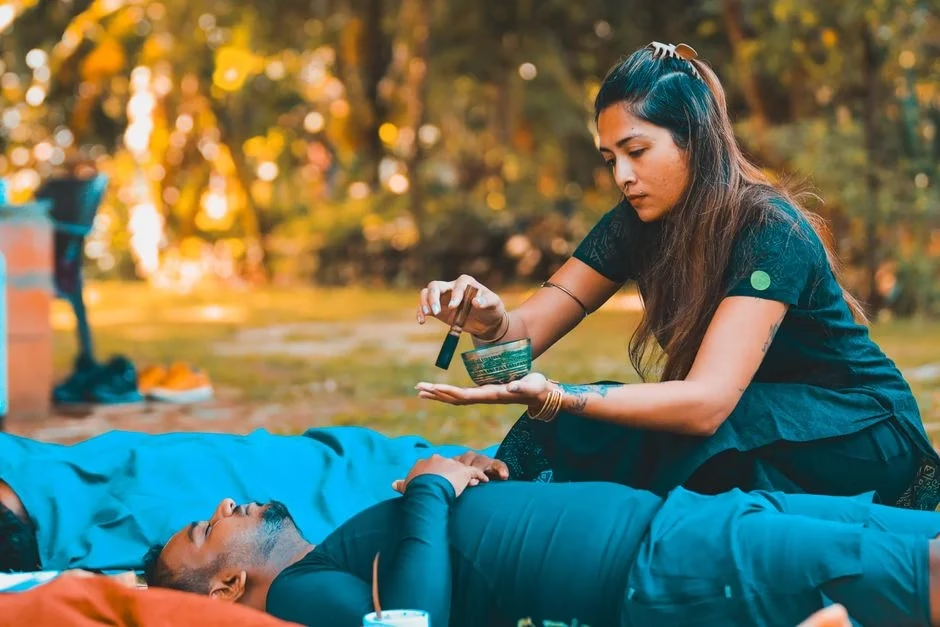
Solo creativity helps, but if isolation is part of what’s weighing on you, group creative activities can offer something extra. A 2025 meta-analysis of 50 controlled studies found that group arts interventions showed moderate reductions in both depression and anxiety in adults over 55, compared with people who weren’t doing any creative group activity. The connection and belonging that comes with making something alongside others matters just as much as the making itself.
A Simple Way to Know If It’s Actually Helping
Here’s something worth knowing: creativity isn’t a universal cure, and not every activity will help every person. Some creative practices can tip into rumination — going over and over painful memories without moving through them. That’s why tracking how you feel matters.
Before and after each creative session, give yourself a quick rating out of ten for distress, energy, and tension. You’re not doing this to grade yourself — you’re building a map of your own nervous system. Which activities leave you quieter? Which ones stir things up without settling them? Over a week or two, patterns emerge that no wellness article could ever predict for you, because they’re yours.
End each session with a small grounding moment — name five things you can see, have a glass of water, and note whether the session helped. It sounds almost too simple. But that tiny act of reflection is what turns a creative hobby into a genuine mental health practice.
One Important Boundary to Keep in Mind
Creative activities can be a genuinely supportive part of looking after your mental health. They can sit alongside therapy, good sleep, connection, and other forms of self-care in a really meaningful way. What they can’t do is replace professional support when that’s what’s needed.
If a creative activity starts bringing up overwhelming memories, or you notice self-harm thoughts surfacing during or after a session, please stop and reach out to someone qualified to help. That’s not a failure — that’s your mind signalling that it needs more than a sketchbook right now, and that signal deserves to be taken seriously.
When participation is voluntary, low-pressure, and focused on process rather than achievement, creativity can be one of the gentler, more accessible ways to tend to your emotional world. You don’t have to be talented. You just have to be willing to begin.
Frequently Asked Questions
Creativity helps mental health through several pathways at once. It draws your attention into the present moment, gives difficult emotions somewhere to go, creates a small sense of achievement, and — in group settings — reduces isolation. You don't need to make something good for it to work. The act of making, rather than the result, is what tends to shift how you feel.
There's no single best activity — it depends on what you need. For anxiety, rhythmic activities like music, repetitive mark-making, or knitting can help calm an overactive nervous system. For low mood or depression, tiny starting actions like opening a journal or doodling for ten minutes work well because they don't demand energy you don't have. The best activity is the one you can do without judging yourself.
Yes, drawing can help reduce stress and anxiety — particularly when you remove any pressure to draw well. Focused mark-making gives your brain a single point of attention, which can interrupt the scattered, looping thoughts that anxiety tends to create. Even a simple continuous-line doodle for ten minutes can shift your breathing and lower physical tension. Process matters far more than the finished result.
Absolutely. Talent has nothing to do with it. The mental health benefits of creative activity come from engagement, focus, and expression — not from producing something impressive. Humming, folding paper, taking photos on your phone, or writing a deliberately bad poem all count. The only thing that matters is that you're making something without judging yourself while you do it.
Art therapy — delivered by a trained professional — has shown promising results for depression in research. It differs from recreational creativity because it involves clinical assessment, specific goals, and professional guidance. A 2026 review of 22 trials found that arts-based interventions reduced depression scores, though effects varied widely between studies. If you're experiencing persistent low mood, art therapy could be worth exploring alongside — not instead of — qualified mental health support.
Related Reading
- Childrens Mental Health Signs Every Parent Should Know
- Mental Health Awareness Recognize Respond Get Help
- Creative Visualization Techniques That Actually Work
- Positive Self Talk That Actually Works
Author’s note
Thank you for taking the time to focus on your well-being and for being your own cheerleader in this journey called life. I truly appreciate you for choosing to invest in yourself today, and I’m honored that you spent a part of your day here. Remember, every small step you take matters, and you’re doing an amazing job. Keep going—you’ve got this!