You don’t have to be able to draw a straight line. You don’t have to own a single paintbrush. And you definitely don’t have to consider yourself a ‘creative person’ for this to work for you.
What the research is quietly revealing is that art therapy for mental health has very little to do with making something beautiful — and everything to do with giving your feelings somewhere to go. Whether you’re carrying low-grade anxiety that won’t switch off, or a heaviness that’s been sitting on your chest for weeks, creative expression might be one of the gentlest, most underrated tools available to you.
This post covers what the science actually says, why creativity helps your brain process difficult emotions, and how you can weave small creative moments into your everyday life — no talent required.
Relevant blog to read: Work Life Balance Mental Health
Table of contents
The Surprising Truth About Art Therapy for Mental Health
Here’s the thing that most people get completely wrong: the benefit of creative expression has nothing to do with the end result. It’s not about the painting. It’s not about the poem. It’s about what happens inside you while you’re making it.
When you’re anxious or low, your mind tends to loop. The same worried thought circles back. The same memory replays. Psychologists call this rumination, and it’s exhausting. Creative activity interrupts that loop by pulling your attention into something sensory and immediate — the feel of a pencil on paper, the way colours mix, the rhythm of knitting needles. Your brain can’t fully ruminate and fully focus on a texture at the same time.
This is why art therapy for anxiety and depression isn’t just a feel-good idea. It’s a genuine emotion-regulation strategy. And a growing body of research backs that up. A 2026 systematic review and meta-analysis of adults with depression found that art therapy significantly reduced depressive symptoms compared with control conditions — a finding drawn from 14 studies and 861 participants. That’s not a small or casual result.
The most surprising part? You don’t need a formal art therapy session for some of these benefits to reach you. Intentional, regular, low-pressure creative activity — done consistently — can shift how you feel.
What’s Actually Happening in Your Brain When You Create
Understanding the why makes it so much easier to trust the process, especially on the days when picking up a pencil feels like climbing a mountain.
Creativity supports your mental health through several pathways at once, and it helps to know what they are:
- Emotional labelling: When you choose a colour that matches your mood, or draw the shape of how you’re feeling, you’re putting a name — or at least a form — to an emotion. Studies show that naming an emotion reduces its intensity. It moves the feeling from something overwhelming into something you can look at.
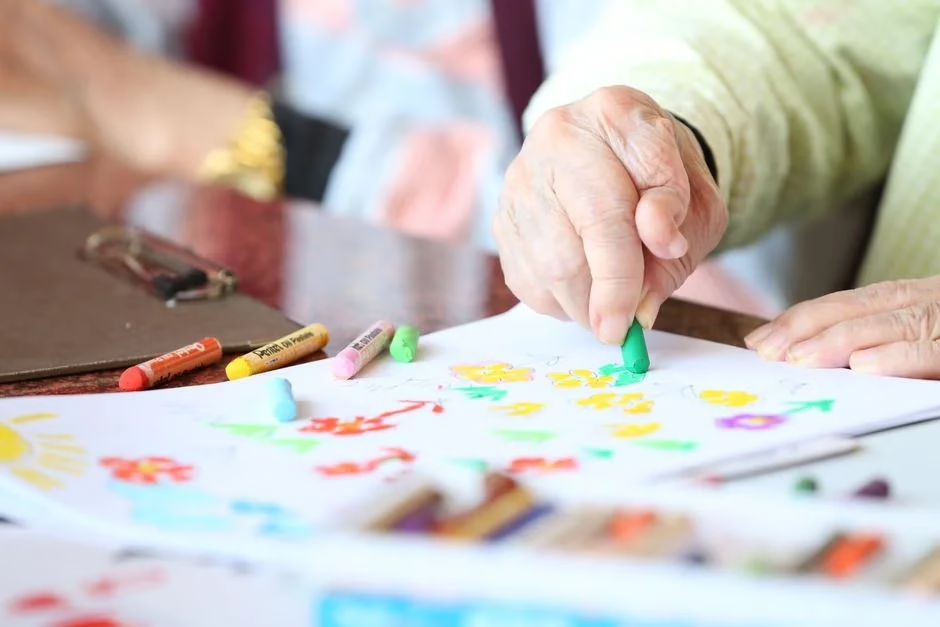
- Self-soothing: Repetitive, focused movements — colouring, knitting, collaging — activate the body’s calming response. They slow the breath naturally and settle the nervous system in the same quiet way a mindfulness-based art therapy session might.
- Mastery and agency: When life feels out of control, finishing even a tiny creative task gives you back a small sense of ‘I did that.’ That feeling of competence is genuinely protective for mental health.
- Behavioural activation: One of the core challenges of depression is that it makes you stop doing things you once enjoyed, which then deepens the depression. Creative activity — even gentle, low-stakes creative activity — gets you doing something, which can slowly restart that cycle in a healthier direction.
- Social connection: Joining a craft group, a drawing class, or even a shared creative hobby online adds human connection to the mix. And connection is one of the most powerful buffers against low mood.
None of these pathways require you to be good at art. They just require you to show up and make something.
Does Creativity Actually Help Anxiety and Depression? What the Research Shows
You might wonder if this is all a bit too simple. Can sketching for ten minutes really make a dent in anxiety? Here’s what the evidence suggests — honestly, without overpromising.
For depression, the findings are genuinely encouraging. A 2023 American Psychiatric Association poll found that 46% of Americans already use creative activities to relieve stress or anxiety — which tells you that intuitively, a lot of people have found their way here already. The clinical research supports them. Multiple recent reviews show that structured creative interventions produce moderate improvements in depressive symptoms, particularly when sessions run for longer than six weeks and are tailored to the individual.
For anxiety, a 2025 systematic review of 14 randomised trials involving 1,686 adults found that every single one of those trials reported greater anxiety reduction in the art therapy groups than in the control groups. Every one. That kind of consistency across different studies, different populations, and different settings is meaningful.
One honest caveat: clinical art therapy — delivered by a trained professional as part of a structured care plan — tends to produce stronger results than casual creative hobbies. Both have value, but they’re not quite the same thing. If you’re managing severe or persistent symptoms, creative activities work best alongside professional support, not instead of it.
How to Use Creativity as a Daily Mental Health Tool
You know that feeling when you sit down to do something good for yourself, and your brain immediately finds seventeen reasons why now isn’t the right time? That’s not laziness. That’s a exhausted nervous system looking for an exit. The suggestions below are designed to be small enough that there’s no exit worth taking.
Here are some gentle, practical ways to make creativity a regular part of how you look after yourself:
- Start tiny: Set aside just 10 to 15 minutes. That’s it. Sketching, collaging, journaling, knitting, colouring — pick whichever feels least intimidating on any given day.
- Use a mood check-in prompt: Before you start, choose a colour, a shape, or an image that matches how you’re feeling right now. You’re not trying to fix the feeling yet — just acknowledge it. This small step is surprisingly powerful.
- Try guided prompts: Instead of an open-ended blank page, give yourself a small container. ‘Draw the shape of my stress.’ ‘Make a page about today using only three colours.’ ‘Write one true sentence about how this week has felt.’ Constraints are actually freeing.
- Keep materials visible: If your sketchbook is buried in a drawer, you won’t reach for it when you need it most. Leave a notebook on your desk. Keep coloured pens next to the kettle. Make the creative option the easy option.
- Pair it with something calming: Try slow music, a short walk beforehand, or a few slow breaths before you pick up your materials. Pairing creativity with a calming habit helps your brain learn that this is a safe, settling activity.
- Create without judging the result: Focus on the process — the texture, the movement, the colour — not on whether it looks good. What does your hand feel like as it moves? What colour feels right in this moment? Stay in that sensory space.
- Add connection when you can: A local art class, a craft group, or even a shared online creative challenge adds human warmth to the mix. Consistency and community both strengthen the benefits over time.
The research is clear on one thing above all else: consistency matters far more than quality. A wonky sketch made every day will do far more for your mental health than a masterpiece you never quite get around to starting.
So put the pressure down. Pick up whatever’s nearby. And just make something — for you, not for anyone else’s eyes. That’s where the quiet magic of creative mental health actually lives.
Frequently Asked Questions
Yes, and the evidence is stronger than most people expect. A 2025 systematic review covering 14 randomised trials and 1,686 adults found that every single trial reported greater anxiety reduction in art therapy groups than in control groups. Creative activity helps by pulling your attention away from looping worried thoughts and into something sensory and immediate — which naturally settles the nervous system over time.
It can, particularly when it's practised regularly and with some structure. Multiple recent reviews have found moderate improvements in depressive symptoms from art therapy compared with doing nothing. One reason it works is behavioural activation — depression makes you withdraw, and any gentle, engaging activity can begin to break that cycle. For severe or persistent depression, creative activities work best alongside professional support.
Not at all. This is one of the most common misconceptions about creative mental health. The benefit comes entirely from the process of making — the focus, the movement, the sensory engagement — not from producing anything that looks good. Research consistently shows that artistic skill has no bearing on the emotional and psychological benefits. Anyone can pick up a pencil and feel the difference.
Even 10 to 15 minutes daily can make a meaningful difference. The research suggests that consistency matters far more than duration or quality. Short, regular creative sessions — done most days — tend to produce stronger benefits than occasional longer bursts. Think of it less like a hobby and more like a small daily check-in with yourself.
Clinical art therapy is a structured intervention delivered by a trained therapist — it involves guided expression, reflection, and is often part of a broader treatment plan. Casual creative hobbies at home are genuinely helpful for well-being and stress relief, but they're not the same thing. Both have real value. If your symptoms are severe or persistent, a qualified art therapist can offer a deeper level of support.
Related Reading
- Work Life Balance Mental Health
- Creativity and Mental Health Personal Growth
- Self Motivation Techniques That Actually Work
- Positive Affirmations That Actually Work
Author’s note
Thank you for taking the time to focus on your well-being and for being your own cheerleader in this journey called life. I truly appreciate you for choosing to invest in yourself today, and I’m honored that you spent a part of your day here. Remember, every small step you take matters, and you’re doing an amazing job. Keep going—you’ve got this!