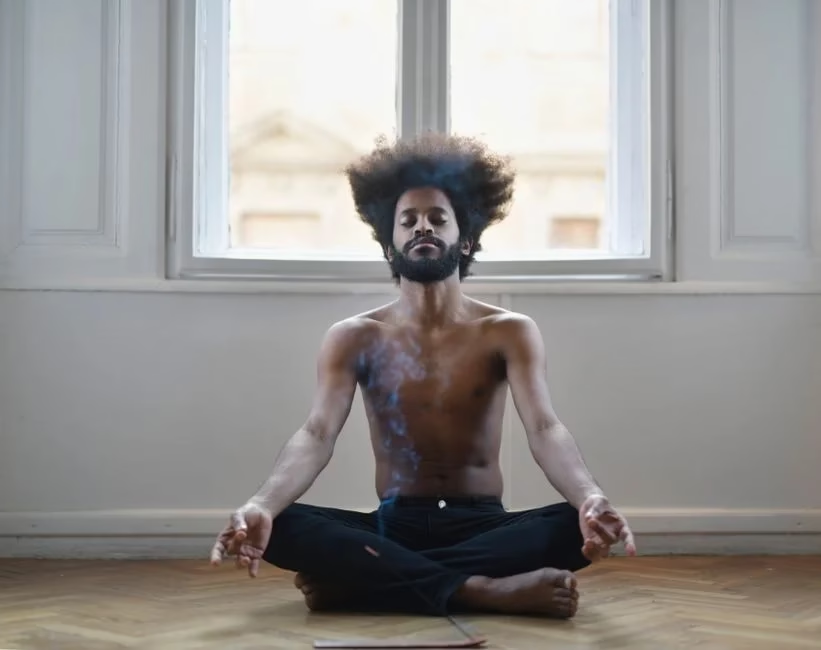
You know that voice in your head that replays the moment you said the wrong thing in a meeting, or didn’t do enough, or let someone down? The one that gets louder at night when everything else goes quiet? That voice isn’t a personality flaw. But it is costing you more than you realise.
Loving-kindness meditation is one of the most underestimated tools for softening that voice — not by silencing it through sheer willpower, but by gradually training your brain to respond to yourself with a little more warmth. It’s not about becoming relentlessly cheerful. It’s about slowly changing the emotional weather inside your own head.
This post walks you through what loving-kindness meditation actually is, why it works on a real neurological level, and exactly how to start — even if five minutes feels like too much right now, even if you don’t feel anything at first.
Relevant blog to read: Emotional Dysregulation is Real Why You Feel So Much So Fast
Table of contents
Why Your Brain Gets Stuck in Self-Critical Mode
Before we get to the practice itself, it helps to understand why self-criticism is so sticky. Your brain has a threat-detection system — think of it as a security alarm — and it evolved to keep you safe from danger. The trouble is, it can’t always tell the difference between a physical threat and an emotional one. A harsh thought about yourself can trigger the same alarm bells as genuine danger.
When that alarm stays switched on too long, you start to live in a low-grade state of self-monitoring. You’re constantly scanning for what you did wrong, what people think of you, where you fell short. Over time, this is exhausting. It’s one of the core emotional patterns behind burnout, shame spirals, and chronic anxiety.
Loving-kindness meditation works by doing the opposite. Instead of scanning for threat, you deliberately redirect your attention toward warmth and goodwill — first toward yourself, then gradually outward to others. Studies show it reduces what researchers call self-focused threat-based reactivity, which in plain English means it helps your brain stop treating you like your own worst enemy.
What Loving-Kindness Meditation Actually Is
At its simplest, loving-kindness meditation — sometimes called metta — is a practice where you silently repeat phrases of goodwill. Phrases like: May I be safe. May I be healthy. May I be peaceful. May I live with ease. You direct those phrases toward yourself first, and then, with practice, toward others.
It sounds almost too simple. But that simplicity is the point.
Here’s the thing most people get wrong about it: you don’t need to feel anything for it to work. Many people sit down, repeat the phrases, and feel completely neutral — maybe even a little awkward. That’s completely normal. The practice isn’t asking you to manufacture warmth. It’s asking you to keep showing up with the intention of warmth. Over time, the brain starts to follow where the intention leads.
A 2014 systematic review of 22 studies involving 1,747 participants found moderate but meaningful improvements in self-compassion, mindfulness, positive emotions, and depression symptoms in people who practised kindness-based meditation regularly. The effects weren’t dramatic after one session — they built quietly, over time, like water wearing down stone.
How to Do Loving-Kindness Meditation: A Simple Beginner’s Script
You don’t need an app, a cushion, or a quiet retreat. You need about five minutes and a willingness to try without judging the result. Here’s how to start.
- Find a comfortable position. Sitting in a chair is fine. Lying down is fine. Close your eyes if that feels comfortable, or soften your gaze downward.
- Take three slow breaths. Let each exhale be a little longer than the inhale. This anchors your attention before you begin.
- Start with yourself. Silently repeat these phrases, slowly: May I be safe. May I be healthy. May I be peaceful. May I live with ease. Repeat them three to five times. Don’t rush.
- Move to someone you care about. Picture a friend, a family member, a pet — someone who feels easy to love. Repeat the phrases with them in mind: May you be safe. May you be healthy. May you be peaceful. May you live with ease.
- Extend outward gradually. Over time — not necessarily today — you can extend the phrases to a neutral person (a neighbour you barely know), and eventually to someone you find difficult. But don’t rush to that stage. There’s real benefit in just the first two steps.
- Close gently. Take another three breaths. Notice — without judgment — whether anything feels slightly different. Warmer, calmer, or even just slightly less tense.
If strong emotions come up during the practice — especially if directing kindness toward yourself feels uncomfortable or even sad — that’s okay. It’s actually quite common. Gently shorten the session, return to a neutral person or even just focus on the breath, and try again another day.
The Benefits That Might Surprise You
Most people expect loving-kindness meditation to make them feel vaguely nicer. The real benefits run deeper than that — and they show up in places you might not expect.
- Faster emotional recovery: One practical sign the practice is working isn’t that you feel calmer during the session — it’s that anger, shame, or anxious rumination fades more quickly afterward. You bounce back a little faster from difficult moments.
- Softer self-talk: People dealing with burnout and shame often notice a gradual shift in their internal monologue. The voice doesn’t disappear, but it loses some of its sharpness. Research links regular practice to meaningful reductions in self-criticism over several weeks.
- Better conversations: Evidence suggests the practice improves what researchers call supportive communication — you become slightly more patient, slightly less reactive in difficult interactions. This is particularly useful before a hard conversation you’ve been dreading.
- Reduced anxiety symptoms: A 2023 review reported that loving-kindness meditation can reduce stress and increase positive affect, with improvements in compassion compared to simply sitting quietly. For people whose anxiety is tangled up with self-judgment, this is especially relevant.
- Greater life satisfaction over time: In one study, people who practised loving-kindness meditation daily for seven weeks reported steady increases in daily positive emotions and greater life satisfaction, alongside lower depressive symptoms.
Making It Stick: Small Habits, Real Change
The research is consistent on one thing: consistency matters more than duration. A brief daily practice — even five minutes after waking, before the day’s noise rushes in — builds more lasting change than a long session once a week.
Think of it less like a meditation practice and more like keeping a plant alive. You don’t water it once for an hour and walk away for a month. You give it a little, regularly, and trust that something is growing even when you can’t see it.
A few small habits that make it easier to keep going:
- Anchor it to your morning. Practise for five minutes right after waking, before you check your phone. The world hasn’t reached you yet. Use that window.
- Pair it with slow breathing. If your mind wanders — and it will — using the breath as an anchor brings you back without frustration.
- Write one sentence afterward. Just one. Something like: My shoulders feel slightly less tight or I noticed I was less snappy with my partner this morning. This builds awareness of the small, real changes that happen before you consciously register them.
- Use it before hard moments. Try two minutes of the practice before a difficult conversation, a stressful meeting, or a moment you know tends to trigger your inner critic. It won’t solve everything — but it can take the edge off reactive speech.
If you’re going through a particularly hard stretch right now — high stress, emotional exhaustion, the kind of tired that sleep doesn’t fix — start smaller than you think you need to. Even thirty seconds of one phrase, repeated with intention, counts. You are not failing at this. You are doing the hardest version of it, and doing it anyway.
Frequently Asked Questions
Loving-kindness meditation is a practice where you silently repeat short phrases of goodwill — like 'May I be safe. May I be peaceful' — first toward yourself, then toward others. You sit comfortably, breathe slowly, and move through the phrases without rushing. You don't need to feel anything particular for it to work. Start with five minutes and just yourself as the focus.
Some people notice a subtle shift in mood after a single session, but the deeper benefits — less self-criticism, lower anxiety, improved emotional resilience — tend to build over several weeks of consistent daily practice. Research found meaningful improvements in self-compassion and positive emotions in studies lasting multiple weeks. Brief daily sessions matter more than occasional long ones.
Yes, especially the kind of anxiety that's tied to self-judgment or replaying social situations in your head. The practice gradually reduces what researchers call threat-based reactivity — your brain's tendency to treat emotional discomfort like a physical danger. A 2023 review found that loving-kindness meditation reduced stress and improved compassion compared with simply sitting quietly. It works best as a regular habit, not a one-off fix.
That's completely normal — and it doesn't mean the practice isn't working. Many people begin with neutral or even slightly uncomfortable feelings, particularly when directing kindness toward themselves. The benefit comes from the repeated intention, not from manufacturing warm feelings on demand. Keep going gently. The emotional shift tends to appear gradually, often in how quickly you recover from a difficult moment rather than during the session itself.
It can be a genuinely useful tool for burnout, particularly because burnout often comes with a harsh inner critic and a constant low-level sense of not doing enough. Loving-kindness meditation directly targets threat-based self-monitoring — the emotional pattern that tends to sustain burnout. Start with very short, gentle sessions and focus entirely on yourself before extending the practice to others.
Related Reading
- Emotional Dysregulation is Real Why You Feel So Much So Fast
- Loving Kindness Meditation Self Compassion Guide
- Self Motivation Techniques That Actually Work
- Loving Kindness Meditation
Author’s note
Thank you for taking the time to focus on your well-being and for being your own cheerleader in this journey called life. I truly appreciate you for choosing to invest in yourself today, and I’m honored that you spent a part of your day here. Remember, every small step you take matters, and you’re doing an amazing job. Keep going—you’ve got this!