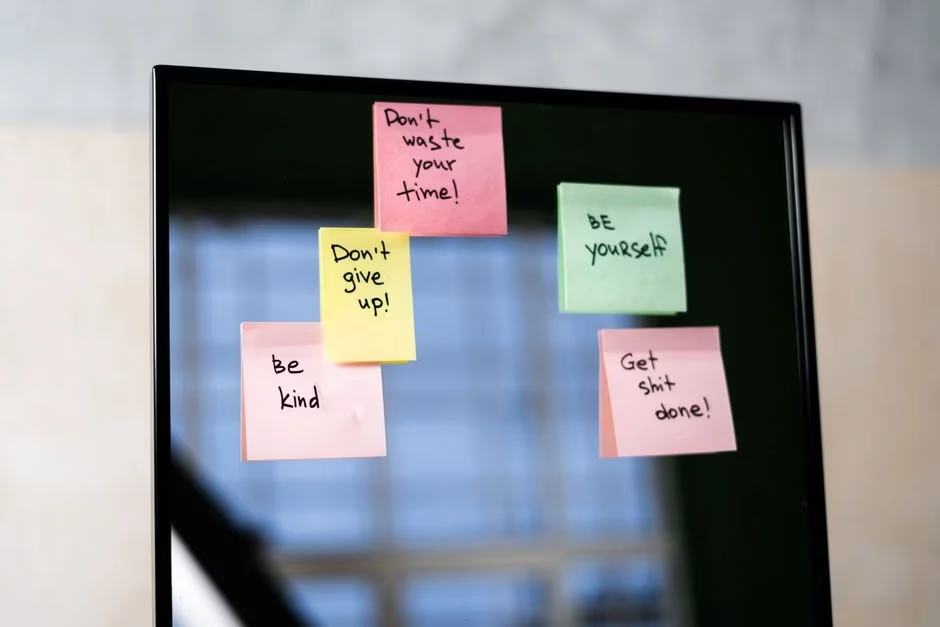
You set the goal. You felt the buzz. You even told a few people about it. And then, somewhere around week three, the whole thing quietly fell apart — and you weren’t quite sure why.
This happens to almost everyone. And the reason isn’t weakness, laziness, or a lack of discipline. The reason is that motivation, on its own, was never designed to last. It flickers. It rises and falls like your energy levels or the weather. What keeps people going — what actually sustains them through the hard days — is something much quieter and much more powerful. It’s a sense of purpose in life and motivation that comes from the inside out.
This post is going to gently unpack why purpose works the way it does, clear up a few things most people get wrong about motivation, and give you some genuinely simple ways to start connecting with what actually drives you — not just this week, but long term.
Relevant blog to read: Little Things for Long and Happy Life
Table of contents
The Biggest Misconception About Motivation
Most people treat motivation like it’s a tap you either have on or off. You’re either motivated or you’re not. But that’s not really how it works.
Motivation is actually more like a mood. It shifts. It dips after a stressful day. It disappears on a grey Tuesday morning when your bed feels like the best place in the world. Expecting it to stay constant is a bit like expecting to feel excited all the time — it’s just not realistic, and believing otherwise sets you up to feel like you’ve failed when really you’ve just had a normal human experience.
The second misconception — and this one is worth really sitting with — is that purpose only counts when it’s grand. A life mission. A calling. Some people spend years waiting to discover their “big purpose” and in the meantime, they miss the small, daily moments that are already quietly meaningful. Purpose doesn’t always arrive with a fanfare. Sometimes it shows up in the way you feel when you help a colleague through something difficult, or when you’re halfway through a walk and realise your head feels clearer than it has all week.
What Purpose Actually Does to Your Brain and Body
Here’s the insight that genuinely changes things: purpose isn’t just a feeling. It’s a psychological resource — something you can draw on, like a reserve of inner fuel, even when external rewards have dried up.
Think about the difference between going for a run because your doctor told you to, versus going because you genuinely love how it makes you feel afterwards. Both get you out the door, but only one keeps you going when it’s cold, you’re tired, and there’s a good show on. That second kind of motivation — the kind that comes from enjoyment, curiosity, and genuine care — is called intrinsic motivation. And research shows it’s the most powerful link between having a sense of purpose and actually sticking with the things that matter to you.
Studies consistently find that people with a stronger sense of purpose report greater intrinsic motivation for physical activity, fewer perceived barriers to getting moving, and less time spent sedentary — even during periods of significant stress. Researchers Maimaran and Fishbach found that prioritising joy and satisfaction throughout a process — rather than just focusing on the end result — is what actually drives people to keep going. The enjoyment of the journey matters more than the utility of the destination.
So what does that mean for you? It means that if something feels like a punishment, it probably won’t stick. But if you can find even a thread of genuine interest in it — something that feels meaningful rather than mandatory — you’ve already got the most important ingredient.
Why Purpose Lowers the Barriers That Stop You
You know that feeling when you want to do something — go to the gym, start a creative project, reach out to an old friend — but somehow there’s always a reason not to? Those reasons are real. Tiredness is real. Time pressure is real. Low confidence is real. But purpose actually changes how big those barriers feel.
When something connects to what genuinely matters to you, the mental cost of doing it shrinks. Not because the obstacle disappears, but because the pull forward is stronger than the push back. People who have a clearer sense of purpose don’t necessarily have easier lives — they just have a stronger internal reason to keep moving through difficulty.
- Enjoyment reduces resistance: When you actually like what you’re doing, the brain stops cataloguing all the reasons to avoid it. Enjoyment is a natural barrier-buster.
- Meaning softens effort: Work that feels meaningful feels less draining, even when it’s genuinely hard. This is why people often describe their most purposeful periods as both exhausting and energising at the same time.
- Identity reinforces consistency: When an activity aligns with who you feel you are — or who you want to become — skipping it starts to feel slightly uncomfortable. That’s purpose quietly holding you accountable.
This is why simply adding more willpower rarely works. Willpower is a short-term tool. Purpose is a long-term foundation.
How to Start Building Purpose Into Everyday Life
You don’t need to have everything figured out to start living with more purpose. You just need to begin noticing what genuinely moves you — and then nudge your daily life a little closer to that.
Start with one small meaningful action each morning
Before the day picks up speed, pause for a moment and ask yourself: what’s one thing I could do today that feels genuinely mine? Not what you think you should do — what actually matters to you. It might be a ten-minute walk. It might be writing one honest paragraph. It might be calling someone you’ve been meaning to speak to. Small actions that align with your values quietly reinforce your sense of who you are and why that matters.
Choose enjoyment over obligation wherever you can
If you’re trying to build a new habit, the question isn’t “how do I make myself do this?” It’s “is there a version of this I’d actually want to do?” Hate running? Try dancing, swimming, or a long walk with a podcast you love. Because intrinsic motivation — the kind powered by genuine enjoyment rather than guilt — doesn’t need to be topped up every few days. It refills itself. And when you stop treating a habit like medicine you have to choke down, you stop looking for reasons to skip it.
Celebrate what you’ve already done
Not with a list. Not with a productivity tracker. Just a quiet, honest moment of: I did that. It cost me something. It counted. Most people skip straight from finishing one thing to worrying about the next, which means they never actually feel like they’re making progress — even when they are. Noticing your own small wins isn’t self-indulgent. It’s what teaches your brain that your efforts have meaning. And that feeling is exactly what makes you want to show up again tomorrow.
Let your goals reflect what you actually value
Goals that come from the outside — from comparison, pressure, or what you think looks good — tend to collapse under the weight of real life. Goals that come from the inside, from something you genuinely care about, have a quiet staying power. When you sit down to set a goal, it’s worth asking: do I actually want this, or do I just think I should want it? That one question can save you months of chasing the wrong thing.
Purpose doesn’t have to be a dramatic revelation. It can start as a small, quiet shift — one morning, one choice, one moment of doing something that feels genuinely yours. That’s enough to begin.
Frequently Asked Questions
Motivation is the feeling that moves you to act — and like most feelings, it comes and goes. Purpose is the deeper 'why' underneath that feeling. It's what keeps you going even when motivation dips. Think of motivation as the spark and purpose as the fuel. One ignites the moment, the other keeps the fire burning when things get hard.
Start smaller than you think you need to. When motivation is low, looking for your grand life purpose can feel overwhelming. Instead, notice what makes you feel slightly more like yourself — a conversation, a creative task, a walk outside. Purpose often reveals itself through small moments of genuine engagement, not through big declarations. Follow the tiny sparks first.
When something connects to what genuinely matters to you, your brain stops treating it as an obligation and starts treating it as an expression of who you are. That shift — from 'I have to' to 'I want to' — is intrinsic motivation. Research shows that enjoyment and personal meaning are the strongest drivers of sustained engagement, far more powerful than external rewards or pressure.
It genuinely can. Studies consistently find that people with a stronger sense of purpose report fewer perceived barriers to physical activity and less sedentary time. Purpose doesn't make the barriers disappear — tiredness, busyness, and low confidence are all still real — but it shifts the internal balance so that the reason to move forward feels stronger than the reason to stay still.
You don't need to overhaul anything. Start by identifying one small daily action that feels genuinely meaningful to you — not impressive to others, but meaningful to you. Then notice how it feels before and after. Over time, adding more of those small aligned moments is what builds a life that feels purposeful. Big change almost always begins with one honest, quiet step.
Related Reading
- Little Things for Long and Happy Life
- Finding Purpose in Life Daily Practice
- Winter Habits Motivation Energy
- Mindfulness for Families Practical Ways to Bring Everyone Together
Author’s note
Thank you for taking the time to focus on your well-being and for being your own cheerleader in this journey called life. I truly appreciate you for choosing to invest in yourself today, and I’m honored that you spent a part of your day here. Remember, every small step you take matters, and you’re doing an amazing job. Keep going—you’ve got this!