

Imagine a friend who hasn’t seemed like themselves for months. They’re tired all the time, they’ve gone quiet, and when you ask how they’re doing, they say “I’m fine” — but something in their eyes tells you they’re not. You don’t want to pry. You don’t know what to say. So you say nothing.
That moment — that pause — is exactly where mental health awareness either becomes useful or stays stuck as a poster on a wall. Knowing that mental health matters is a start. But knowing what to look for, what to say, and what to do next? That’s where things actually change for people.
This post is about bridging that gap. You’ll find out how to spot early warning signs in yourself or someone you care about, how to have a conversation that doesn’t make things worse, and how to take real, practical steps — even small ones — that can genuinely help.
Relevant blog to read: How to Prepare Yourself for Mental Health Awareness Month
Table of contents
Why Mental Health Awareness Is Only the Beginning
Here’s the thing most awareness campaigns don’t say out loud: knowing about mental health doesn’t automatically make it easier to ask for help. A recent review published in PMC found that while public awareness has grown and helped reduce stigma, awareness alone doesn’t guarantee that people get the support they need. The gap between understanding something and actually doing something about it is wide — and it’s worth talking about.
According to the National Institute of Mental Health, in 2022, around 59.3 million adults in the United States — that’s about 1 in 4 people — experienced some form of mental illness. That’s not a small number. That’s your neighbour, your colleague, possibly you.
And yet, many people wait. They wait because they’re not sure their feelings are “bad enough.” They wait because they don’t want to be a burden. They wait because they’re not sure what kind of help even exists. Mental health awareness, at its best, shortens that wait. It helps people recognise what they’re feeling earlier, feel less alone in it, and find their way to support sooner rather than later.
How to Spot the Signs — In Yourself and in Others
One of the most common misconceptions about mental health is this: if someone looks fine, they are fine. Many people are extraordinarily good at carrying invisible weight. They show up to work, they laugh at the right moments, and they fall apart only when nobody’s watching. Outward appearance is simply not a reliable guide to what’s happening inside.
So what should you actually look for? Mental health professionals tend to focus on patterns — things that have changed, persisted, or started interfering with daily life. Here are some of the most common signs worth paying attention to:
- Persistent low mood: Feeling sad, flat, or empty most days for two weeks or more — not just a rough few days.
- Withdrawal: Pulling away from friends, family, or activities that used to bring joy.
- Sleep changes: Sleeping far too much, barely sleeping at all, or waking at 3am with a mind that won’t quiet down.
- Irritability or short fuse: Snapping at people over small things, or feeling on edge without a clear reason.
- Loss of interest: Things that once felt good — hobbies, food, connection — starting to feel pointless or joyless.
- Difficulty concentrating: Struggling to follow conversations, finish tasks, or hold a thought.
- Physical symptoms: Unexplained headaches, stomach aches, or fatigue that don’t have a clear physical cause.
None of these signs mean something is definitively wrong. Grief, burnout, stress, and difficult life events can all produce similar experiences. The goal here isn’t to diagnose — it’s to notice, and to check in. If a pattern has been there for more than two weeks, or if it’s getting in the way of everyday life, that’s worth paying gentle attention to.
The Language We Use Changes Everything
Stigma is still one of the biggest reasons people don’t seek help. Not stigma from strangers — but the quiet, internal kind. The voice that says “other people have real problems” or “I should be able to handle this.” That voice often grows louder when the language around mental health treats it as something shameful, dramatic, or weak.
One of the most powerful mental health awareness activities you can do costs nothing: change how you talk about it. Not in a performative way — just in everyday conversation.
- Instead of “she’s so crazy”: try “she’s going through a really hard time.”
- Instead of “man up” or “just think positive”: try “that sounds really exhausting — do you want to talk about it?”
- Instead of “everyone feels like that”: try “I hear you — that sounds like a lot to carry.”
Small shifts like these send a signal to the people around you: this is a safe place to be honest. And sometimes, that signal is exactly what someone needed before they were willing to speak up.
How to Have the Conversation That Could Actually Help
You know that feeling when you sense something is wrong with someone you love, but you’re not sure how to bring it up without making it awkward? That hesitation is completely human. Most people worry they’ll say the wrong thing. But here’s what the research consistently shows: asking directly and compassionately about how someone is really doing is almost always better than staying silent.
You don’t need a script. You just need to mean it. Here’s a simple way to start:
- Choose a calm, private moment. A walk, a quiet coffee, a car journey — somewhere without distractions.
- Ask an open, genuine question. “How have you really been lately?” or “I’ve noticed you seem a bit unlike yourself — I just wanted to check in.”
- Listen without jumping in to fix it. Resist the urge to offer solutions straight away. Sometimes being heard is the whole point.
- Avoid minimising phrases. “Everyone goes through this” or “just try to stay positive” can feel dismissive, even when you mean well.
- Offer something concrete. “I’m here if you ever want to talk” is kind. “Would you like me to help you find someone to speak to?” is even more useful.
You don’t have to have all the answers. You just have to show up and stay. That alone can mean more than you know.
Turning Mental Health Awareness Into Daily Action
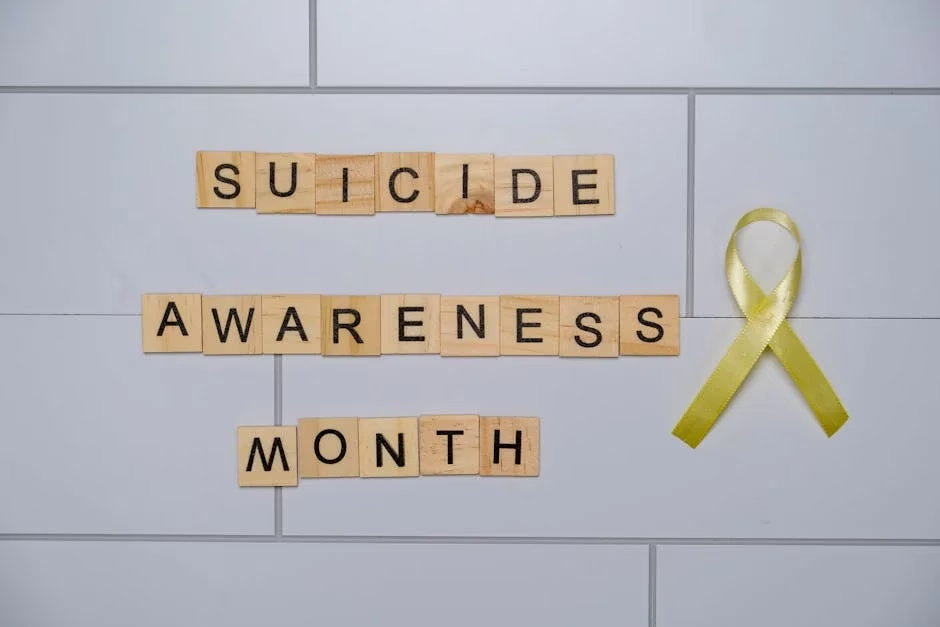
Mental Health Awareness Month gets a dedicated slot in May, a wave of campaigns, and well-meaning social posts that vanish by June. That annual surge matters — it starts conversations that wouldn’t otherwise happen. But the most effective mental health awareness campaign you’ll ever run is the one you run quietly, every single day, in how you treat yourself and the people around you.
Here are some small, grounded things you could try — not because you have to, but because they genuinely support emotional wellbeing over time:
- Daily emotional check-in: Each morning or evening, ask yourself three things — what am I feeling right now, what do I need, and has my mood changed noticeably over the past two weeks?
- The 2-minute reset: When stress spikes, slow your breathing down, name five things you can see, and consciously drop your shoulders. It sounds simple because it is — and it works by gently interrupting your body’s stress response.
- Write down your support options now: Before you need them, jot down the name of a therapist or GP, a trusted friend, and a crisis line. Having them ready removes one barrier when things feel hard.
- Protect your sleep: Going to bed and waking up at roughly the same time each day — yes, even weekends — gives your nervous system a rhythm it can rely on.
- One honest conversation a week: Ask someone you trust, “How have you really been doing?” Then actually listen to the answer.
- Limit doomscrolling: Set a specific window for news and social media, then step away from the screen for a few minutes afterwards. Your nervous system will notice the difference.
None of these will fix a crisis. They’re not meant to. Think of them less as solutions and more as small acts of maintenance — the kind that keep things from quietly getting worse while you’re busy looking the other way.
Mental health awareness becomes most powerful when it lives in the everyday — in how we notice, how we speak, and how we show up. You don’t need a campaign or a special month to start. You can start with one quiet check-in, today.
Frequently Asked Questions
Mental health awareness is the ongoing effort to help people understand what mental health is, recognise when it's being affected, and feel comfortable seeking support. It covers education about common conditions, reducing stigma in everyday conversations, and making it easier for people to talk about how they're really doing — and to ask for help when they need it.
It matters because stigma and lack of knowledge are two of the biggest reasons people delay getting help. The National Institute of Mental Health reported that in 2022, around 1 in 4 U.S. adults experienced some form of mental illness. When people understand what mental health challenges look like and feel safe talking about them, they tend to seek support sooner — and earlier help often leads to better outcomes.
Some of the most common signs include a persistently low or flat mood lasting more than two weeks, withdrawing from friends or activities, big changes in sleep, difficulty concentrating, unexplained irritability, and losing interest in things that used to feel meaningful. No single sign confirms something is wrong — the key is noticing patterns that are new, lasting, or getting in the way of everyday life.
Start with the language you use. Swapping dismissive phrases like 'just stay positive' for 'that sounds really hard — do you want to talk?' costs nothing but signals to people around you that it's safe to be honest. You could also check in genuinely with someone each week, share reliable information, and look after your own emotional wellbeing so you can show up for others.
A daily emotional check-in is a good place to start — just ask yourself what you're feeling, what you need, and whether your mood has shifted lately. You could also try a 2-minute grounding exercise when stress spikes: slow your breathing, name five things you can see, and relax your shoulders. Starting one honest conversation with someone you care about this week is another small action that can genuinely make a difference.
Author’s note
Thank you for taking the time to focus on your well-being and for being your own cheerleader in this journey called life. I truly appreciate you for choosing to invest in yourself today, and I’m honored that you spent a part of your day here. Remember, every small step you take matters, and you’re doing an amazing job. Keep going—you’ve got this!



2 Comments