Most people who try chakra meditation are handed the same advice: start at the root, work your way up, repeat a few words, and you’re done. And yet, so many people quietly give up after a week, wondering why it didn’t click the way they hoped. Here’s the thing nobody tells you — the reason it might not have worked is that it wasn’t built for you.
Chakra meditation is an ancient practice rooted in yoga traditions. It works with seven energy centres in the body, each connected to different emotions, thoughts, and experiences. But what makes it genuinely powerful isn’t just knowing the seven chakras — it’s knowing which one matters most for you, right now. Whether you’re someone who feels everything deeply or someone who lives mostly in their head, there’s a version of this practice that fits your nature. This guide will show you exactly how to find it.
Relevant blog to read: Rewiring Your Mindset Thoughts That Work for You
Table of contents
What the 7 Chakras Actually Mean (In Plain English)
Think of your chakras like seven rooms in a house. Each room has a job. When a room is tidy and well-lit, everything flows. When it’s cluttered, you feel it — in your mood, your body, your relationships. You don’t need to redecorate all seven rooms every day. You just need to know which one needs attention.
- Root Chakra (Red — base of the spine): Your sense of safety and stability. When this feels blocked, anxiety and restlessness tend to creep in.
- Sacral Chakra (Orange — lower abdomen): Creativity, pleasure, and emotional flow. A block here can leave you feeling uninspired or emotionally flat.
- Solar Plexus Chakra (Yellow — above the navel): Personal power and confidence. Feeling indecisive or lacking self-belief often traces back here.
- Heart Chakra (Green — centre of the chest): Love, compassion, and connection. Grief, loneliness, or emotional guardedness live in this space.
- Throat Chakra (Blue — throat area): Communication and self-expression. Struggling to speak your truth or feeling constantly misunderstood? This one’s worth exploring.
- Third Eye Chakra (Indigo — between the eyebrows): Intuition, clarity, and perspective. Overthinking, confusion, and mental fog are often signs this centre needs care.
- Crown Chakra (Violet — top of the head): A sense of peace, purpose, and deep inner calm. When balanced, this is where profound stillness lives.
You don’t have to memorise all of this at once. Even knowing one or two of these descriptions might already be pointing you somewhere useful.
The Most Underrated Secret in Chakra Meditation
Here’s the insight that changes everything — and it’s rarely talked about in beginner guides. Most people approach chakra meditation like a to-do list: get through all seven, tick the box, move on. But mental health professionals who work with these practices point out that the real power comes from personalisation. Specifically, knowing whether you tend to process life through your emotions or your intellect tells you exactly where to focus.
If you’re someone who feels everything intensely — someone whose heart races during conflict, who replays conversations, who cries at adverts — you’re emotionally dominant. The heart chakra is your home base. Meditating here helps you regulate those feelings, build compassion for yourself, and stop being swept away by every emotional wave.
If you’re someone who analyses everything — who lives in spreadsheets and hypotheticals, who struggles to trust gut feelings, who gets stuck in loops of “but what if?” — you’re intellectually dominant. The third eye chakra is where your practice should live. It helps quiet the mental noise and reconnect you with your own deeper knowing.
A 2022 study in the Journal of Alternative and Complementary Medicine found that 68% of participants reported reduced anxiety after just eight weeks of chakra meditation. That’s a meaningful result — and it becomes even more meaningful when the practice is aimed at the right place for the right person.
How to Actually Do Chakra Meditation for Beginners
You don’t need candles, a yoga mat, or an hour of silence. Five minutes on your lunch break counts. Here’s how to build a simple, personal practice that you’ll actually want to come back to.
Step One: Choose Your Starting Point
Rather than always beginning at the root and marching through all seven, ask yourself one honest question: What’s weighing on me most right now? Feeling anxious and ungrounded? Start with the root. Feeling emotionally overwhelmed? Go to the heart. Feeling foggy and unable to think straight? Try the third eye. One chakra, fully felt, is worth more than seven chakras skimmed.
Step Two: Settle In
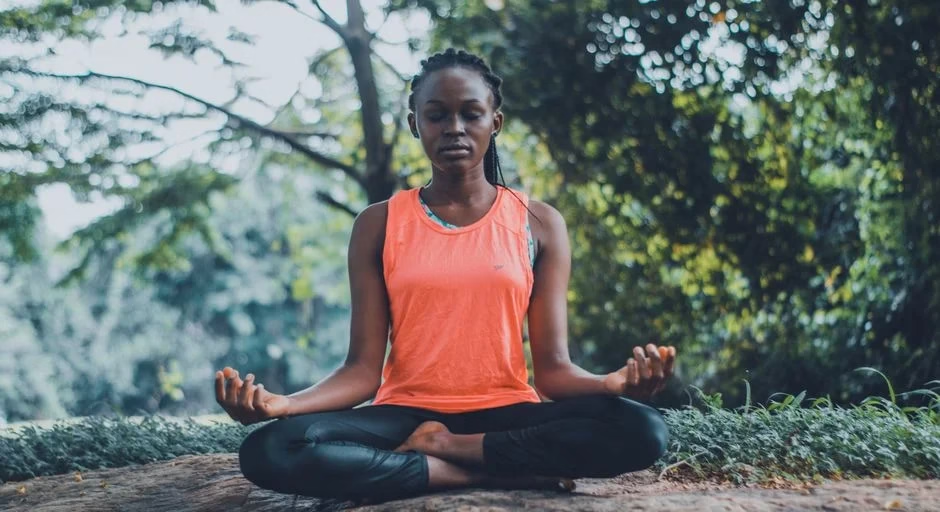
Sit somewhere quiet — a chair, the floor, the edge of your bed at midnight if that’s where you are. Phone face down. Eyes closed. Take three slow breaths, making the exhale a little longer than the inhale. Notice your shoulders dropping. Notice the silence. Your nervous system is already starting to believe you.
Step Three: Visualise and Feel
Bring your attention gently to the body location of your chosen chakra. Imagine a soft, warm glow of its colour building there as you breathe in, and any tension or heaviness dissolving as you breathe out. You’re not forcing anything. You’re simply giving that part of you some quiet attention.
Step Four: Add a Mantra or Affirmation (Optional but Powerful)
Each chakra has a seed sound — a simple syllable that creates a gentle vibration when spoken or hummed quietly. You don’t need to chant loudly. A soft murmur works beautifully.
- Root: Hum “lam” — and breathe in the feeling of being safe, supported, grounded.
- Sacral: Hum “vam” — and picture warmth and creative energy flowing freely.
- Solar Plexus: Hum “ram” — and feel a quiet confidence expanding in your chest.
- Heart: Hum “yam” — and let your breath carry the words “I am loving” into that space.
- Throat: Hum softly — and imagine blue, open sky at your throat, clearing the way for honest words.
- Third Eye: Sit in silence — and gently ask yourself, “What do I need to see more clearly?”
- Crown: Rest in stillness — and let the affirmation “I am joy” drift through your mind like a slow breath.
Even two or three minutes with one of these can shift your mood in a way that’s hard to explain until you’ve tried it.
Common Myths That Might Be Holding You Back
If you’ve tried chakra meditation before and felt like you were doing it wrong, you probably weren’t. Two very common ideas get in the way of people actually benefiting from this practice.
- “I have to do all seven every time”: You really don’t. Targeting one chakra based on what you actually need that day is far more effective — and far more sustainable — than rushing through all seven and feeling nothing.
- “This is too mystical to have any real effect on my mind”: The mental health benefits of chakra-based meditation are very real, even if you approach it purely as a focused mindfulness exercise. The act of turning your attention inward, breathing slowly, and connecting a sensation to an emotion is exactly what evidence-based meditation research describes as helpful for stress and emotional regulation. The framework just gives you a map.
Healthline notes that common signs of a blocked root chakra include persistent anxiety and a sense of unease — things that many people live with daily without ever connecting them to a deeper pattern. Recognising the pattern is often the first step toward gently loosening it.
A Simple Daily Rhythm You Could Actually Keep
Forget the elaborate morning routines and the perfectly timed rituals. The only chakra practice worth building is the one that fits inside your actual life — the messy, interrupted, never-enough-hours version of it.
- Morning (5 minutes): Root chakra breathing. Sit quietly, breathe in a sense of red warmth at the base of your spine, breathe out any lingering worry. Set your feet flat on the floor. Feel held by the ground beneath you.
- Midday (2 minutes): Solar plexus reset. Hum “ram” three times quietly, or just place a hand above your navel and breathe into that space. Notice if you feel a little steadier going into the afternoon.
- Evening (5 minutes): Heart or third eye practice, depending on your nature. If your day was emotionally heavy, let the heart chakra have some room. If your mind is still spinning, sit with the third eye and ask it what it needs to release.
A 2024 survey by Yoga International found that 82% of regular chakra meditators reported better stress management over time. The word “regular” matters more than the word “long”. Five minutes daily will always outperform an hour once a month.
You don’t have to transform your whole routine or become someone who meditates perfectly. You just have to start with the part of yourself that’s asking for attention today — and trust that even a few slow, intentional breaths in the right direction is always enough to begin.
Simple Ways to Deepen Your Chakra Meditation Practice
Once the basics of chakra meditation feel familiar, small adjustments can make the practice noticeably richer. The goal isn’t to make it more complicated — it’s to make it feel more like yours. A few gentle tweaks can turn a routine you tolerate into one you genuinely look forward to.
Try pairing each session with a short intention or a spoken phrase that matches the chakra you’re working with. Words carry energy, and layering in gentle affirmations can anchor the practice emotionally, not just physically. You might also experiment with time of day, a specific colour to visualise, or a piece of music that helps you settle. Notice what shifts, and keep what works.
- Add a one-line intention before each session.
- Visualise the chakra’s colour as you breathe into that area.
- Keep a short note of how you feel afterwards to spot patterns.
- Let the practice stay flexible — some days need one chakra, some need stillness.
Frequently Asked Questions
Start with just one chakra rather than all seven. Sit comfortably, close your eyes, and bring your attention to one area of your body — for example, the centre of your chest for the heart chakra. Breathe slowly, visualise a warm glow of colour there, and silently repeat a simple affirmation like 'I am calm'. Even three to five minutes is a genuinely useful place to begin.
The seven chakras run from the base of the spine to the top of the head: Root (red), Sacral (orange), Solar Plexus (yellow), Heart (green), Throat (blue), Third Eye (indigo), and Crown (violet). Each one is linked to different emotional and mental experiences — from feeling safe and grounded at the root, to intuition and clarity at the third eye.
Many people find it genuinely helpful. A 2022 study in the Journal of Alternative and Complementary Medicine found that 68% of participants reported reduced anxiety after eight weeks of chakra meditation. The practice works by encouraging slow breathing, focused attention, and body awareness — all of which help calm an overactive stress response over time.
It depends on what you need most right now. If you feel anxious or ungrounded, start with the root chakra. If you're emotionally overwhelmed, try the heart chakra. If your mind won't stop racing, the third eye chakra is worth exploring. There's no single right answer — the best starting point is wherever feels most relevant to what you're carrying today.
No — and you really don't have to. Focusing on one chakra that matches what you're experiencing right now is often far more effective than rushing through all seven. Think of it like this: giving one area of your life your full, unhurried attention is almost always more useful than giving seven areas a few distracted seconds each.
Author’s note
Thank you for taking the time to focus on your well-being and for being your own cheerleader in this journey called life. I truly appreciate you for choosing to invest in yourself today, and I’m honored that you spent a part of your day here. Remember, every small step you take matters, and you’re doing an amazing job. Keep going—you’ve got this!