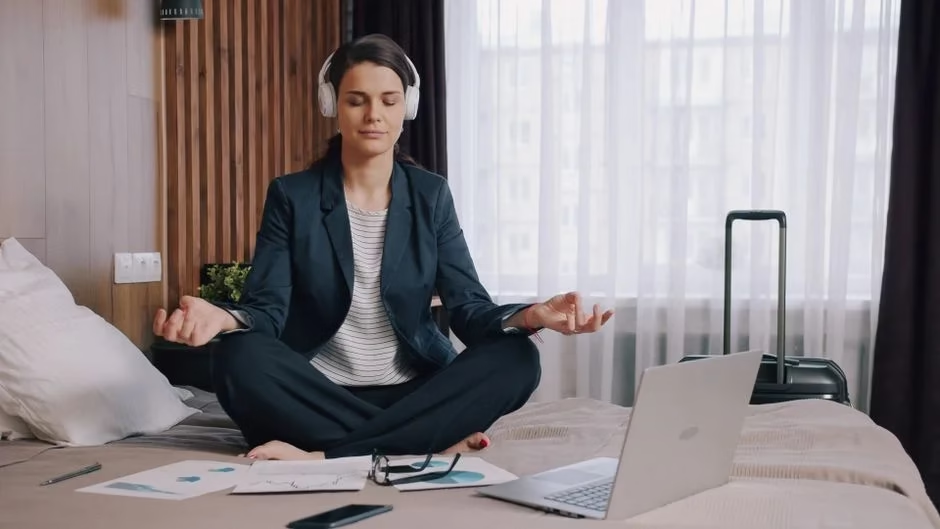
Picture this: it’s mid-afternoon, you haven’t eaten a proper meal, your phone is buzzing, and somewhere in the back of your mind a voice is whispering that you should be doing better. You’ve seen the wellness posts. The 5am routines. The elaborate self-care spreads. And somehow, instead of helping, they’ve made you feel like you’re failing at taking care of yourself too.
Here’s the thing — that voice is wrong. A self-care routine for mental health was never meant to be another performance. It was meant to make difficult days slightly easier to get through. That’s it. That’s the whole job.
This post is going to walk you through what self-care actually means for your mental health, why tiny actions carry real weight, and how to build a daily routine that fits around your capacity — not someone else’s highlight reel.
Relevant blog to read: Daily Self Care Routine Nervous System Reset
Table of contents
What Self-Care Actually Means (It’s Not What You Think)
Self-care gets a bad reputation because it’s often sold as bubble baths and expensive face masks. But the World Health Organization defines self-care as the intentional actions people take to maintain their health and cope with stress — with or without support from a professional. That’s a much broader, much more human definition.
Effective self-care for mental health includes:
- Sleep: Not just any sleep, but a broadly consistent schedule that gives your brain time to reset emotionally overnight.
- Nourishment: Food and water are foundational. When blood sugar drops, so does your ability to manage stress and emotion.
- Movement: Even a short walk counts. The National Institute of Mental Health notes that 30 minutes of walking each day can lift mood and support overall wellbeing.
- Stress management skills: Breathing techniques, grounding exercises, or simply putting your phone down for five minutes.
- Social connection: One honest conversation with someone who cares about you can lower the weight of an overwhelming day.
- Help-seeking: Knowing when to reach out to a professional is itself an act of self-care — not a sign of failure.
None of these require money, a free morning, or a lot of energy. That matters, because real self-care has to work on your worst days, not just your best ones.
Why Your Routine Keeps Falling Apart (And Why That’s Not Your Fault)
Most self-care advice is designed around motivation — that feeling you get after a good night’s sleep or a hopeful Monday morning. But motivation is unreliable. When you’re anxious, exhausted, or low, motivation is often the first thing to disappear. So routines built on motivation crumble exactly when you need them most.
Habit research offers a much kinder solution: anchor new actions to things you already do. This takes motivation almost entirely out of the equation.
- Stretch while the kettle boils: You were making tea anyway. Now you’ve moved your body.
- Drink a glass of water before you open your phone: The phone was always going to get checked. Now you’ve hydrated first.
- Write one sentence in a notebook before you turn the light off: You were going to bed regardless. Now you’ve processed a little of your day.
These small pairings work because your brain loves patterns. When an action is linked to something you already do automatically, it stops requiring a decision. And removing the decision is what makes it stick.
The goal isn’t a perfect daily self-care routine. The goal is a minimum viable routine — the smallest version of care that still makes a difference on the days when everything feels hard.
How to Create a Self-Care Routine That Fits Your Real Life
Think of your routine as having four simple pillars. You don’t need to nail all four every single day. But aiming for at least one or two, even in their smallest form, keeps you connected to yourself when disconnection feels easiest.
Pillar 1: Body Basics
Your body and your mind are not separate systems. When one struggles, the other feels it. On a hard day, body basics might look like:
- Water first: Drink something within the first hour of waking. Dehydration quietly worsens mood, concentration, and anxiety.
- One real meal: Not perfect nutrition — just something with a bit of protein or fibre to give your brain what it needs to function.
- A change of position: If you’ve been sitting or lying down for a long time, even standing up and walking to the window counts as movement.
Pillar 2: A Moment of Calm
When you’re stressed or anxious, your body shifts into a kind of alert mode — breathing gets shallower, muscles tighten, thoughts race. This is a physical response, not a character flaw. And physical responses can be gently interrupted with physical tools.
- Slow your exhale: Try breathing in for four counts and out for six. The longer exhale signals to your nervous system that the danger has passed.
- 5-4-3-2-1 grounding: Name five things you can see, four you can touch, three you can hear, two you can smell, one you can taste. It pulls your attention out of your thoughts and back into the room.
- A five-minute phone-free pause: Set a recurring reminder once a day. No scrolling. Just breathing, stretching, or sitting quietly.
Pillar 3: One Human Connection
Isolation makes almost everything harder. And when you’re depleted, the bar for reaching out can feel impossibly high — like you’d need to explain too much, or you don’t want to be a burden, or you’re just not sure anyone would really get it right now.
So make it smaller. Send one message today — not “hey,” but something with just enough shape to open a door: “I’ve had a tough few days, would you be up for a quick call this week?” That’s it. You’re not asking them to fix anything. You’re just letting one person know you exist and you’re struggling a little. That alone can loosen something.
Pillar 4: A Gentle Wind-Down
How you end the day shapes how you start the next one. Sleep is a genuine mental health intervention — not a luxury. Consistent sleep and wake times help regulate the part of your brain that manages emotional responses. When sleep is chaotic, emotions tend to follow.
- Dim the lights an hour before bed: Bright light at night tells your brain it’s still daytime, which delays the natural sleepy feeling.
- Lay out tomorrow’s essentials: Water, medication if relevant, something to wear. Small preparation reduces the mental load you wake up carrying.
- Write three things before you sleep: One stressor from today, one thing that helped, and one tiny step for tomorrow. This isn’t a gratitude list — it’s a brain-download that helps your mind feel heard before you try to rest.
When Self-Care Isn’t Enough
This is the part most wellness content skips, and it matters more than any breathing technique or morning habit.
A self-care routine for depression or anxiety can genuinely reduce symptoms and help you cope. The World Health Organization has found that structured self-help approaches — especially guided ones — can produce meaningful improvements in depression, anxiety, and stress. That’s real, and it’s worth knowing.
But self-care is not a treatment. It’s a support. And there’s an important difference.
If you notice that your mood has been consistently low for more than a couple of weeks, that your daily functioning — sleeping, eating, working, connecting with people — is getting harder rather than easier, or that thoughts of self-harm have entered the picture, please reach out to a qualified professional or a crisis service. That step is not a last resort. It’s the most compassionate thing you can do for yourself, and it can happen alongside everything else you’re already trying.
Tracking how you feel doesn’t need to be elaborate. Once a day, rate your energy, mood, sleep, and stress on a scale from zero to ten — on a sticky note, in a notes app, wherever. You’re not chasing a perfect score. You’re watching for a direction. A slow slide downward over two weeks tells you something a single bad day doesn’t. That’s the signal worth catching early.
A good self-care routine doesn’t demand that you perform wellness. It just quietly keeps the door open between you and feeling a little better — and helps you notice, sooner rather than later, when it’s time to ask for more support.
Frequently Asked Questions
The best self-care routine for mental health is the one you can actually do on a hard day. That usually means covering four basics: drinking water and eating something nourishing, moving your body even briefly, spending a moment calming your nervous system through slow breathing or grounding, and making one small connection with someone you trust. Small and consistent always beats elaborate and occasional.
Start by choosing just one action from each of these areas: body, calm, connection, and sleep. Then pair each action with something you already do — drink water before you check your phone, stretch while the kettle boils. This way you're not relying on motivation, which tends to vanish on the days you need it most. Build from two or three anchored habits before adding anything else.
When anxiety is high, your body is in alert mode and needs a physical signal to slow down. Breathing out for longer than you breathe in — for example, in for four counts and out for six — genuinely helps calm your nervous system. Grounding exercises like naming five things you can see also work quickly. A short walk with attention on your senses is another option that doesn't require any equipment or planning.
It can support you, yes — but it works best as a complement to professional care, not a replacement. The World Health Organization has found that structured self-help approaches can meaningfully reduce symptoms of depression. For someone with depression, even a two-minute action like opening the curtains or drinking a glass of water is a real step forward. If symptoms persist or daily life is becoming harder to manage, please reach out to a professional.
When everything feels like too much, narrow your focus to the smallest possible version of care. Can you drink a glass of water? Can you sit somewhere quiet for two minutes? Can you send one message to someone you trust? Overwhelm shrinks when the ask is tiny. You're not failing if you can only manage one small thing — that one thing is still self-care, and it still counts.
Related Reading
- Daily Self Care Routine Nervous System Reset
- Summer Self Care Mental Health
- Mental Health Awareness From Knowing to Actually Helping
- Mental Health Advocacy From Awareness to Real Change
Author’s note
Thank you for taking the time to focus on your well-being and for being your own cheerleader in this journey called life. I truly appreciate you for choosing to invest in yourself today, and I’m honored that you spent a part of your day here. Remember, every small step you take matters, and you’re doing an amazing job. Keep going—you’ve got this!