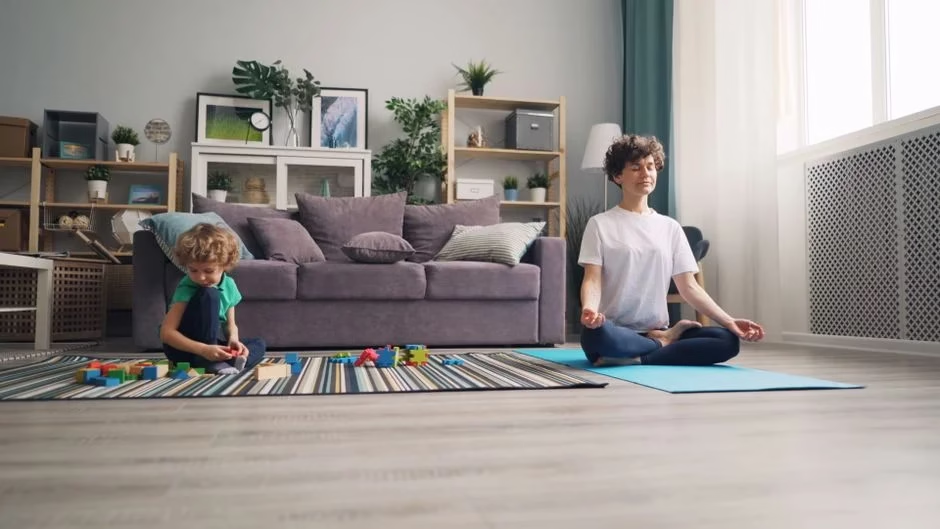
You sit down to meditate. You close your eyes, try to focus on your breathing, and within thirty seconds your mind is running through tomorrow’s to-do list, replaying an awkward conversation, and somehow also thinking about what’s in the fridge. You open your eyes and think: I’m doing this wrong.
You’re not doing it wrong. But the exercise you chose might not be the right fit for where your nervous system is right now — and that’s a distinction almost nobody talks about. Mindfulness exercises aren’t a single thing. They’re a collection of different skills, and some will feel far more natural depending on whether you’re anxious, exhausted, wired, or just quietly overwhelmed.
This post walks you through four types of mindfulness practice — breath-based, sensory, movement, and routine-woven — and helps you understand which one your body might actually welcome today. No perfect stillness required.
Relevant blog to read: Conflict Resolution Skills That Actually Work
Table of contents
- The Biggest Myth About Mindfulness (And Why It Holds People Back)
- Why Your Stress Response Changes Which Exercise Will Help
- Four Types of Mindfulness Exercises — and When to Choose Each
- The STOP Technique: Mindfulness When You Actually Need It
- How to Know If It's Working (Without Judging Yourself)
- Frequently Asked Questions
- Related Reading
- Author's note
The Biggest Myth About Mindfulness (And Why It Holds People Back)
Most people believe mindfulness means emptying your mind. Sit still, think nothing, feel calm. That’s not what it is — and believing that version of it sets almost everyone up to feel like they’ve failed.
Mindfulness actually means noticing what’s happening — your thoughts, feelings, and body sensations — without automatically reacting to them. The goal isn’t a quiet mind. It’s a slightly more aware one. That small shift in understanding changes everything, because it means every wandering thought isn’t a failure. It’s actually the whole point. You notice it. You come back. That’s the practice.
The other myth worth naming: mindfulness isn’t universally relaxing for everyone. For some people — particularly those with a history of trauma or panic — focusing inward on breath and body can feel activating rather than calming. If that’s ever happened to you, it doesn’t mean mindfulness isn’t for you. It means you might need a different starting point, like keeping your eyes open and anchoring to something outside yourself. More on that shortly.
Why Your Stress Response Changes Which Exercise Will Help
Think about the last time you were really stressed. Maybe your chest felt tight. Your breathing got shallower without you noticing. Your thoughts started jumping from one worry to the next faster than you could keep up. That’s your nervous system in a heightened state — and it actually matters which mindfulness exercise you choose when you’re in that state.
When your body is already on high alert, a long silent breath meditation can sometimes amplify that internal noise. A grounding exercise that pulls attention outward — to sounds, textures, or the feeling of your feet on the floor — can give your nervous system somewhere safe to land first. Once you feel even slightly more settled, a breath-based or body practice might open up more naturally.
Think of it like this. If your mind is a snow globe that’s been shaken, you need to set it down before you can see clearly — not keep swirling it around by diving straight into deep internal focus. The right exercise at the right moment is the one that gently sets the globe down.
Four Types of Mindfulness Exercises — and When to Choose Each
1. Mindfulness Breathing Exercises (Best When You Feel Scattered)
Breath-based practice is the most well-known starting point, and for good reason — your breath is always with you, always in the present moment, and always available. When stress makes your breathing shallow and quick, consciously slowing it down sends a signal to your nervous system that you’re safe.
The simplest way to start: set a timer for two minutes. Follow three full sensations of each breath — the air coming in, the pause, the release. When your attention drifts (and it will), gently label what happened. Thinking. Hearing. Worrying. Then come back. No frustration needed. That return — that little moment of starting again — is exactly what builds the skill.
One gentle note: if focusing on your breath ever makes you feel more anxious or panicky, try switching to an eyes-open version where you rest your attention on a point in the room instead. Both count.
2. Sensory Grounding (Best When You Feel Anxious or Overwhelmed)
When anxiety is running high, the mind tends to time-travel — rehearsing future disasters or replaying past ones. Sensory grounding pulls you back into the room you’re actually sitting in, right now, through your five senses.
Before you check your phone in the morning, try this: name three things you can see, two sounds you can hear, and one sensation in your body. It takes under a minute. It’s a particularly good fit for mindfulness exercises for anxiety because it anchors attention externally before asking you to look inward.
You can also try it at meals. Take the first three bites without a screen, and just notice — the smell, the texture, the temperature, how your body responds. Small, but genuinely effective as a daily mindfulness exercise you can actually remember to do.
3. Mindful Walking (Best When Sitting Still Feels Impossible)
Some days, sitting quietly is the last thing your body wants to do. That restless, can’t-settle feeling isn’t a problem — it’s information. And mindful walking is built for exactly that moment.
You don’t need a special route or a forest or the right shoes. You need about five minutes and permission to move slowly. Notice each foot leaving the ground and landing again — that small thud of contact that you’ve taken thousands of steps ignoring. Notice sounds as they arrive: traffic, a door, your own breathing. Let your eyes go soft, unfocused, not looking for anything. Then cycle your attention gently between feet, breath, and whatever’s around you — like a slow, quiet rotation.
This counts as a real mindfulness practice. Movement can be just as grounding as stillness, and for many people, it’s far more accessible.
4. Routine-Based Mindfulness (Best for Building a Daily Habit)
Here’s the practical truth about daily mindfulness exercises: a two-minute practice done every day will almost certainly serve you better than a forty-minute session done once a fortnight. The challenge is memory, not motivation. That’s where anchoring mindfulness to something you already do becomes a quiet game-changer.
Brushing your teeth. Waiting for the kettle. Standing in the shower. Walking to your car. These are already happening — you’re just usually somewhere else in your head while they do. Bringing even thirty seconds of genuine attention to one of these moments builds the same neural habit as formal meditation.
A 2024 systematic review of 27 studies involving over 2,500 participants found short-term benefits across anxiety, stress, and well-being from mindfulness-based approaches — but also noted that longer-term effects were less consistent. That suggests these practices work best when they’re kept going, not treated as a one-time fix. Weaving them into daily routines is one of the most practical ways to do that.
The STOP Technique: Mindfulness When You Actually Need It
There’s a four-step sequence that turns mindfulness into something you can use in the middle of a difficult moment — not just on a quiet morning when you have time to sit. It’s called STOP, and it takes about sixty seconds.
- Stop: Pause whatever you’re doing, even briefly.
- Take a breath: One slow, deliberate breath. Just one is enough to interrupt autopilot.
- Observe: Notice what you’re feeling in your body, what thoughts are present, and what’s happening around you — without needing to fix any of it yet.
- Proceed: Move forward based on what you actually want to do, rather than what the spike of stress was pushing you toward.
Use this before replying to a message that’s wound you up. Use it before walking into a hard conversation. Use it at 3am when your mind starts listing every problem you’ve ever had and sleep feels impossible. It won’t dissolve the problem — but it creates a small gap between feeling and reacting, and that gap is where better choices live.
How to Know If It’s Working (Without Judging Yourself)
The most honest thing to understand about mindfulness is that you probably won’t feel dramatically different after one session. You’re not chasing a feeling. You’re building a reflex — the reflex to notice what’s happening inside you before you’re already three reactions deep. That’s quieter progress than people expect, and it’s easy to miss if you’re looking for something more obvious.
A useful way to track this without overthinking: for one week, note how long you practised, how you felt before, and how you felt after. Not to grade yourself — just to notice patterns. Some exercises will suit you better than others. Some days will feel easier. That’s not inconsistency; that’s being human.
If a practice consistently increases your distress rather than softening it, stop and try a different one. There’s no single right way. The best mindfulness exercise is the one that actually feels manageable to you, today, in your life as it actually is.
Frequently Asked Questions
Start with something small enough that you'll actually do it. A two-minute breath practice — just following the feeling of three inhales and exhales and gently returning when your mind wanders — is one of the most beginner-friendly options. If that feels too intense, try a sensory grounding exercise instead: name three things you can see, two you can hear, and one body sensation. Both build the same core skill.
It genuinely can help many people, though it's not a cure and results vary. A 2024 review of 27 studies found short-term improvements in stress, anxiety, and well-being from mindfulness-based practices. The key is choosing the right type of exercise for your stress response — external sensory grounding often works better for high anxiety than inward breath focus, which can feel activating for some people.
Shorter than most people think. Research suggests that consistent brief practices — even one to five minutes daily — can build real benefits over time. Duration alone doesn't guarantee results; regularity matters more. Starting with two minutes a day and building gradually is far more effective than one long session a week. The goal is a sustainable habit, not an impressive number.
Meditation is usually a set practice you do at a specific time — sitting quietly, following your breath, or doing a body scan. Mindfulness is the broader quality of awareness that those practices build. You can be mindful while walking, eating, or washing up. Meditation is one way to train mindfulness, but daily mindfulness exercises woven into ordinary moments count just as much.
That's more common than people realise, and it doesn't mean mindfulness isn't for you. For some people, especially those with panic symptoms or trauma histories, turning attention inward can feel activating. Try keeping your eyes open and anchoring to something external — sounds in the room, the feeling of your feet on the floor, or a slow visual scan of your surroundings. These grounding approaches work the same neural pathways with less risk of discomfort.
Related Reading
- Conflict Resolution Skills That Actually Work
- Daily Self Care Routine Nervous System Reset
- Creative Visualization Techniques That Actually Work
- How to Feel More Joy and Contentment
Author’s note
Thank you for taking the time to focus on your well-being and for being your own cheerleader in this journey called life. I truly appreciate you for choosing to invest in yourself today, and I’m honored that you spent a part of your day here. Remember, every small step you take matters, and you’re doing an amazing job. Keep going—you’ve got this!