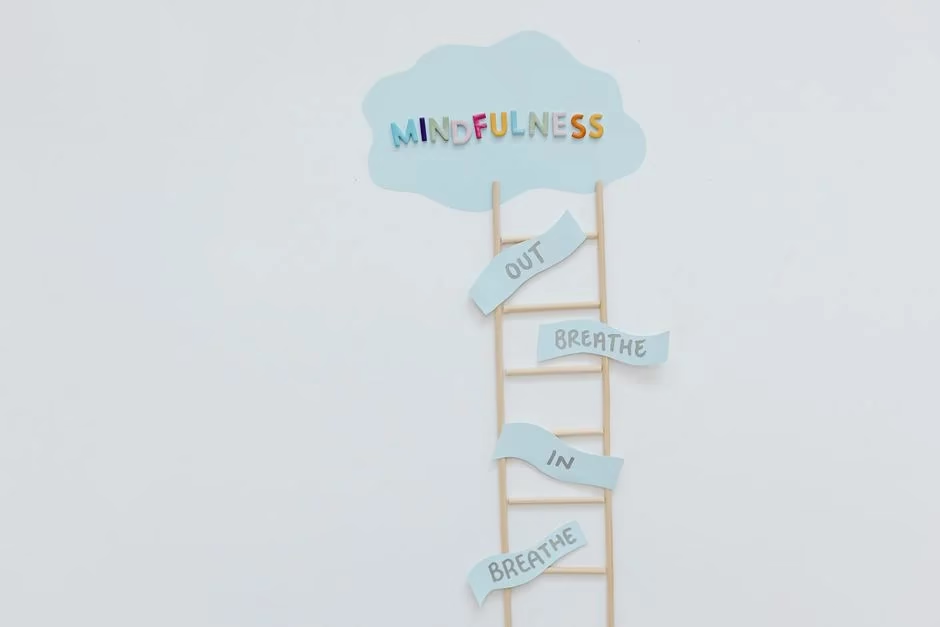
You’ve probably been told to “just breathe” when you’re anxious. And maybe, like a lot of people, you’ve tried it — only to feel somehow more tense, more aware of every uncomfortable sensation in your chest. If that’s happened to you, you’re not doing it wrong. It just means that breathing attention isn’t a one-size-fits-all tool — and nobody told you that part.
That’s exactly what this guide is here to change. Mindful breathing techniques are genuinely useful — research backs them up — but the overlooked skill isn’t breathing harder or deeper. It’s knowing when breath focus helps, when it might not, and what to do instead. That’s the difference between a tool that works for you and one that quietly makes things worse.
By the end of this, you’ll know three different ways to approach your breath, how to tell which one fits your moment, and a few gentle alternatives for when breath focus isn’t the right choice at all.
Relevant blog to read: Mindful Breathing Techniques
Table of contents
- Why "Just Take a Deep Breath" Isn't the Whole Story
- What the Research Actually Shows
- Three Ways to Work With Your Breath (Choose What Fits)
- When Breath Focus Might Not Be Right For You
- How to Build a 5-Minute Mindful Breathing Practice That Actually Sticks
- Frequently Asked Questions
- Related Reading
- Author's note
Why “Just Take a Deep Breath” Isn’t the Whole Story
When you’re stressed or anxious, your body shifts into a kind of alert mode. Your breathing naturally gets shallower and faster — that’s not a flaw, it’s your nervous system preparing you to respond quickly. The problem is that when the threat is a difficult email rather than a physical danger, that shallow breathing keeps humming along, quietly fuelling that tight, unsettled feeling.
So breath-focused attention can help — by gently interrupting that loop and giving your mind something neutral to notice. But here’s what most breathing guides skip over: forcing big, deep breaths can actually cause dizziness or discomfort, especially if you’re already anxious. And for people who have experienced trauma, or who struggle with panic, turning attention inward to physical sensations can sometimes increase distress rather than ease it.
This isn’t a reason to avoid mindful breathing techniques altogether. It’s a reason to choose your approach wisely — which is exactly what we’re going to do.
What the Research Actually Shows
It’s worth knowing that the science here is genuinely encouraging, while also being honest about its limits. A 2023 meta-analysis of 12 randomised controlled trials involving 785 participants found that breathwork was associated with meaningful reductions in self-reported stress — with a small-to-medium effect size. That’s real, measurable relief for real people.
A separate 12-week randomised trial of 100 healthy adults found that slow breathing reduced psychological stress scores significantly, though interestingly it didn’t change heart-rate variability — a physical marker of nervous system balance. That tells us something worth sitting with: you can feel genuinely calmer even when the physiological change is subtle. Your felt sense of relief is real, even if it doesn’t show up on every measurement.
What the research also makes clear is that breathing practices work best as a complement to other support — not as a replacement for therapy or professional care when that’s what someone needs. Think of it as a low-cost, always-available skill to practise alongside whatever else supports you.
Three Ways to Work With Your Breath (Choose What Fits)
Rather than prescribing one technique for everyone, it helps to think of three levels of engagement. Start with the gentlest and only move deeper if it feels comfortable.
Level 1 — Just Watch (No Changing Anything)
This is the most underrated approach. You don’t try to slow your breath, deepen it, or count it. You simply notice it. Where do you feel it most — the tip of your nose, the rise of your chest, the expansion of your belly? Just observe, like you’re watching clouds move.
- Why it works: It shifts your attention away from anxious thoughts without asking your body to perform. There’s no way to do it wrong.
- Who it suits: Anyone who finds deliberate breath control activating, uncomfortable, or just unfamiliar.
- How to try it today: Set a timer for one to two minutes. Notice three things — the in-breath, the out-breath, and the small pause between them. That’s it. When your mind wanders (it will), gently bring it back. No judgment.
Level 2 — Gentle Slowing (The Longer Exhale)
Once simple observation feels comfortable, you might try nudging your breath into a slightly slower rhythm. The key word is slightly. A longer exhale — breathing out a little more slowly than you breathe in — tends to activate the part of your nervous system that helps you settle.
- Why it works: A longer exhale gently signals to your body that you’re safe. It’s like pressing a soft brake pedal on your stress response.
- Who it suits: People who feel comfortable with Level 1 and want to go a step further. If dizziness or air hunger appears, ease off immediately.
- How to try it today: Try breathing in for about four seconds and out for five or six seconds — only if that feels easy. If counting creates strain, drop the count and just focus on making the out-breath slightly longer than the in-breath. Do this for five minutes, once or twice a day.
Level 3 — Anchored Breathing (For Difficult Moments)
This is breath awareness used as an anchor during a stressful moment — not a full practice session, just a brief reset. You know that feeling when a difficult conversation ends and your heart is still hammering ten minutes later? This is for that.
- Why it works: Giving your attention a physical anchor — the breath — interrupts the spiral of anxious thinking. It doesn’t erase the feeling, but it creates a small gap between stimulus and response.
- Who it suits: Anyone in a mid-day stress moment. Keep both feet on the floor, breathe gently through your nose if comfortable, and take six easy breaths before responding to whatever is in front of you.
- How to try it today: Before sending a difficult message, or walking into a hard meeting, pause. Six breaths. Jaw soft. Shoulders dropped. Then go.
When Breath Focus Might Not Be Right For You
This part matters, and it rarely gets said clearly enough: for some people, turning attention to physical sensations in the body can feel unsettling rather than calming. This can happen if you’ve experienced trauma, if you’re prone to panic attacks, or if you have a respiratory condition that makes breathing feel effortful on a normal day.
If focusing on your breath ever makes you feel more panicked, dizzy, dissociated, or distressed — stop. That’s not failure. That’s information. Your nervous system is telling you it needs a different kind of anchor right now.
Here are some alternatives that can offer the same kind of grounding without asking anything of your breath:
- Feet on the floor: Press both feet firmly into the ground and notice the sensation of weight and contact. Simple, immediate, and hard to get wrong.
- 5-4-3-2-1 senses: Name five things you can see, four you can hear, three you can touch, two you can smell, one you can taste. This pulls your attention fully into the present moment.
- Cold water: Run your wrists under cold water for thirty seconds, or hold an ice cube. The physical shock of temperature is one of the fastest ways to interrupt a spiral — your brain genuinely cannot catastrophise and process cold at the same time.
- Slow movement: A short walk, stretching your arms above your head, or gently rolling your shoulders can discharge stress through the body without requiring any breath control at all.
How to Build a 5-Minute Mindful Breathing Practice That Actually Sticks
The research on breathing practices consistently shows that short, regular sessions work better than occasional long ones. Five minutes once or twice a day builds the kind of quiet skill that shows up for you when you actually need it — not just when you have time to light a candle and sit still.
The trick is to stop treating it as a separate thing you have to find time for. Attach it to something you already do every day without thinking. Your brain follows grooves — give it a groove.
- Morning: One minute of breath observation before you pick up your phone. Just notice three breaths before anything else enters your day.
- Midday: Six gentle breaths at the moment you transition from one task to another — closing a laptop, leaving a meeting, finishing lunch.
- Evening: Two to three minutes of the gentle slowing technique (Level 2) while the kettle boils, or before you brush your teeth.
After each practice, try writing one sentence: how anxious you felt before, how you feel after, and whether the exercise felt calming, neutral, or activating. Over time, that one sentence becomes your personal map — showing you which approach works best in which moments, for you specifically.
That’s the real skill in mindful breathing techniques: not perfecting any single method, but learning to listen to what your body is asking for — and responding with something that actually helps.
Frequently Asked Questions
Start by simply noticing your breath without changing it — feel the air coming in, going out, and the small pause between. You don't need to breathe deeply or count. Just observe for one to two minutes. When your mind drifts, gently bring your attention back to the next breath. That gentle returning is the actual practice, and you genuinely cannot do it wrong.
There isn't one single answer, because different approaches suit different people and moments. A gentle starting point is a slightly longer exhale than inhale — try breathing in for four seconds and out for five or six, only if that feels comfortable. If any deliberate control feels activating, simple breath observation with no counting at all is equally valid and often more calming.
Five minutes once or twice a day is enough to build real skill — research consistently suggests that short, regular practice is more effective than occasional long sessions. If five minutes feels like too much at first, one minute at three points in your day — waking, midday, and bedtime — adds up to the same benefit without feeling like a chore.
It can help some people, but it's worth knowing that for others — particularly those with a trauma history or strong panic responses — focusing inward on physical sensations can occasionally feel more distressing, not less. If that's your experience, grounding techniques like pressing your feet into the floor or the 5-4-3-2-1 senses method can offer similar relief without requiring breath focus.
For most people, gentle breath observation is safe and low-risk. However, those with certain respiratory conditions, panic disorder, dissociation, or trauma histories may find some techniques uncomfortable. The safest approach is to start with simple observation — no controlling, no counting — and stop if you feel dizzy, faint, or more distressed. Always speak with a health professional if you're unsure what's right for you.
Related Reading
- Mindful Breathing Techniques
- Effective Communication Techniques That Build Real Trust
- Childrens Mental Health Signs Every Parent Should Know
- Creative Visualization Techniques That Actually Work
Author’s note
Thank you for taking the time to focus on your well-being and for being your own cheerleader in this journey called life. I truly appreciate you for choosing to invest in yourself today, and I’m honored that you spent a part of your day here. Remember, every small step you take matters, and you’re doing an amazing job. Keep going—you’ve got this!