Picture a three-year-old mid-meltdown on the kitchen floor — not because they’re badly behaved, but because their little nervous system is genuinely overwhelmed. Now picture a parent sitting down beside them, quietly, without frustration. That moment right there? That’s mental health support. And it starts much earlier than most of us realise.
Early childhood mental health support isn’t about therapists and waiting rooms — though those matter too. It’s about the everyday, ordinary moments that wire a child’s brain for resilience, calm, and connection. According to CDC data, nearly 1 in 5 children aged 2–8 in the US has at least one mental health condition. Yet almost half of those children never receive any support at all. That gap is heartbreaking — and a lot of it comes down to not knowing where to look, or what to do first.
This post will walk you through what the research actually shows about building strong mental health in children from birth — including why your relationship with your child is the single most powerful tool you have, how to spot early signs that something might need more attention, and simple daily practices that genuinely make a difference.
Relevant blog to read: Mental Health Awareness From Knowing to Actually Helping
Table of contents
- The Surprising Truth: Mental Health Begins at Birth
- What Early Signs of Mental Health Problems Actually Look Like
- How Relationships — Not Programmes — Build Resilience
- Supporting Child Emotional Regulation at Home
- Screen Time and Your Child's Mental Health: What the Research Actually Shows
- Frequently Asked Questions
- Related Reading
- Author's note
The Surprising Truth: Mental Health Begins at Birth
Most people assume mental health only becomes relevant when a child starts school, or when a problem shows up. But research tells a different story. Mental health — the ability to feel, connect, cope, and grow — begins the moment a baby is born.
In those earliest months and years, a baby’s brain is building itself at a staggering pace. Every time a caregiver responds to a cry, mirrors a smile, or soothes a fear, they’re literally shaping the architecture of that child’s emotional brain. This is why experts now say mental health requires a relational approach — one that includes both the child and the people raising them.
What’s even more powerful — and this is the insight worth pausing on — is that positive childhood experiences can actually buffer the effects of difficult ones. A child who faces hardship but has even one consistently safe, warm relationship in their life is measurably more likely to thrive. The presence of good doesn’t erase the hard. But it genuinely protects against it.
This shifts the whole conversation. Instead of asking only “what went wrong?”, we get to ask “what can we build?”
What Early Signs of Mental Health Problems Actually Look Like
One of the most common misconceptions is that children will simply “grow out of” emotional struggles. Sometimes that’s true. But signs of mental health problems in toddlers and young children are often real, recognisable, and worth taking seriously early.
Children don’t have the words adults do. Their distress often shows up in behaviour, in the body, and in play. Here’s what to gently watch for:
- Big emotions that don’t settle: All toddlers have tantrums. But if a child’s distress lasts unusually long, happens very frequently, or seems wildly out of proportion to the trigger, that’s worth noticing.
- Changes in sleep or appetite: A child who suddenly struggles to sleep, eats much less, or seems constantly exhausted may be carrying more stress than they can express.
- Pulling away from connection: If a previously sociable child becomes withdrawn, clingy beyond their developmental stage, or stops engaging in play, something may have shifted.
- Persistent physical complaints: Tummy aches and headaches with no clear medical cause are a classic way young children communicate emotional distress.
- Regression: Going back to behaviours they’d outgrown — thumb-sucking, bedwetting, baby talk — can signal that a child feels unsafe or overwhelmed.
None of these signs mean something is definitely wrong. And they absolutely don’t mean you’ve done anything wrong. They’re simply your child’s way of communicating. The earlier you tune in, the more you can help.
How Relationships — Not Programmes — Build Resilience
When we talk about early intervention for childhood anxiety and emotional struggles, it’s tempting to look for a specific technique or programme. And yes — structured approaches like cognitive behavioural therapy have strong evidence behind them for children as young as four, with research showing anxiety symptoms staying reduced even a year after the work is done.
But the foundation underneath all of that? It’s relationship.
Social support — feeling connected to family, feeling truly seen by a parent — is one of the strongest protective factors known to science. A child who has that foundation can weather far more than one who doesn’t. Family resilience and the parent-child bond have been shown to promote positive mental health even in children who’ve experienced significant adversity.
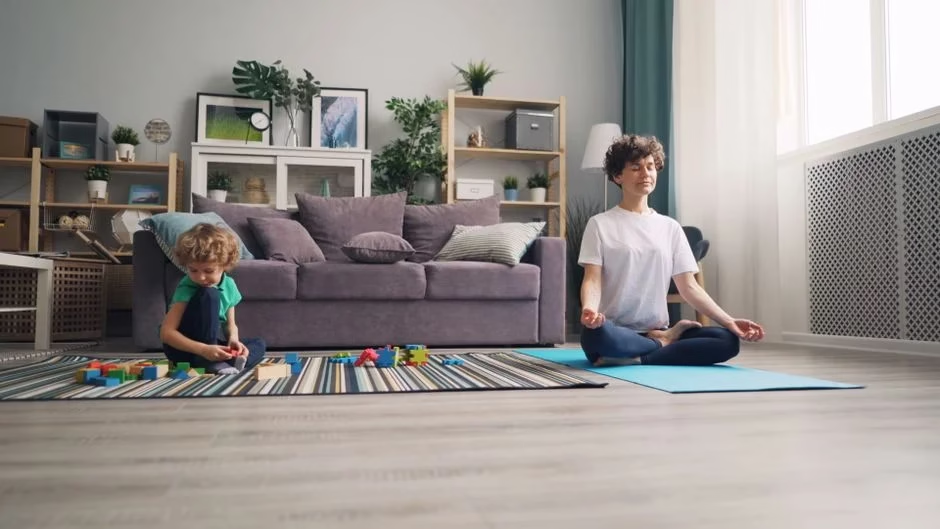
You don’t need to be a perfect parent. You need to be a present one. Here are some small, relationship-building practices that fit into real life:
- 15-minute one-on-one time: Once a day, let your child completely lead an activity — no phones, no agenda, no teaching moments. Just follow their lead. This builds attachment in a profound way.
- Emotion-naming conversations: Try asking “What feeling is in your body right now?” rather than “Are you okay?” It opens the door and builds emotional regulation skills at the same time.
- Weekly family check-ins: A short, low-pressure ritual where everyone shares one good thing and one hard thing normalises the idea that feelings — all feelings — are welcome in your home.
- Predictable routines: Consistent meal, sleep, and play times aren’t just convenient — they signal safety to a child’s nervous system. Predictability reduces anxiety.
These aren’t grand gestures. They’re quiet, repeated moments of connection. And over time, they add up to something remarkable.
Supporting Child Emotional Regulation at Home
Here’s something reassuring: you can genuinely support how to help child emotional regulation at home, without any specialist training. Because emotional regulation isn’t a skill children either have or don’t — it’s something that develops gradually, with a lot of co-regulation from the adults around them.
Co-regulation simply means: your calm helps create their calm. When a child is flooded — screaming, inconsolable, completely gone — they cannot think their way out of it. Their brain’s alarm system has taken over. What brings them back isn’t a lesson or a consequence. It’s you, staying steady, close, and unfrightened by the storm. Over time, that steadiness becomes something they carry inside themselves.
Practical tools for everyday moments
- Bubble breathing: When big feelings hit, try breathing in together for 4 counts, holding for 4, then breathing out for 4 — as if you’re slowly blowing a bubble. Even young children can do this with a little practice, and it genuinely calms the body’s stress response.
- Daily movement: Around 30 minutes of physical activity — walking, dancing, playground time — supports emotional regulation significantly. A child who’s moved their body handles frustration better. It’s that straightforward.
- Model your own emotions: When you say “I’m feeling a bit overwhelmed right now, so I’m going to take three slow breaths” — you’re teaching more than any lesson could.
Screen Time and Your Child’s Mental Health: What the Research Actually Shows
You’ve probably seen the headlines. Screen time is ruining kids. Or: screen time is fine in moderation. The truth, as usual, sits somewhere more nuanced.
Research does show that frequent social media use is associated with changes in the brain regions linked to emotions, impulse control, and learning — and these changes correlate with higher rates of depression. That’s worth taking seriously. But screen time alone doesn’t cause mental health problems. Context, content, and connection matter enormously.
Interestingly, research points to what might be called a developmental “sweet spot” — where both very high and very low screen use are linked with higher depression rates in children. It’s not simply “less is always better.” It’s about balance and what’s being displaced.
When screen time replaces sleep, physical activity, face-to-face connection, or unstructured play — that’s when it becomes a concern. As a practical guide for screen time guidelines for child mental health:
- Under 18 months: Video calls with family aside, screens offer very little developmental value at this age.
- Ages 2–5: Around an hour a day of high-quality content, watched together when possible, is a reasonable starting point.
- School-age children: Consistent screen-free family times — meals, the hour before bed — protect sleep and connection without requiring perfection.
- Model what you want to see: Children absorb what the adults around them do, not what they’re told. If phones are always present, that sends a message too.
The goal isn’t a screen-free childhood. It’s a connected one — where screens are one small part of a full, rich life.
Building strong early childhood mental health support for your child doesn’t require a perfect home, unlimited resources, or any special expertise. It starts with turning toward them — again and again, imperfectly and consistently — and trusting that those small moments of genuine connection are doing something lasting. Because they are.
Frequently Asked Questions
There's no single definitive sign, but patterns matter more than individual moments. Watch for persistent big emotions that don't settle, changes in sleep or appetite, withdrawal from play or connection, frequent unexplained physical complaints like tummy aches, or regression to earlier behaviours. If something feels consistently 'off' for more than a few weeks, talking to your child's doctor is always a reasonable next step — trust your instincts.
Toddlers can't say 'I'm anxious' — they show it. Key signs include tantrums that are unusually intense or last a long time, difficulty separating from caregivers beyond typical stages, disrupted sleep without a clear cause, losing interest in play they previously loved, or going back to behaviours they'd grown out of. These signs don't confirm a diagnosis, but they're worth paying attention to and discussing with a healthcare provider.
Start with connection — your calm genuinely helps regulate your child's nervous system. Predictable daily routines reduce background anxiety significantly. Simple breathing techniques like breathing in for 4 counts and out for 4 can help during stressful moments. Naming emotions together — 'it sounds like you're feeling scared right now' — builds their ability to manage feelings over time. If anxiety is frequent or intense, early support from a professional makes a real difference.
Research suggests it's less about the exact number of minutes and more about what screens are replacing. When screen time displaces sleep, physical activity, or face-to-face play, that's when it becomes a concern. As a rough guide: minimal screens under 18 months, around an hour of quality content for ages 2–5, and consistent screen-free times — like meals and before bed — for school-age children. Watching together and talking about content also helps.
Mental health development begins at birth. In the earliest months and years, a baby's brain is building its emotional architecture through every interaction with caregivers. When a parent responds to a cry, soothes distress, or mirrors joy, they're literally shaping how that child's brain learns to handle emotions. This is why warm, consistent relationships in the very early years have such a lasting impact on a child's long-term wellbeing.
Related Reading
- Mental Health Awareness From Knowing to Actually Helping
- Parental Mental Health Child Happiness
- Creative Routine Building Mental Health
- How to Talk About Mental Health
Author’s note
Thank you for taking the time to focus on your well-being and for being your own cheerleader in this journey called life. I truly appreciate you for choosing to invest in yourself today, and I’m honored that you spent a part of your day here. Remember, every small step you take matters, and you’re doing an amazing job. Keep going—you’ve got this!